When it comes to art, the name Guggenheim resonates strongly in the collective imagination. The iconic New York museum is not only one of the most influential venues for modern and contemporary art, but also a meeting place for artists, collectors, and cultural leaders from around the world.
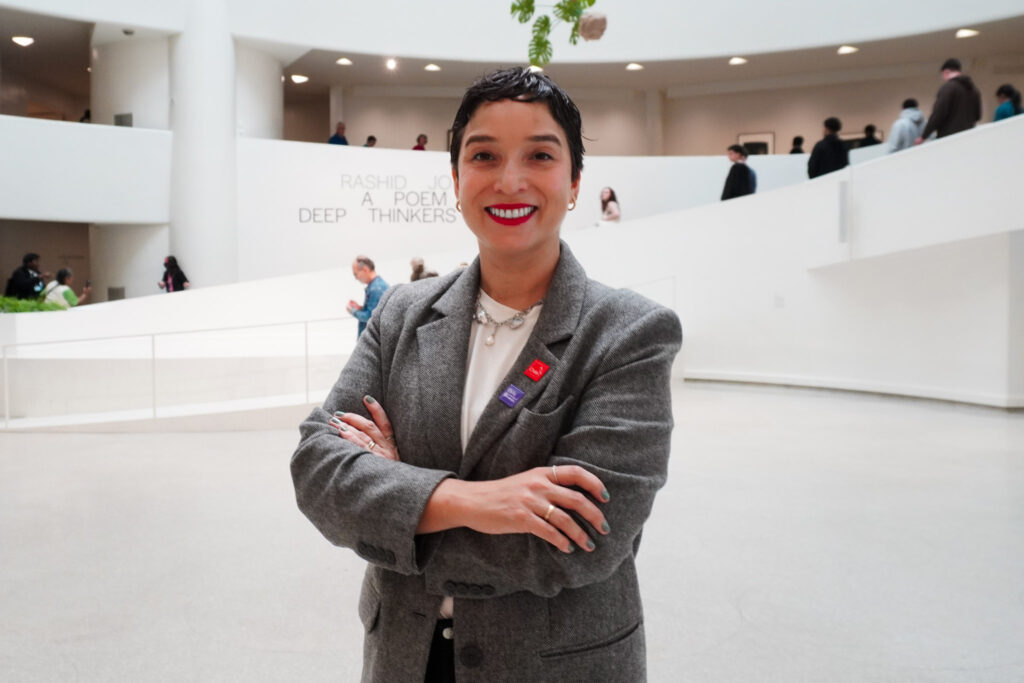
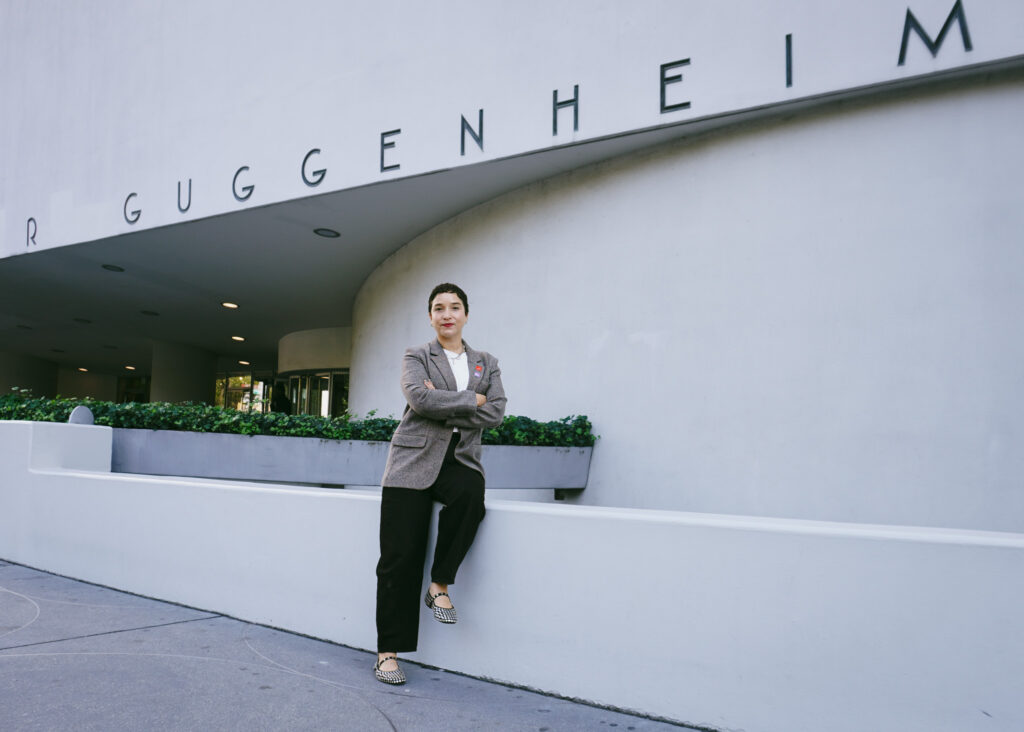
This is the stage on which Chilean Antonieta Landa now finds herself, having recently been appointed Senior Manager of Individual Giving at the Guggenheim Museum in New York. A curator and cultural manager with an international career spanning Santiago, Shanghai, and New York, her work has focused on creating opportunities for Latin American artists and exploring how identity is transformed when art crosses borders.
From the cultural capital of the United States, we spoke with Antonieta Landa about her career, the role of museums in the contemporary world, and opportunities to promote Chilean art on the international stage.
You have built your career in various countries, working with contemporary Latin American art. How has your perspective on art—and, in particular, on Latin American art—changed as a result of that international experience?
I have always been involved with Latin American contemporary art, but for the past 13 years I have been working with it from within the diaspora, particularly with artists who live outside their home countries.
I'm very interested in how these artists explore identity from a distance. It's fascinating to see how that identity evolves when you live abroad, how new experiences are incorporated, and how that blend is reflected in their art. It speaks to a global experience that is becoming increasingly common.
How has your perception of Chilean art changed as a result of this international experience?
I’ve worked quite a bit with Chilean artists, especially when I lived in China. One thing that strikes me is that Chilean art tends to be very analytical and conceptual. I feel that Chilean artists are very meticulous in their work, especially compared to other Latin American art scenes.
For example, in New York I see many Caribbean artists with very different approaches. In Chile, on the other hand, the works tend to be cleaner, more precise, and grounded in a strong theoretical foundation. That’s a pattern I see recurring, and I find it very interesting.
Do you think that way of working is connected to Chilean identity?
I think so. When compared to other Latin American countries, Chileans tend to be more reserved. Showing a piece of art means putting yourself out there, and I think Chilean artists think long and hard before presenting their work. That might explain why their works are so conceptually developed. It’s a generalization, of course, but it’s something I see time and again: a more thoughtful and polished piece before it’s shown to the world.
What role do you think art plays in shaping a country's image?
Art plays a fundamental role. Artists work from an emotional and sensory space that is sometimes difficult to convey through words alone. Images and artistic experiences generate perceptions that influence how a country is understood.
Chile is home to some incredible artists, but the art scene isn’t yet as professionalized as it is in other countries. There isn’t yet a clear identity for Chilean art that is easily recognizable from the outside. This is a task that also requires a strategy and the development of the cultural ecosystem.
In your role as Senior Manager of Individual Giving at the Guggenheim, how do you help raise the profile of Latin American art, and what does your work entail?
One of my responsibilities is to work with the museum’s Latin American Giving Circle, which is made up of collectors who promote art from the region and seek to create opportunities within the Guggenheim. Although I am not directly involved in curatorial work, I can support these collectors and strengthen their presence within the museum, contributing to an ecosystem where collectors, institutions, and artists empower one another.
My role is in the philanthropy department, where I coordinate various groups of donors who support the museum. Through programming, activities, and connections with artists, I seek to strengthen these relationships and foster ongoing support for the Guggenheim.
How do you view cultural philanthropy in Chile compared to the United States?
I believe that cultural philanthropy is not yet very well developed in Chile. Private support is essential to sustaining the cultural ecosystem. In the United States, philanthropists are crucial to the survival of cultural institutions, and these institutions, in turn, support artists.
It’s a system that works and could be further developed in Chile. There are initiatives such as the cultural donations law, but there is still room to strengthen this model and make donations easier.
What do you think of the state of Chilean art today?
I think the quality is very high, but there’s still a need for greater international exposure. Chilean art often remains confined within the country, and there are few international connections. However, when Chilean artists work abroad, they’re usually very well received. This shows that Chilean art has great potential on the international stage.
Do you feel like an ambassador for Chile through your work?
I don’t know if I’d call myself an ambassador, but I do think it’s important to stay connected with Chilean artists and support them from where I am. I believe that those who live and work abroad are also ambassadors. In my role, I can contribute by building networks, organizing visits, or connecting artists with institutions. That support can be key to the development of their careers.