

“Poetry and human rights have been together since the beginning of time.”
Chile's most important living poet, who will be appearing at FILs Buenos Aires 2023 on April 29, says:
"In a world of victims and perpetrators, the poet is the first victim and the first to rise up and say that, despite everything, new days will come."
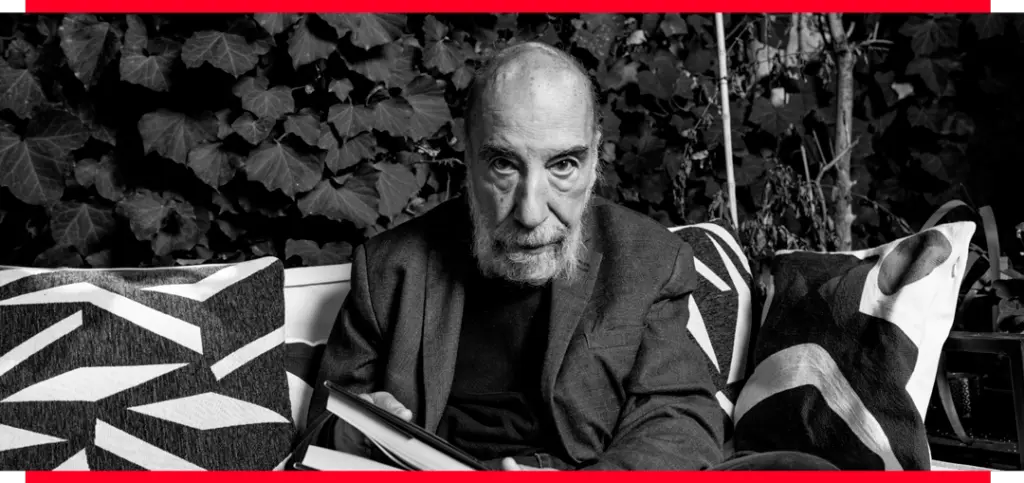
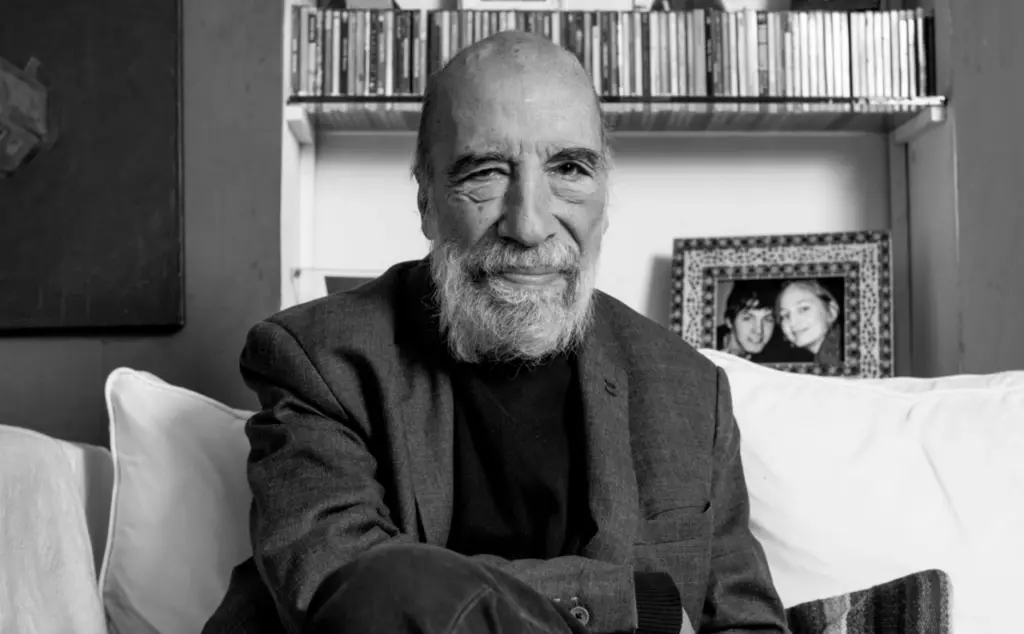
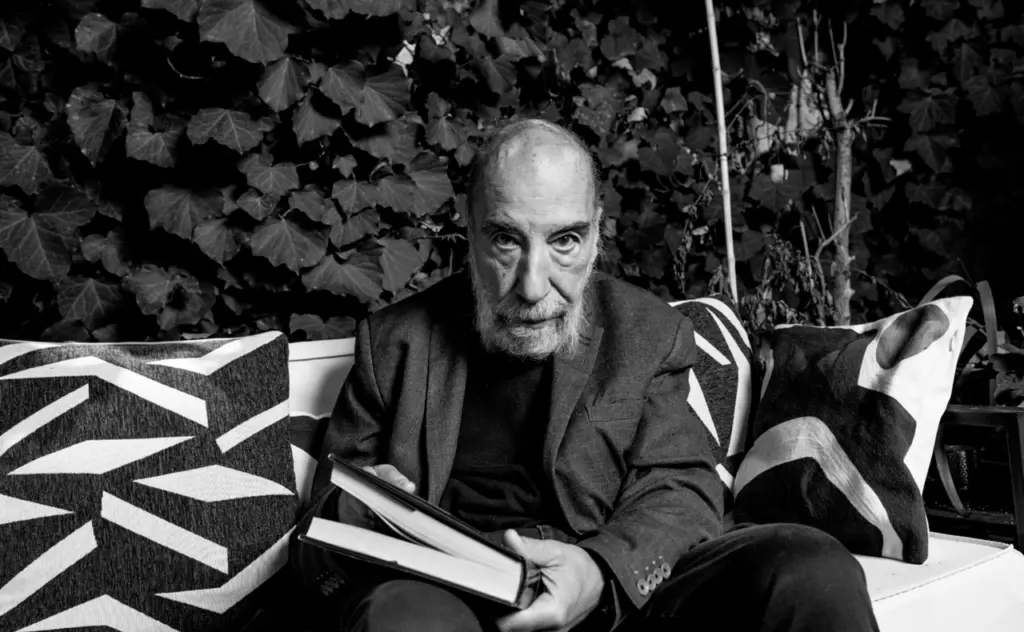
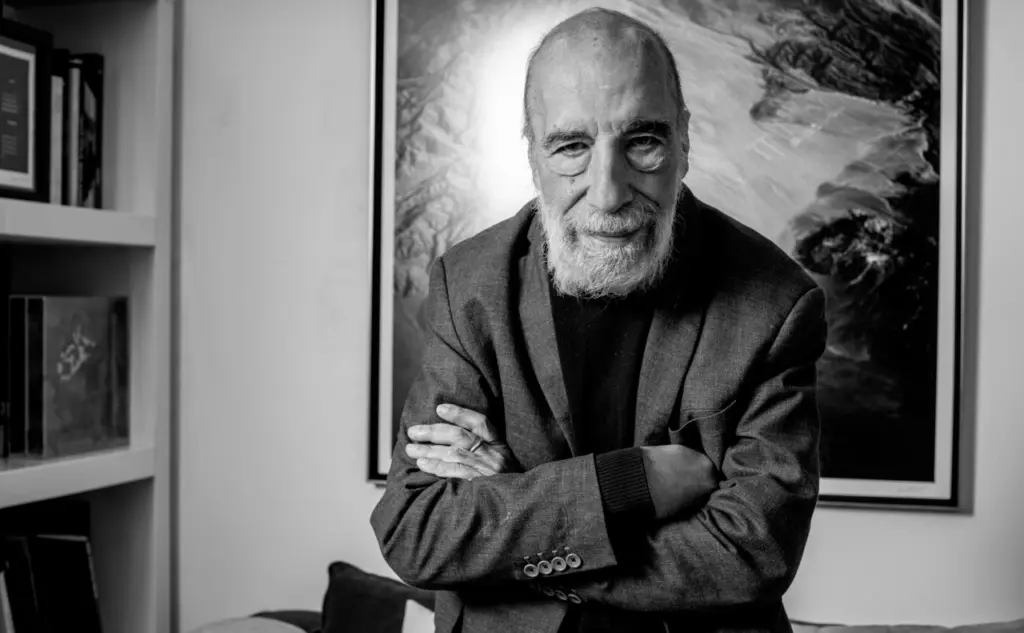
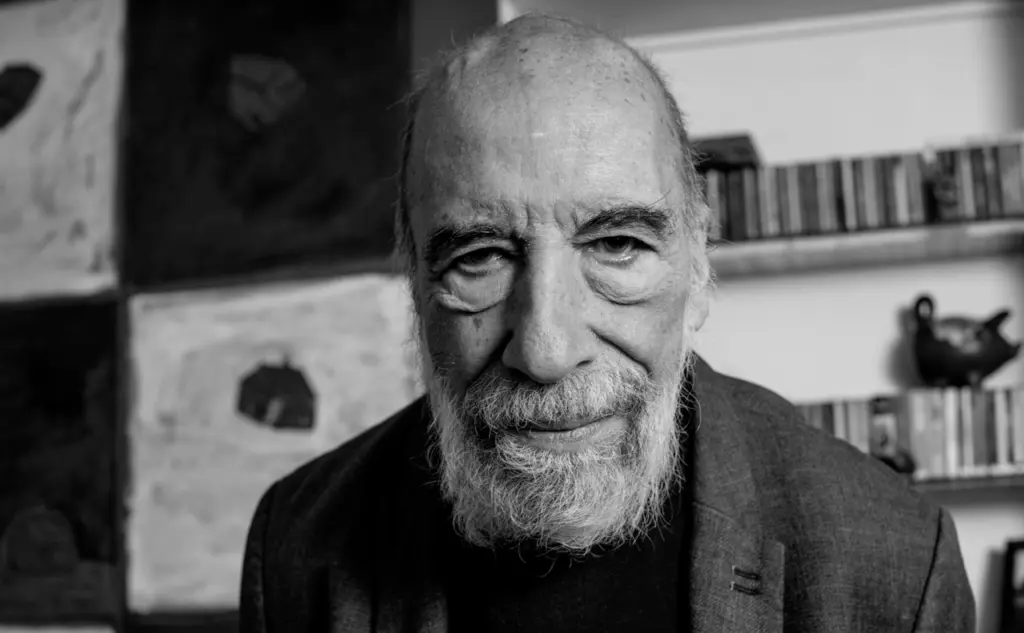
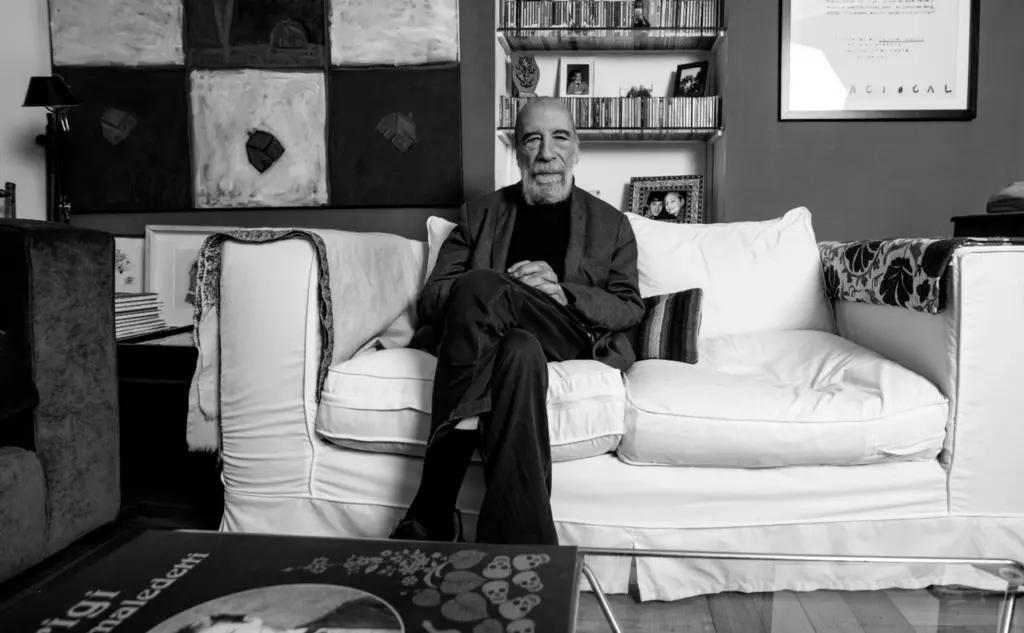
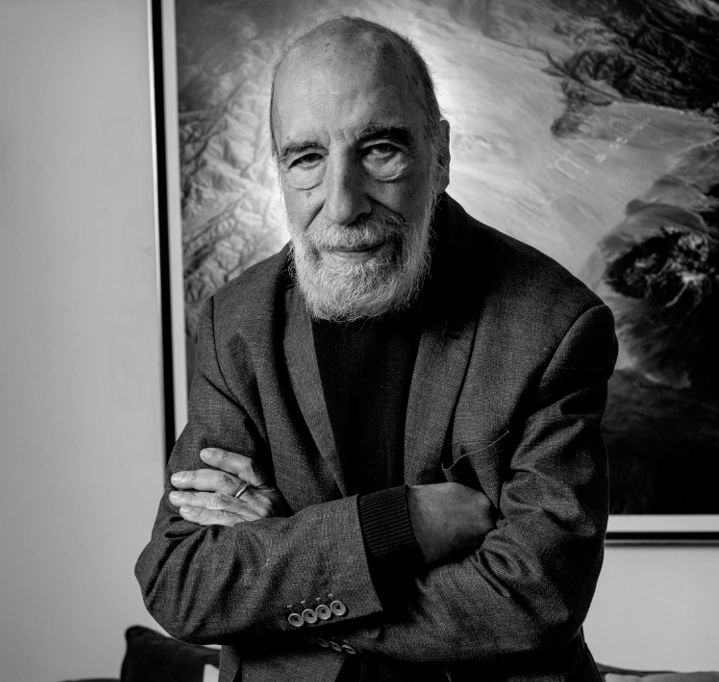
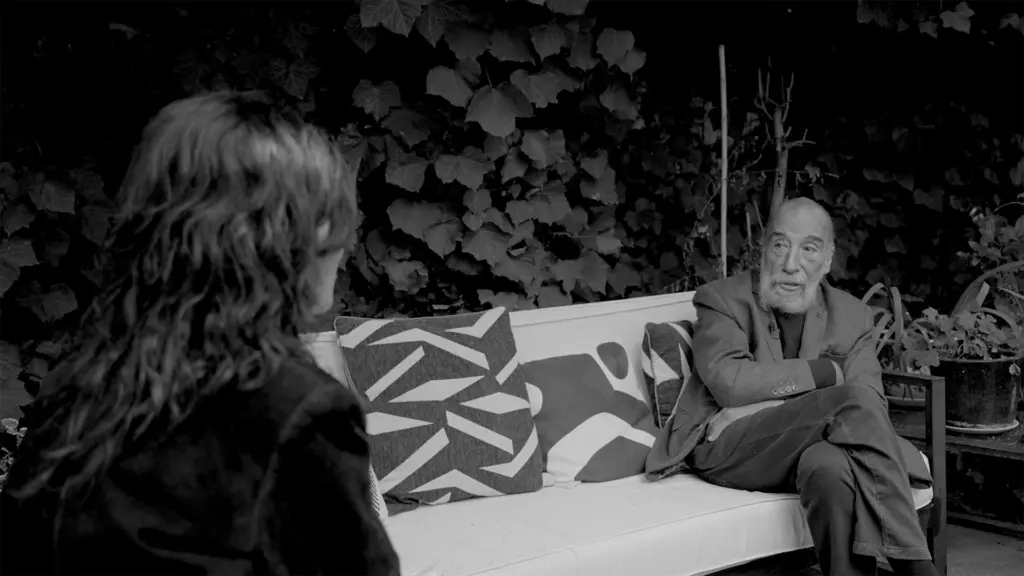
In the shade of his dense garden, with the autumn wind blowing through the trees, Raúl Zurita Canessa speaks in whispers, yet his words are powerful. "Poetry and human rights are the same thing," says the man who is probably the most important living poet in our country. He continues: "Poetry and human rights have gone hand in hand since the beginning of time; it has to do with that mixture of horror and wonder that is always with us."
Author of Purgatorio (1979), Anteparaíso (1982), La vida nueva (begun in 1982 and finally completed in 2018), Canto a su amor desaparecido (1985), INRI (2003), and Zurita (2011), to mention just a few of his works. His long list of awards includes the National Literature Prize (2000), the Reina Sofía Prize for Ibero-American Poetry (2020), and the Pablo Neruda Ibero-American Poetry Prize (2016).
Of course, it has also been his artistic actions that have elevated him to the status of a living legend. For the publication of his first book, Zurita appeared on the cover sporting a scar on one of his cheeks, the result of a self-inflicted burn. Or when he poured ammonia into his eyes and almost went blind. Or on June 2, 1982, the day the first fifteen verses of his poem La vida nueva (The New Life) were written in white smoke across the New York sky by five planes. His literary rock star fame also accompanied him during the social unrest of October 2019, when a photo of him walking with the Chilean flag held high among the crowd went viral on social media.
On Saturday, April 29, with Santiago as the city of honor at FIL Buenos Aires 2023, Raúl Zurita will recite his famous Canto a su amor desaparecido (Song to His Lost Love), considered a cry of resistance against the military dictatorships that ravaged the continent between 1970 and 1990. A personal reading, reminding us that the history of Latin America is marked by violence, oppression, and hunger.
—That's interesting what you said about the connection between poetry and human rights. How else are they related?
—Poetry is hope for those who have no hope, love for those who lack love, that tenuous thread that makes you, despite everything, persist and persist in life, to the point that some have not been able to bear it. Because the history of poetry is also a tragic history; there are stories that are terrible. Let's go back to the Greeks, to The Iliad, which is brutally violent.
He pauses to think, stares intently, and declares: "The greatest poem would have been if those terrible books had never been written; it would mean that what was being narrated never happened, yet poetry has to bear the burden of all those flaws. There is a terrible phrase in the Iliad: 'It is as if the gods take pleasure in bringing us suffering because they love the sound of our songs'. Because song is also born of pain (...). Some say that without wounds there is no art, and that may be true, because if everything is closed off, poetry would have nowhere to come from... But one does not only speak of one's wounds; poetry also recalls all those moments when one man took bread from another, right up to the present day. I am referring to poetry understood as art in general.
"I was severely beaten, but I did not suffer torture."
On September 11, 1973, Zurita was on his way to the Federico Santa María Technical University in Valparaíso, where he was studying civil engineering, when he was arrested by the military. It was at that moment that the story of the then young communist activist took a different turn.
—Were the agents of the dictatorship looking for you?
—No, it was totally random; they were after anything that moved, and I had the misfortune of being in the wrong place at the wrong time. They took me when I was trying to go to university at 6 in the morning because I had spent the whole night awake and wanted to get there for breakfast. They took me away and it was horrible; I was severely beaten, but I wasn't tortured, I want to make that clear; that didn't happen to me. It was a barbaric time. Everyone remembers the fear, the horror, the physical insecurity, but no one mentions the poverty. Since I couldn't go to college anymore and I was out of work, the hunger was unbearable. I had a wife, three children, and I needed to get money any way I could. I didn't think about writing at all, I didn't care, but in my desperation I wrote and wrote... I think I became a poet out of desperation, and concrete desperation at that. Later, poetry became a way for me not to give up, not to go crazy... I didn't publish until 1979. I came up with the craziest ideas, like writing in the sky, and I actually did it. It was incredible. All that madness kept me going in the face of anguish and, above all, poverty." That was the time when Zurita formed the Colectivo de Acciones Artísticas (CADA), together with Lotty Rosenfeld and the writer and National Prize winner Diamela Eltit, his second wife and with whom he had his fourth child. "It was a time, and this is going to sound strange, that was darkly exciting. It was such a dark time that all you had was your friend or partner, because outside everything was horrible. I remember those conversations on the verge of curfew, where you could dive into the depths of who we are, and it's incredible because it awakened a solidarity between us, a brotherhood... We went through the night, crouching together. That time is part of me."
—Those were also the days of his now legendary art performances, when he attempted to harm himself physically.
—I never did a performance, as they call it now. The things I did were completely solitary, locked in a room, with no audience, nothing. What did I do with despair? Because we (artists) are also incapable of enduring so much darkness, and if we do endure it, it is because, despite everything, there is something that shines somewhere, a love, the face of someone you love, very simple things and, at the same time, the most profound things in the world. The role of poets, like that of singers, is to keep up the spirit, and the soul as well, no matter what.
—Did you make it?
—Well, I'm here, I survived my own self-destruction... In a country where so many people disappeared, the rest of us speak as survivors, because it could have been any one of us. In a world of victims and perpetrators, it is precisely the poet who is the first victim. But also the first to stand up and say that, despite everything, new days will come. For me, it is the combination of despair and hope...
—How do you interpret the rise of fascism and autocracies in the world today?
—It's a pretty hopeless world, which affects us all. There are such heartbreaking, terrible scenes in war. In Ukraine, I remember seeing a house that had been completely demolished, with an old woman inside who could barely move; one of the rescue workers took her hand, but they had to leave and she said to him: 'Please stay a little longer, because when you leave, I will be left with only the night and terror; this was my home, where I have always lived, and now I am going to die without even someone to hold my hand...'. Faced with such real scenes of pain, one bows down. In this world full of bombs and madness, we who are alive are survivors... Whether we survive for better or for worse remains to be seen. Art in this sense is the most tremendous, terrible, and accurate representation of the world we live in. And the fact that art is made is already something. He pauses. "There is a lot of talk about memory, that this generation has no memory; I don't think that's true. Through mysterious channels, everything is remembered."