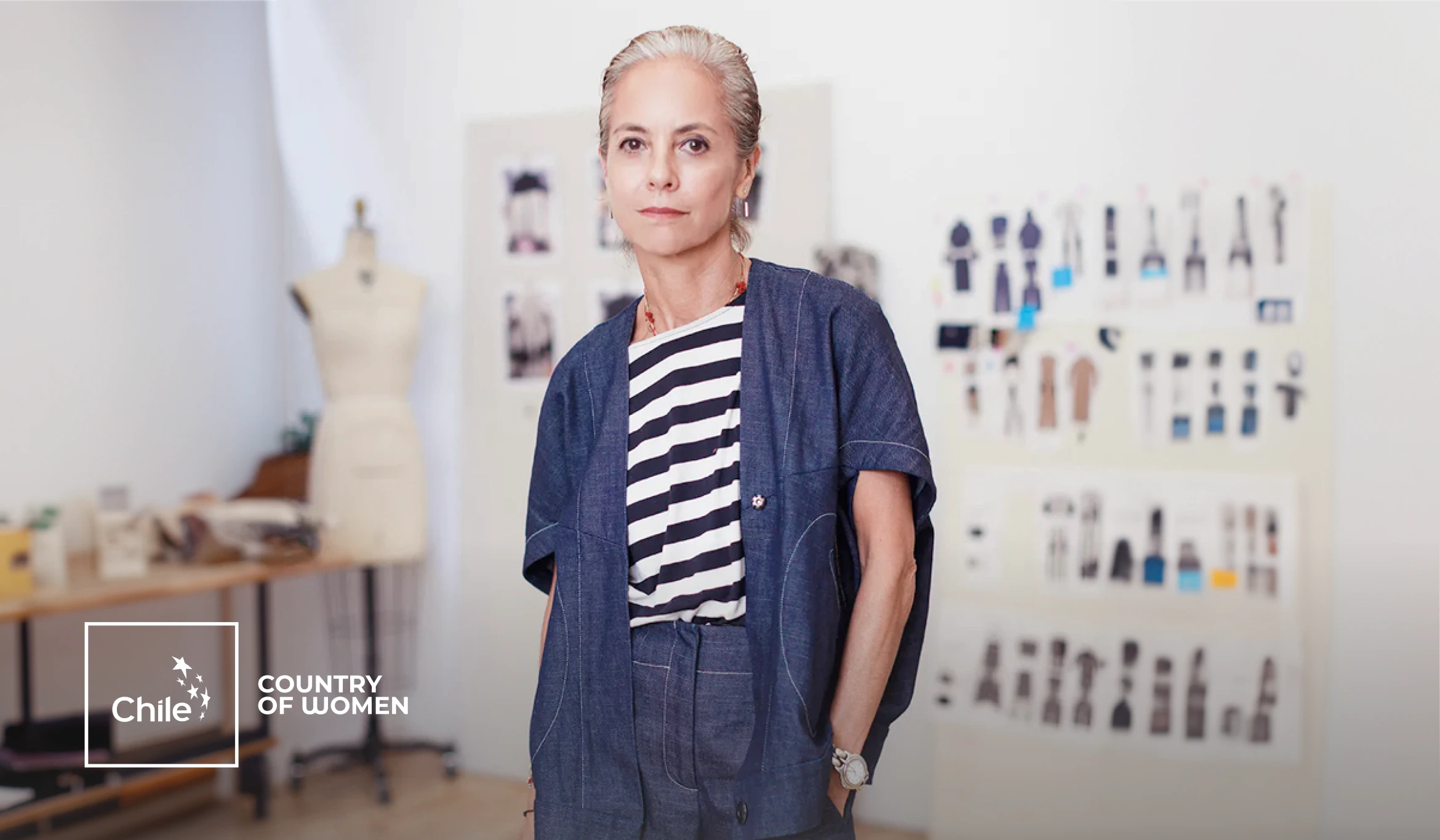


When it comes to Chileans who have reached the pinnacle of their discipline on a global scale, one name stands out in the fashion world: María Cornejo. She may not be a familiar face to the general public, but her prestige in the industry is undisputed.
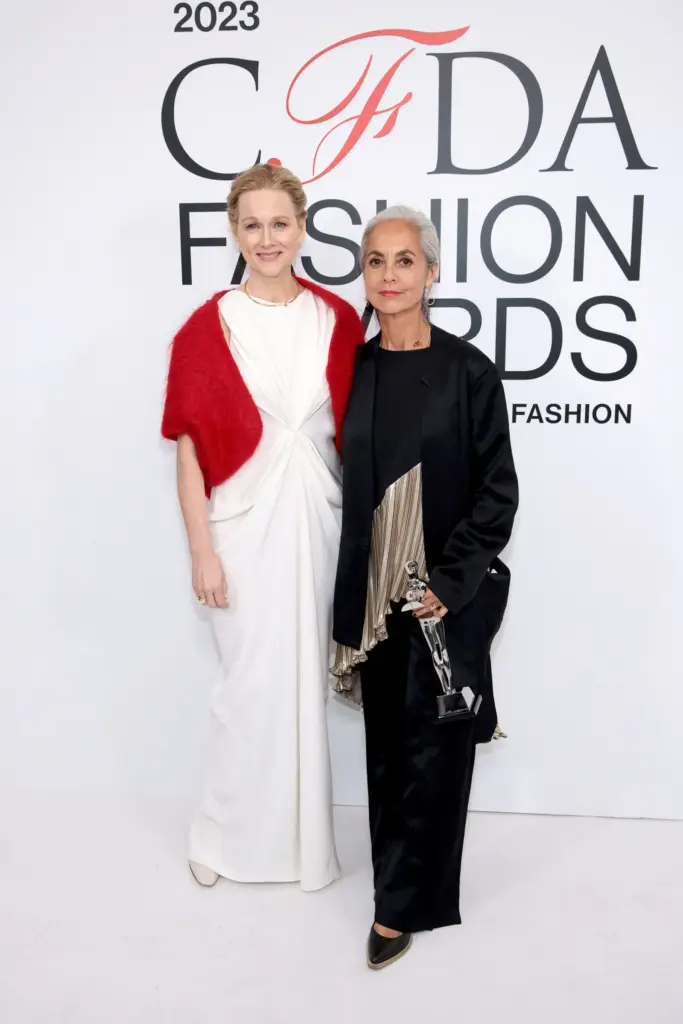
In 2023, he received the Geoffrey Beene Lifetime Achievement Award at the CFDA Fashion Awards, one of the highest honors in the industry—often compared to an "Oscar" for fashion—in addition to a long list of awards throughout his career. His designs have been worn by figures such as Michelle Obama, Tilda Swinton, and Christy Turlington, among many others.
At her Zero + María Cornejo store, located in Manhattan's NoLita neighborhood, she welcomes us to talk about her career, her view of the industry, and her connection to Chile.
With a career that has taken you to some of the world's leading fashion centers—England, Japan, Paris, New York—how have you seen the industry evolve from analog to this digital age?
I went to school in England in the 1980s, in the post-punk era. At that time, art schools were much more creative than they are now. The internet has made everything accessible, but at the same time, the "hand" has been lost. I learned by working in factories in Italy, Japan, France, and England, collaborating directly with those who made the textiles. We invented together.
Nowadays, almost everything is digital. Many designers use computers. I still work on paper. For me, fashion is three-dimensional. Many clients have told me that they thought I was an architect because of the way I construct clothes, because I like volumes.
I feel that craftsmanship is lacking today, the heart that goes into it when you know how fabrics work. It's not the same as designing in Photoshop.
You have spoken about your vocation to dress a real woman, a woman with many lives; a vision that often goes against the grain of the industry. Why do you think that approach has brought you so much recognition?
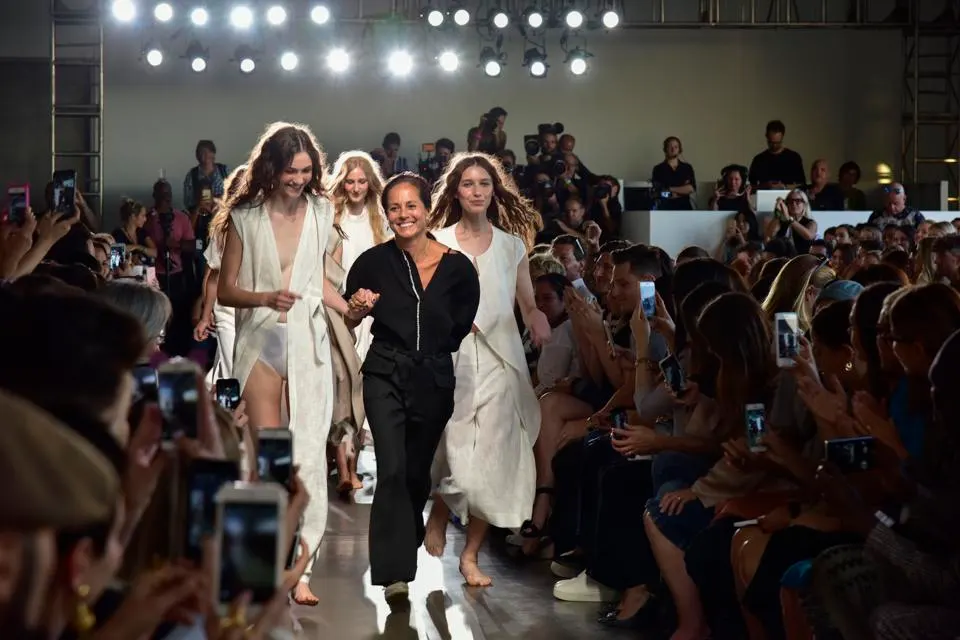
I design for real women, like myself. I think of a woman who drops her children off at school, goes to meetings, works, and has dinner in the evening, all in the same day. I always say that women are like cats: we have many lives at the same time.
I don't design for an ideal or follow trends. I design for creative women who live the same life as me. That's why I think they connect with my work. The garments are interesting and beautiful, but comfortable. I travel a lot, and for me it's important to be able to pack everything in a suitcase in five minutes. Women's lives today are very busy. We want to do everything: family, career, everything. And that's a lot.
Despite that focus on real women, you have also dressed very well-known figures, such as Michelle Obama.
Michelle Obama wore my designs before she arrived at the White House; she was a customer in Chicago. Later, when she began her public career, we created several designs especially for her. Years later, at an awards ceremony at the White House, she mentioned me in a speech about the American dream: she spoke about the hard-working immigrant woman who starts from scratch in the United States. I didn't know what to say. It was very moving.
Sustainability is a pillar of the Chile Brand and also one of the hallmarks of your work; you have even won awards for it. Why is it an important issue for you?
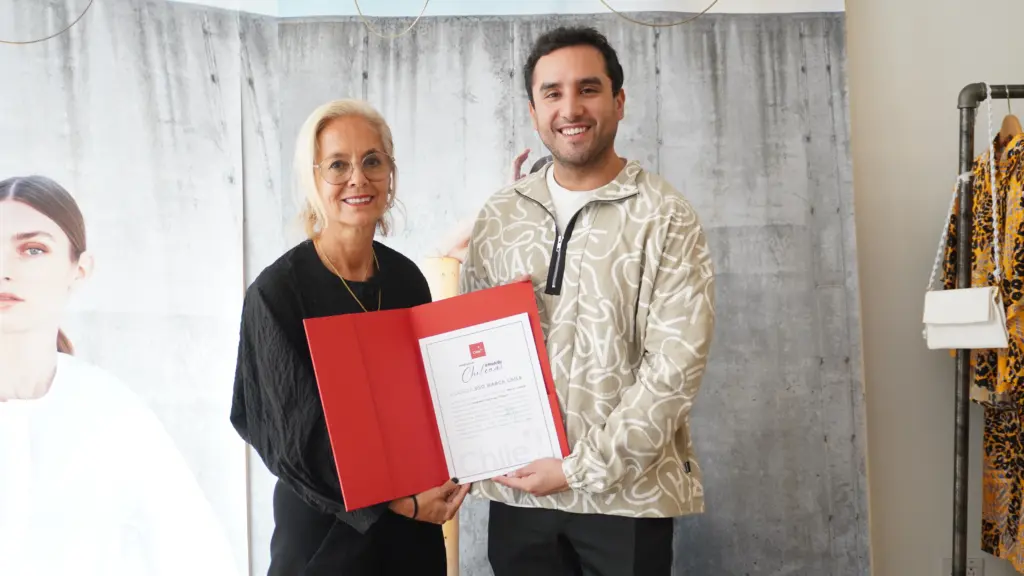
This has always been a priority for me, but now that I have children and grandchildren, it is even more relevant. When I started out, I would buy fabric scraps that other designers had discarded and reuse them. Everything is connected: the planet and people's well-being. The decisions we make today have consequences. Beyond the awards, for me it's personal: it's for my grandchildren and future generations.
In previous interviews, you talked about your grandmother and your childhood in Chile. What memories do you have of your life in our country and your first encounters with the world of design?
We lived in Concepción, but we spent our summers in Santiago with my grandparents. My grandmother knitted everything: my entire outfits, all in the same color. She taught me how to knit.
My grandfather worked in construction and made structures for my dolls. She knitted dresses for them. I still have a doll that she rescued when we left as political refugees. In the 1960s, it was normal for mothers to make clothes for their children and, with the leftovers, make clothes for their dolls. I have very fond memories of my childhood.
Do you feel that your Chilean or Latin American identity is reflected in your design?
It has always been there. The ponchos, the colors, the Latin American influence. Also the Mapuche culture, black, jewelry. But I am also influenced by London and punk, France, Japan. People are like sponges. Sometimes something looks more Chilean, because of the color or shape, but it is not a conscious reference. It is in the unconscious.
Do you feel like an ambassador for Chile in the world?
I feel like an ambassador for women who have survived in different places: Chile, the United States, France. I am proud to be Chilean, especially now, and of what Chile is doing in terms of sustainability. I would love to spend more time in Chile.
Would you like to add anything?
I want to send my love to my whole family in Chile. I love you all very much, even though I don't see you very often.