El Huerto de VIK: the gastronomic book born from the land of Millahue.
The 123-page publication documents the gastronomic proposal developed in Millahue and approaches cuisine as a cultural practice linked to gardening and wine.
January 19, 2026.
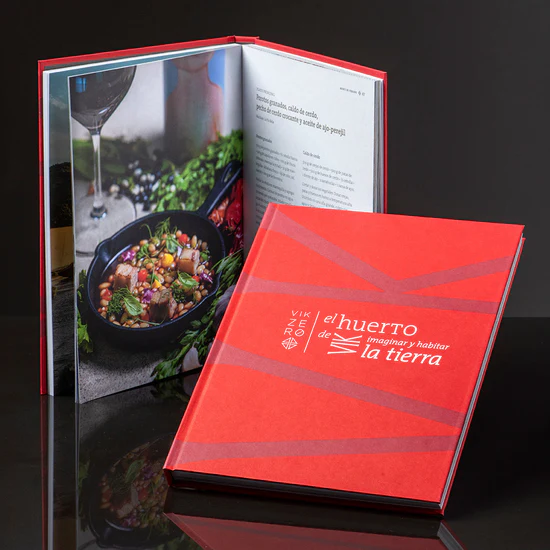
With El huerto de VIK, imaginar y habitar la tierra (The VIK Garden: Imagining and Inhabiting the Land), Viña VIK sets out in writing the gastronomic vision it has developed in Millahue, approaching cuisine as a practice built around the garden, seasonality, and dialogue with wine. The work offers an editorial perspective that transcends the traditional cookbook format and establishes itself as a record of the project's culinary work.
Throughout its pages, recipes made with seasonal products are presented, along with techniques that combine tradition and modernity, and pairing suggestions designed to complement the vineyard's wines. Rather than fixed recipes, the content outlines criteria and decisions that shape a cuisine defined by the origin of its ingredients.
From a regional perspective, the initiative was praised by Verónica Pardo Lago, Undersecretary of Tourism, who pointed out that "the fact that VIK has produced a book based on its own vineyard shows how important the region is, not only for producing wine, but also for thinking about gastronomy and the food pairings that accompany it."
Along the way, the publication shows how cuisine is conceived in spaces such as VIK Zero, the vineyard's agroecological restaurant, where dishes are created using ingredients grown and harvested in its own two-hectare garden. Seasonality, the use of organic products, and a predominantly plant-based cuisine define a way of working that is reflected in these pages.
The work also brings together artistic photography, stories from the culinary team, and reflections on Millahue's natural environment. The focus is on production processes and working with local biodiversity, showing how cuisine, wine, and landscape come together in a single practice.
One of the central themes of the book is respect for origins as the starting point for culinary work. "The book stems from a central idea: respect for origins. Understanding that ingredients, like wine, have a history and a territory behind them. Kitchens like VIK Zero exist based on this logic," says Cristian Vallejos.
This approach is also reflected in the project's everyday cuisine. Pablo Cáceres, executive chef at VIK Chile, explains that "it's not just about technique, but about understanding the tradition and process behind each product. Just as our wines express the character of the terroir, the ingredients we grow amplify that origin. When the two come together, a common language emerges that connects the land, wine, and cuisine."
From an editorial standpoint, El huerto de VIK also stands out for its materiality. The work was developed with Swiss binding, exposed spine, and visible stitching, a decision that reveals its internal structure and accompanies a sober graphic design consistent with the content.
The book is available at the VIK online store and also at the Viña VIK restaurants in Millahue. More information at: VIK Gastronomic Book-Vik Store