Chile is recognized worldwide as an exceptional location for solar energy development .
This offers a tremendous opportunity to continue developing our knowledge and position ourselves as a natural laboratory.
“In Santiago, Chile, we have more solar radiation than in the best location in Europe,” says José Miguel Cardemil, director of the Solar Energy Research Center (SERC Chile). The comparison takes on even greater significance when considering the Atacama Desert, where the highest levels of solar radiation on the planet are recorded.
Building on this potential, Cardemil argues that the challenge for Chile is not only to take advantage of this exceptional natural resource, but also to develop knowledge, technology, and solutions that will transform this advantage into a source of innovation, competitiveness, and sustainable growth. In this interview with Marca Chile, he analyzes the country’s position in the field of solar energy, the opportunities it opens up for various productive sectors, and the challenges that still need to be addressed.
You propose the slogan “Chile, a Solar Country” in this regard. How does the country rank internationally?
We propose the slogan “Chile, a Solar Country” because we have the highest levels of solar radiation on the planet. There is no other place in the world where solar radiation is more intense than in the Atacama Desert. No one doubts our capacity to produce copper or wine. Well, we have the greatest solar resource on the planet; we must believe in it, use it, and harness it to transform this resource into our primary source of energy.
When we began our work at SERC Chile and launched our first campaigns to measure solar radiation availability, we attended international conferences to present these results, and colleagues from around the world told us, “Your calculations are wrong,” and “There can’t be that much solar radiation in Chile.” Well, we weren’t wrong. The Atacama Desert is a global anomaly. Chile is recognized worldwide as an exceptional location for solar energy development. This offers a tremendous opportunity to continue advancing our knowledge, to drive technological development, and to position ourselves as a natural laboratory for studying technologies and advancing knowledge in solar science.
What specific advantages does this give us compared to other countries that are also investing in solar energy?
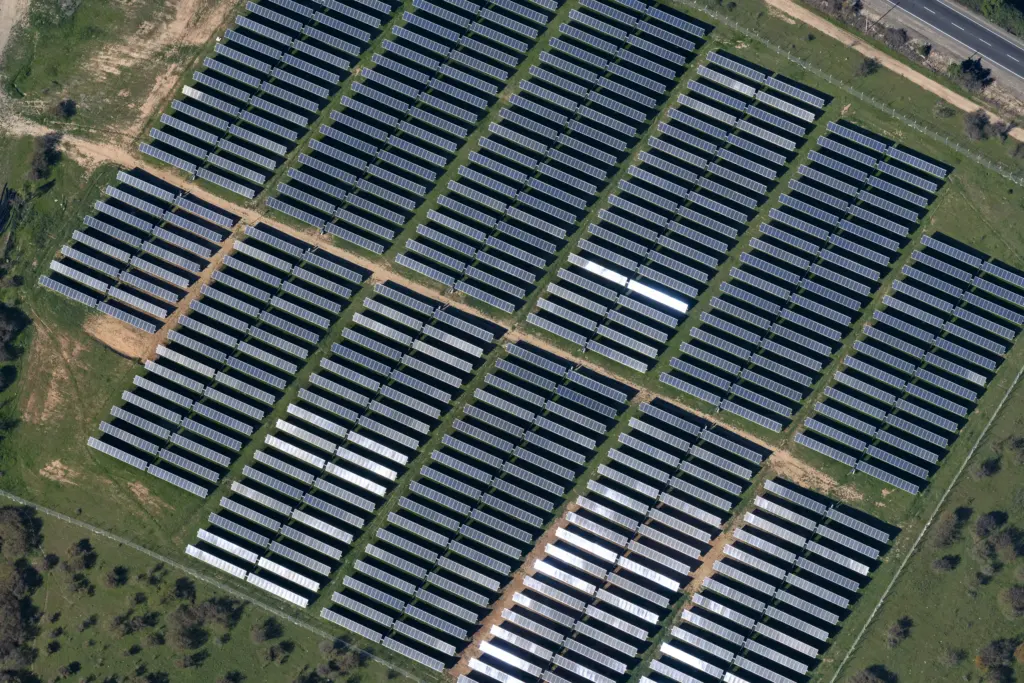
The development of solar energy worldwide has been led primarily by European countries. We have seen extensive deployment of solar energy in Germany and southern Spain. But our measurements show that in Chile, in the Atacama Desert, solar radiation levels are about 25% higher than those observed in the best location in Europe. This means we can develop systems that deliver the same output but are 25% smaller—and therefore 25% cheaper. As a result, the deployment of solar energy in Chile has become fully competitive in the market, without the need for subsidies, unlike what has happened in other parts of the world.
How can solar energy contribute to Chile's economic development and competitiveness?
Although the Atacama Desert offers the greatest availability of solar energy, it is distributed throughout the entire country. In fact, Santiago, Chile, receives more solar radiation than even the best location in Europe; therefore, this resource has the potential to enable new industries or decarbonize our existing ones. We can produce completely green copper or a completely carbon-neutral bottle of wine, just to give a few examples. Added to this is the vast number of job opportunities and all the economic activity associated with the development of solar energy systems. We must remember that solar energy is right there, shining down on us every day, and the challenge we face is to develop technologies that allow us to truly capture it, store it, and subsequently harness it. Beyond the technological challenge, there are also cultural challenges in how we adapt our energy consumption habits to facilitate the use of one of the best energy resources available to us—at least in Chile. The amount of solar radiation that strikes Chile’s territory in a single day exceeds the total energy the country consumes in a year. That is the potential it holds, and that is the challenge.
How can we use this resource to transform our consumption patterns?
The country is already known as the place with the highest solar radiation on the planet. We could say that we are the world champions of solar radiation, but the challenge is for us to become world champions of solar energy—of the use of this energy. To do that, we need to facilitate even greater penetration of these types of systems and devices, and we have to facilitate the integration of storage systems, among the many other technologies we need to develop. By doing so, we will not only become these world champions of solar energy, but along the way we can transform our various economic sectors. We can turn this resource into a driving force for our economy.
There is a significant challenge—namely, waste management and the environmental impact resulting from the use of solar technology. How do you address this?
Technological devices designed to harness solar energy generally have a useful life ranging from 15 to 20 years. The first solar power plants were installed in Chile 12 to 15 years ago. Therefore, in the coming years, we may see a large amount of waste or available material that will need to be processed, and there are two possible approaches to this: the first is recycling and attempting to recover valuable materials from these devices or technologies, and the second alternative is to continue using them, since devices are often discarded because they are no longer useful for productive purposes, but that does not mean they have stopped producing solar energy and could perfectly well continue to be used by social institutions, schools, or other organizations.