

What does it mean to you that a breakthrough like this - the first probiotic patented in Chile to prevent gastric cancer - should be born in our country?
I believe that, as a scientist, this is very significant. That such a breakthrough has been developed at the Universidad de Concepción reflects the work that many others are also doing in different areas of the country. There is science of great value being done in the regions and this achievement is a concrete example of that.
In addition, it seems relevant to me because I have been able to verify in international congresses that this development is already known abroad. This shows that it has crossed borders and that it is valued, not only in the scientific field, but also in the knowledge that reaches the new generations. For me, positioning Chile through scientific research and the creation of this probiotic is very important.
Gastric cancer is one of the most common cancers in Latin America and Asia. How do you think this development could contribute to Chilean and international public health?
It is important to note that gastric cancer is a multifactorial disease. There are different elements that influence its development: genetic factors, hereditary antecedents, infection by the Epstein-Barr virus and, especially, infection by Helicobacter pylori. All these factors can trigger, in one way or another, an inflammatory process at the gastric level.
According to scientific literature, the association between gastric cancer and Helicobacter pylori ranges from 65% to 90%. Globally, it is estimated that around 50 % of the population is infected with this bacterium. Its prevalence is particularly high in some Latin American countries - such as Chile, where it reaches approximately 70 % - and also in several Asian countries, such as Japan and China.
Reducing exposure and preventing infection on a large scale could mean a substantive advance for public health, not only in Chile, but also in many other countries with high prevalence.
Inspiring more women in science
As a researcher and professor, what challenges and opportunities do you see for more women to lead scientific advances in Chile?
Over time I have come to understand how important it can be to be a woman, to be from the region and to lead a line of research for so many years. At the beginning I did not realize it, but today I deeply appreciate the impact this has had, especially on other women and girls. Many tell me directly: that I am a reference, that I inspire them. Sometimes they want to take a photo with me, to have me sign something, and that excites me a lot.
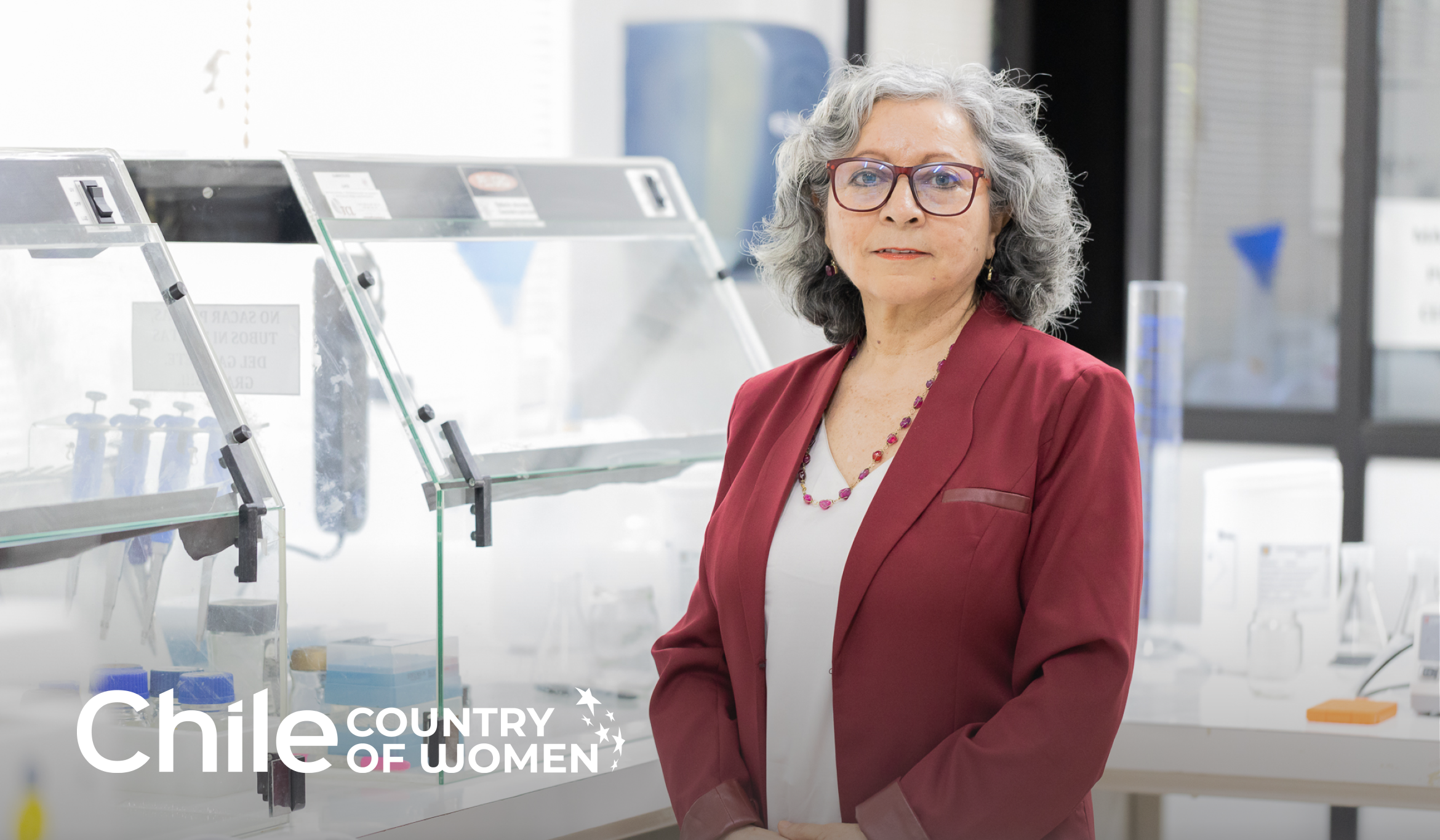
Recently, for example, a girl from the Fifth Region impersonated me for Science Day -with a white wig and glasses- and they sent me the photo. It was very touching, because it shows that this work is also inspiring new generations.
I always tell my students, especially women: we should not set limits for ourselves. We have so many capabilities. It is not about being better or worse than men, but different and complementary. Women tend to have a particular look, a sensitivity that allows us to see things from another angle. And that, in science, is an enormous contribution. Besides, we are very disciplined and persevering, and I believe that my own path is a reflection of that.
What is your vision for the future of science in Chile? How would you like Chile to be recognized in the world based on scientific developments such as this one?
I would love for Chile to be recognized as a scientific reference worldwide. I know that it is not easy, because to achieve this it requires a lot of resources, but I also believe that not everything depends solely on funding. There is talent, there is capacity and there is a very good scientific level in our country.
In fact, Chilean scientists are valued and recognized abroad, especially for the quality of their work. We may not be a country that produces a large amount of research, but the level of what is done is highly respected, especially in Latin America. This shows that we have solid foundations to project ourselves even further.
Science as Chile's gateway to the world
In the context of "Chile, we all do it", how do you think science contributes to the country's image abroad?
I believe that science plays a very important role in how we project Chile's image to the world. We all have the responsibility to contribute from our own fields, and I have always thought that if each person does his or her part well, the country - and even the world - would be different. In my case, my contribution is from academia: I teach at the university and I constantly strive to deliver the best, to update myself and to transmit to young people a real passion for science, without idealizing it, but showing its value.
Science also works as a mirror: it reflects how a country is developing. And in Chile there are many people, women and men, who are carrying out very interesting research and projects in different areas. Campaigns such as "Chile lo hacemos todos" can serve precisely to make this work visible and project it internationally.