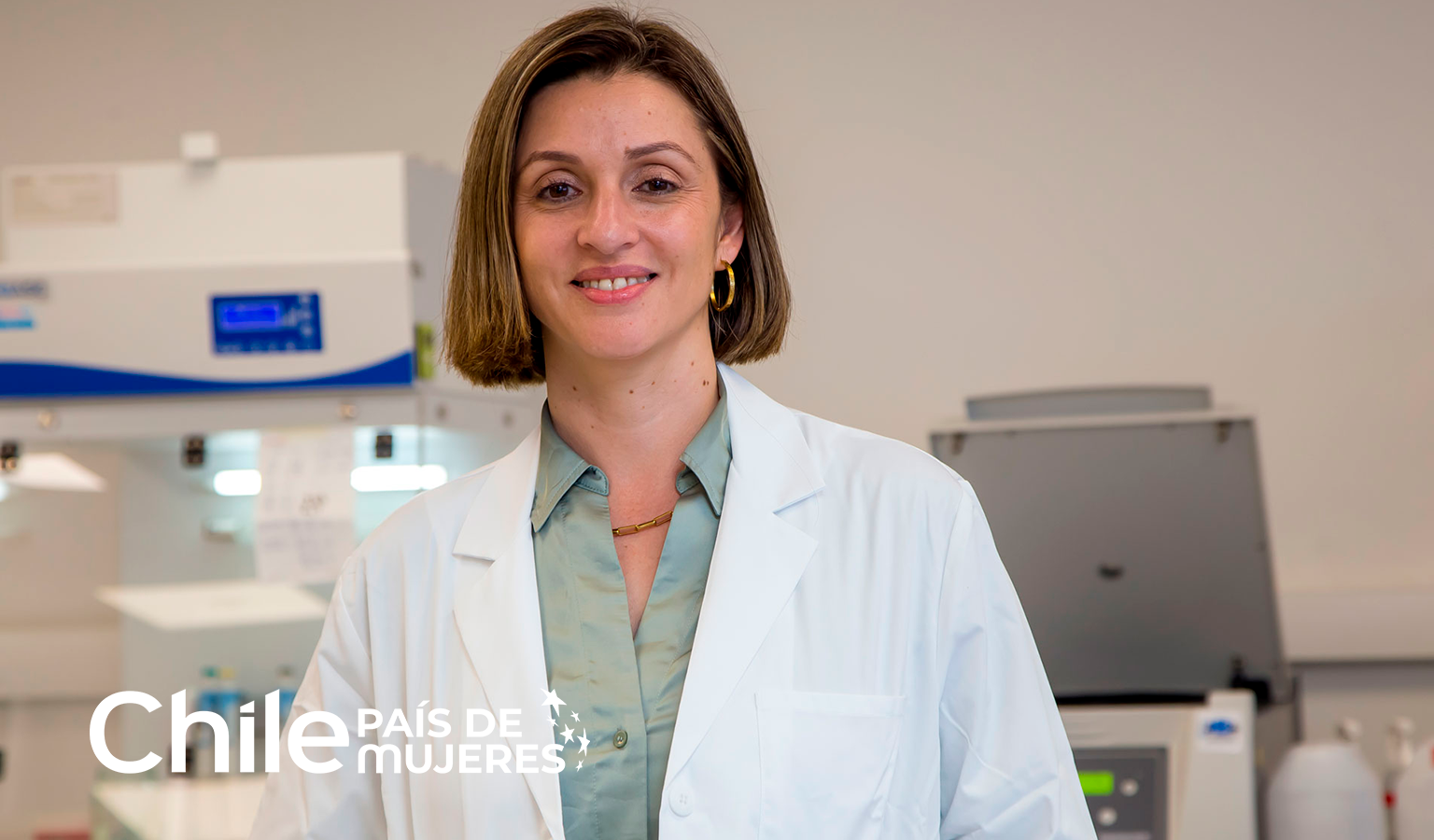


Denisse Bravo is a biochemist and PhD in Biochemistry from the University of Chile, university professor, director of several research projects and of the PhD in translational dentistry at the Andrés Bello University and, in addition, co-founder and scientific director of Pewman Innovation.
Carrying the Marca Chile seal allows us to show that Chile can generate frontier technologies based on excellent science and with global impact.
In the latter, together with his partner, José Manuel Pérez Donoso, they develop nanobiotechnological products to strengthen plant protection against frost damage and biofortifiers reinforced with microorganisms to maintain crop health. "Scientific knowledge becomes more meaningful when it can be transformed into value for society," he said.
The name Pewman means "to dream" in Mapudungun. How does that initial dream translate into the mission and purpose that guide Pewman Innovation today?
The name Pewman Innovation comes from a symbolic fusion between Mapudungun and English, and means "to dream in innovation". This concept reflects our essence: to transform scientific knowledge into technological solutions with real impact, from Chile to the world.
Our work focuses on two highly differentiating pillars: the use of microorganisms from extreme environments in Chile, such as Antarctica and the Atacama Desert, together with organic nanotechnology. From Chile, we drive innovation with global projection.
But this "dreaming in innovation" also has a very concrete root: to bring science closer to the field, to build bridges between the laboratory and the land, and to generate technologies that dialogue with Chilean agricultural tradition. At Pewman we believe that innovation makes sense when it improves people's lives and strengthens the ecosystems where production takes place.
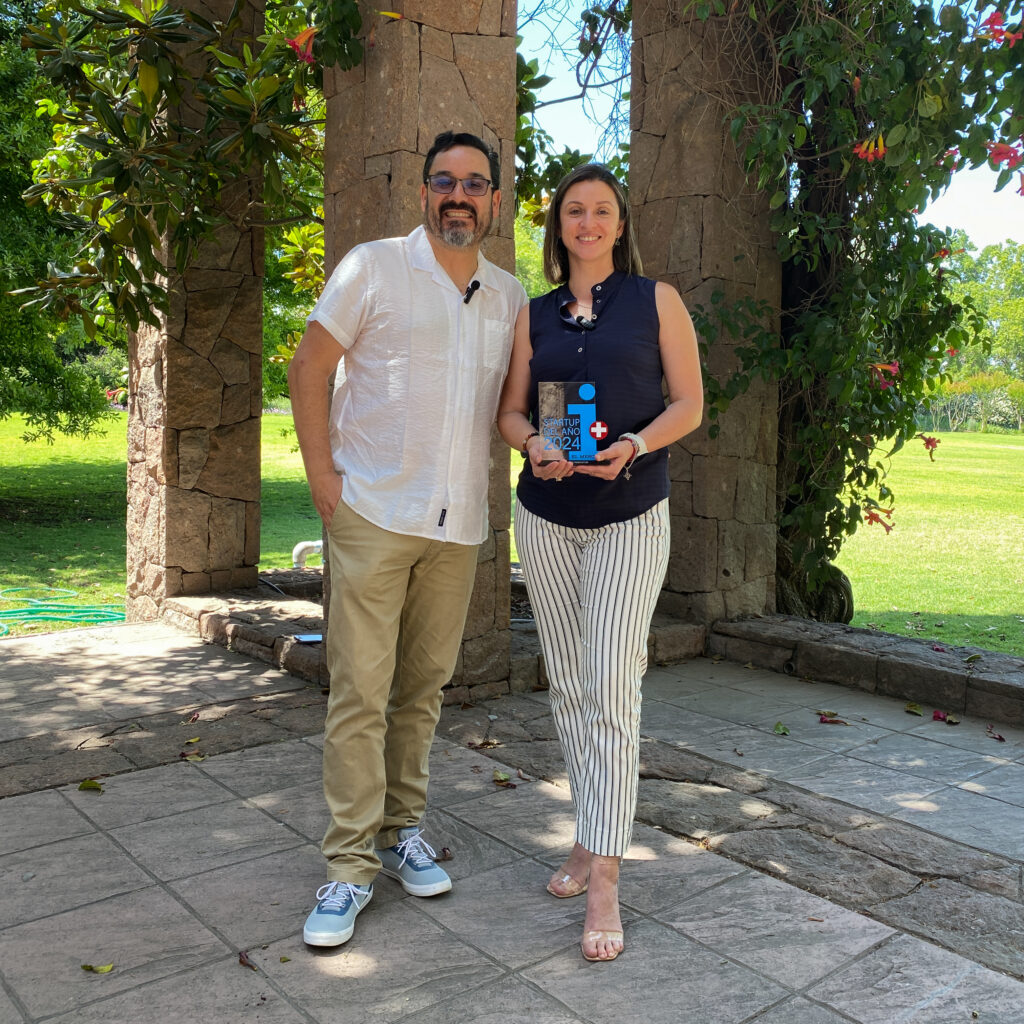
Agricultural biotechnology is a highly specialized and competitive field. What has it meant to you to lead a scientific company in this environment and how has it made your mark as a woman in the industry?
It has been a challenging but deeply rewarding journey. Leading a scientific company in agricultural biotechnology means moving between two worlds: the rigor of the laboratory and the speed demanded by the market. While my training and academic background prepared me solidly for the former, the agility and strategic vision of the latter have been a constant learning experience.
As a woman, I have sought that my leadership combines technical excellence with empathy and collaboration, understanding innovation as an act of care for people, the environment and science. I believe that my hallmark has been to demonstrate that science led by women can be versatile and transformative.
Pewman has positioned the concept of "natural intelligence" at the core of its value proposition. How does this approach contribute to the development of sustainable solutions and the company's competitiveness in international markets?
When we talk about natural intelligence, we refer to the biological wisdom contained in microorganisms and living systems that have survived millions of years in extreme conditions, where almost nothing can survive. At Pewman, we harness that potential to develop technologies that work in harmony with ecosystems, enhancing crop resilience without relying on aggressive chemical or highly polluting mechanical inputs.
The value of the Chile Brand
Pewman is part of the "Made By Chileans" branding program. What value does this recognition bring on the global stage and how do you consider that your work as an entrepreneur and scientist contributes to strengthening Chile's image in the world?
Carrying the Marca Chile seal is a source of great pride; it was one of the first processes we carried out in our company. It represents the recognition of a way of innovating that is born from the territory, with identity and purpose. It allows us to show that frontier technologies can be generated from Chile, based on excellent science and with global impact.
As an entrepreneur and scientist, I seek to contribute to the image of Chile as an innovative, resilient and sustainable country, where science and innovation are of high quality and can be used as tools to build food sovereignty and address climate change. In this sense, biotechnology applied to agriculture can become a strategic pillar of our international projection.
We understand that you are going through a process of expansion into markets such as Peru, Canada and France. What are the main opportunities you identify for technologies developed in Chile and what are the challenges involved in adapting to different international standards and regulations?
Chile is a unique natural laboratory. The extreme conditions of our territory allow us to innovate with microorganisms and technologies with a high adaptive value. This uniqueness opens up great opportunities in agricultural markets that seek biological solutions with high yields and low environmental impact.
The main challenge in the context of internationalization has been to adapt our technologies to the different international regulatory frameworks, which vary greatly from country to country and tend to advance more slowly than innovation (the same happens in Chile). This requires new validations in the field and a great technical and commercial management capacity on the part of the team.
An invitation to dream
Finally, what message would you give to the new generations of women who aspire to lead scientific and technological projects with global impact?
I would tell them to allow themselves to dream big, without fear and without setting limits to what they can achieve. Science and innovation need more diverse voices and more female leadership, capable of integrating empathy, collaboration and vision. Because no sustainability is possible without the vision and commitment of women.
The road will not always be easy, but each step we take opens space for others. Persevere, trust your knowledge and always remember that doing science is also a way to love and care for the world.