What began as an academic conversation eventually evolved into a technology venture with global reach. Agustina Mir and Constanza Gómez met while pursuing a master’s degree in the United States, and—without initially realizing that they were both Chilean—they began exchanging ideas about a shared concern: the growing impact of textile waste.
So, they began to devise a system that would allow these materials to be managed in a more circular and sustainable way. Their connection to Chile was key to that process, as the accumulation of textile waste in the north of the country had begun to attract the attention of the international media and highlight the need for new solutions.
The result of that work is Sortile, a company that develops technology capable of identifying and sorting textile fibers to facilitate their recycling. Today, five years later, the company operates in both Chile and the United States, while maintaining a strong connection to its roots.
“Being a Chilean woman is something I’m proud of because I know it’s connected to the textile industry I’m involved in. And being able to innovate and develop technology makes me happy,” says Agustina Mir.
How did Sortile get started?
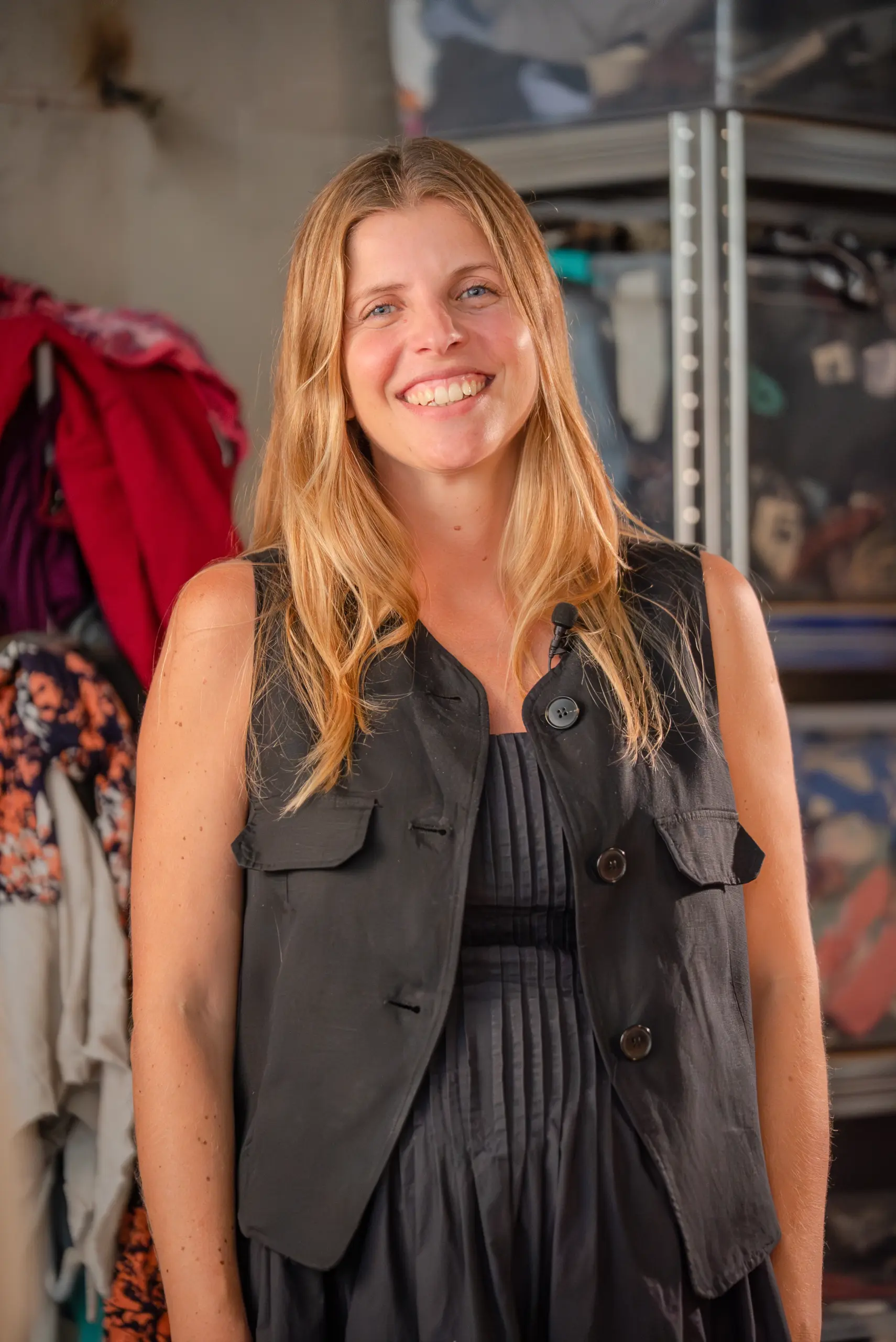
My business partner and I met in the United States in 2021 while we were both studying, and following a conversation in a class about textile issues, we got caught up in this cycle of researching the textile industry and textile waste, and trying to figure out how to generate value from this—which is raw material for a potential textile recycling process. We began our research and registered the company in the United States so we could develop the technology needed to identify textile materials and thus facilitate their separation. This technology enables the identification of textiles for recycling, as well as quality control, production, manufacturing, and more. That led us to assemble a technical team with whom we’ve developed our machine, our algorithms, and our software. What motivated us was that we saw the potential to make an impact.
It's a very innovative technology. How is it viewed around the world and in Chile?
In reality, it’s an entire recycling system that doesn’t exist. It’s being built on a global scale. It’s not that it doesn’t exist in Chile alone and that’s why we have the textile problem, but rather that globally there is no active textile recycling industry, no industry dedicated to the recovery of textiles. So that makes it even more interesting. We’re truly in an industry that’s being built right now, which is challenging. But it’s also very exciting because there are opportunities to innovate in many ways.
How would you connect your work to your identity as a woman?
In many ways. I’m involved in an industry centered on textile recycling, which is being driven globally by a strong female presence. The issues of sustainability and circularity have been championed by many women. I believe that this strong female presence has been a key factor in driving this new industry forward.
World-class innovation
As a Chilean woman who has been driving innovation from abroad, how do you stay connected to Chile and your identity?
I am Chilean and proud to be Chilean. My drive to innovate stems from that motivating force to solve problems and take risks, to tackle issues and make a positive impact. This is an issue that deeply affects Chile, especially in the northern region, in Iquique, with the landfill there. The second-hand industry in Chile is massive and historically very important, so I really connect with innovating in this area. Being a Chilean woman is something that makes me proud because I know it’s linked to this industry I’m involved in, and innovating and developing technology makes me happy.
Do you see any differences between innovative technology created by Chileans and that created in other parts of the world?
I don’t see any difference. We develop technology to identify textile materials, and we’re two Chilean women with a team made up entirely of Chileans. We operate between the U.S. and Chile, but we’re active in the global market. Our competitors are British, German, and Swedish companies that develop technologies for identifying textile materials, and we have clients who say, “I love your technology—it’s so much better than what those other guys offer.” Chile faces the problem of textile waste in the Atacama Desert, so when people find out we’re Chilean, it creates a connection because they say, “Oh, they know what they’re talking about.” It’s possible to create and innovate in Chile at a world-class level. The country has all the talent and people needed to create world-class technology and innovation.
What motivates you most about the work you're doing?
I’m excited to be building a company that will make a difference in making society a little better, but at the same time, I’m excited to be developing technology in my own country, Chile. We are two women who took the plunge to start this company, and maybe one day someone—a girl, another woman, or whoever—will see it and say, “Oh, it’s possible; you can think big; I can put my skills to work on these massive challenges.” Personally, I’m really passionate about finding a solution to this issue—one that I know will have a positive impact on society and that might serve as an example for someone else in the future, inspiring them to take on another massive challenge.