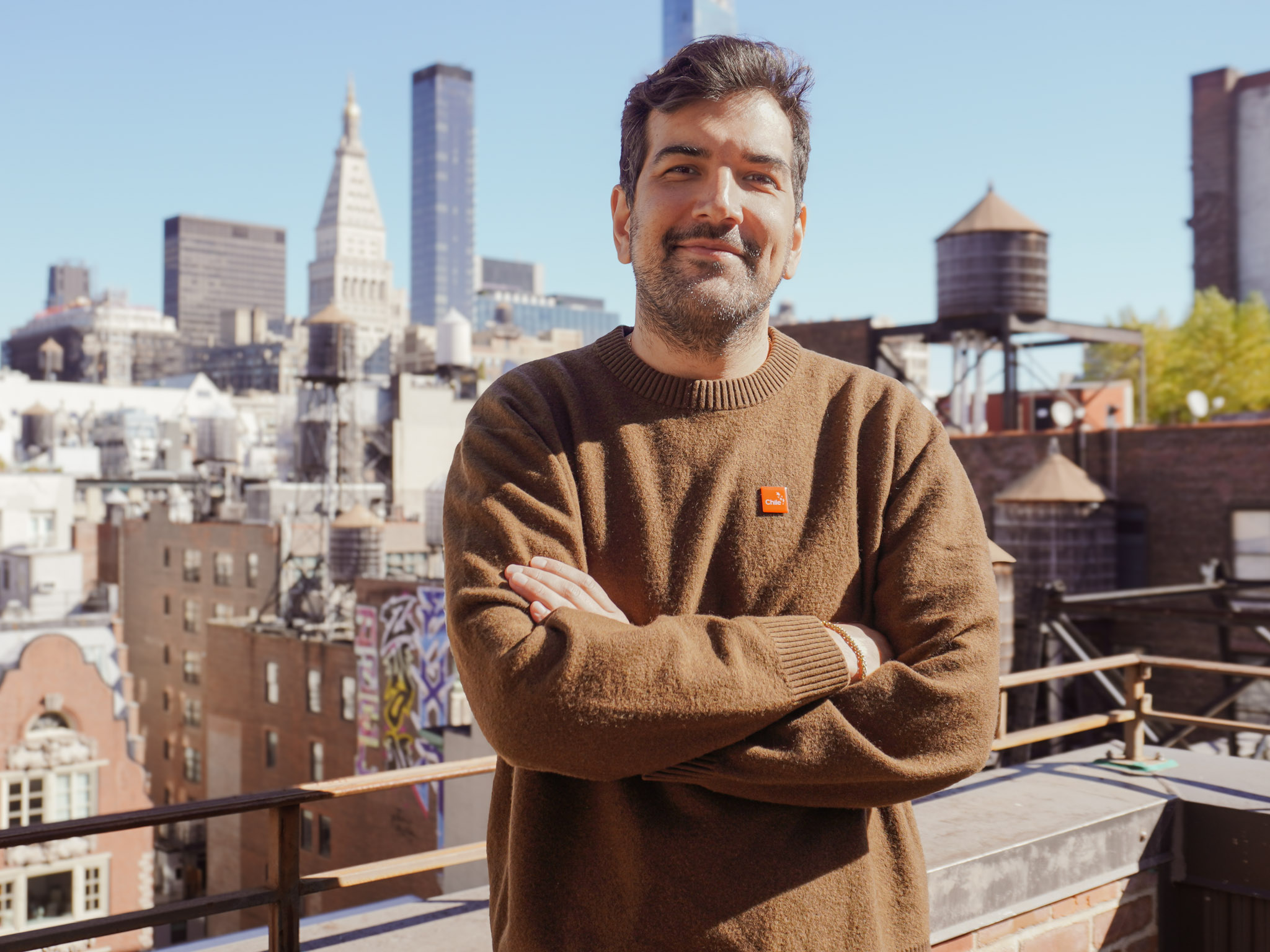


With a slow speech and a reflective tone, Alejandro Matamala is one of those leaders who project tranquility even under enormous responsibility. As Runway's Chief Design Officer, he is at the helm of design at one of the world's most influential companies in technologies for creating videos with generative artificial intelligence.
Chosen by TIME as one of the 100 most influential companies of 2023, Runway is used by millions of people and is valued at more than US$3 billion. And its impact goes beyond the numbers: Madonna used its tools in the graphics of her latest tour, Kanye West in one of his music videos, and part of the aesthetics of "Everything Everywhere All at Once," winner of the Oscar for Best Picture, also comes from its AI models.
Although the company was born in the United States, two of its three founders are Chilean, making it one of the few global unicorns with Chilean leadership. We spoke with Alejandro at Runway's offices in the heart of Manhattan.
Runway was born with the idea of bringing artificial intelligence closer to artists and designers. What was the initial challenge you wanted to solve and how did that vision evolve?
Runway was born with the challenge of making artificial intelligence capabilities more accessible to the creative industry: artists, designers, photographers. We wanted to reduce technical barriers and allow any creator to discover, use and adopt these tools within their creative process.
At the beginning it was a space for experimentation: to understand how to incorporate this technology into workflows and what possibilities it opened up. Over time, this exploration evolved into concrete uses in real production: short films, movies and advertising.
Each new technology also creates its own language and opens up new forms of storytelling. What new forms of expression do you think may emerge from AI?
We have always believed that artificial intelligence will generate new languages of communication. We like to draw a parallel with the invention of the camera: when it appeared, nobody imagined that cinema would emerge from it. Cinema was an unexpected consequence of that technology.
Something similar is happening with artificial intelligence. It is a tool with the potential to enable entirely new forms of visual storytelling. It has the ability to create personalized experiences, more immersive worlds and to allow us to see stories that until now did not exist or were impossible to produce with traditional tools.
Many in the industry see artificial intelligence as an opportunity, while others perceive it as a threat. What is your perspective on the relationship between artists, AI and the creative industry?
Runway was born in a deeply artistic context, at NYU Tisch School of the Arts, where I met my co-founders while we were studying how to integrate technological tools into creative processes. In part, it was also a personal need: to design the tools that we, as artists and creators, wanted to use in our own processes.
We have developed tools that allow us to carry out more ambitious projects -works that before could be very complex or costly to produce- but always with the creator at the center, as a creative partner. For us, artificial intelligence is a partner: a collaborator that expands possibilities, that opens paths, but does not replace the artist's vision or work.
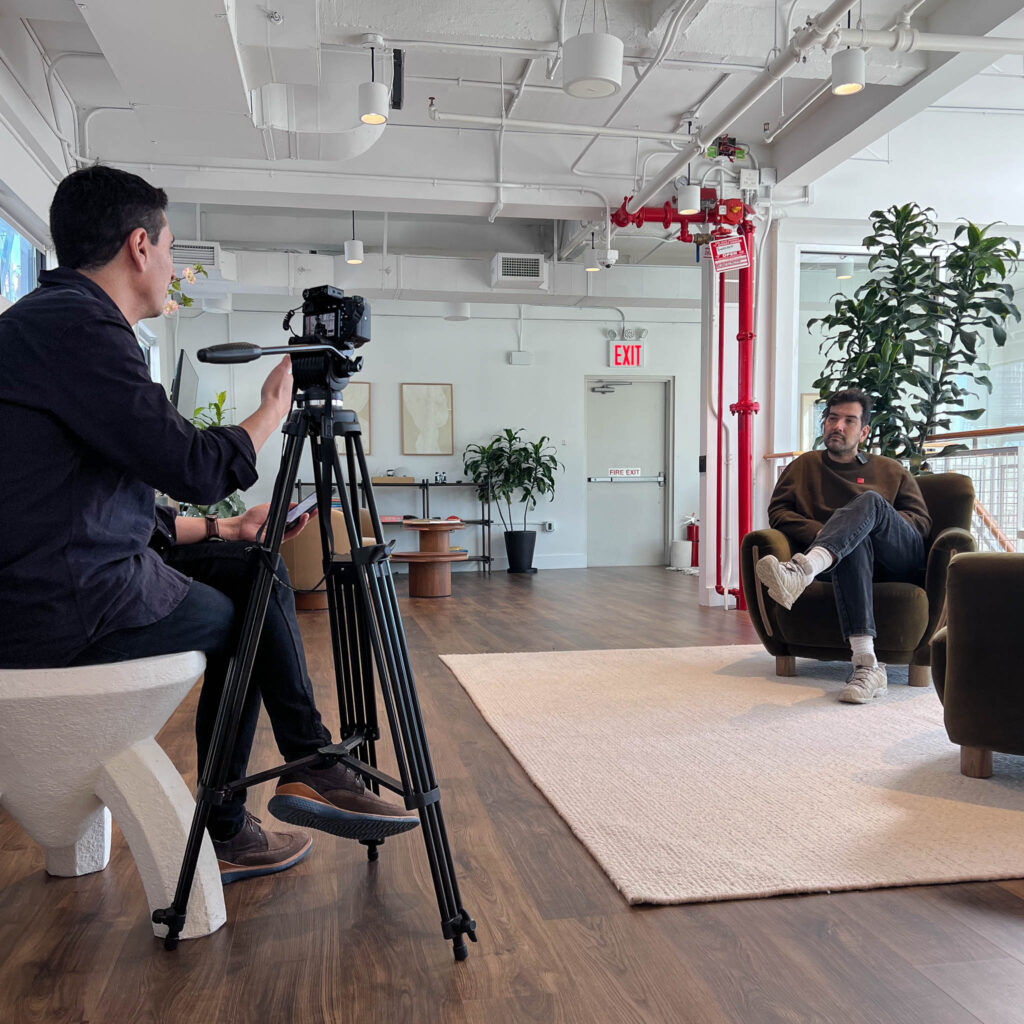
Speaking of the early days at NYU: what memories do you have of that time when you first started Runway? What elements of the company's original DNA are still important to you and do you want to maintain in the future?
We started very early in the current artificial intelligence boom. In those early years, our focus was on experimentation: getting things into the hands of users as early as possible to quickly learn what their intentions and needs were.
That mentality - test, iterate, learn and test again - remains an essential part of Runway's DNA. We are, in a way, an applied research company: we develop many internal experiments that are then transformed into products capable of solving real problems.
Another key aspect that we have maintained is the interdisciplinary nature of the team. We come from the art world and we want that sensitivity to remain at the heart of the company. We have grown by incorporating profiles that deeply understand creative processes: people with decades of experience in audiovisual, special effects and storytelling, working alongside artificial intelligence researchers who push the most advanced models.
As you've grown, you've become involved with big names in film and music, creators working at the highest level of the industry. What does it mean to you that Runway is also influencing popular culture?
We are very proud to see that projects created with our tools -videos, advertising pieces, music tours- are being nominated, awarded or developed by well-known artists. For us it is a validation that what we do brings concrete value to the creative process.
But beyond the awards or the big names, there is something we value even more: we have been able to support a very diverse community - from independent developers to established directors and artists from around the world - to create and share their ideas.
Are there any examples of Runway's use of technology that particularly impressed you, surprised you, or made you particularly proud?
Yes, there are several. Some are huge in scale, like Madonna's tour, which used our tools for part of its staging and graphics, or music videos from artists like A$AP Rocky.
But personally, what I am most proud of is what we have seen at our AIFF (Annual IA Film Festival). In three editions we went from receiving close to 300 submissions to more than 3,000 short films from all continents. The winners of the last editions are directors who made extraordinary works and then continued to develop those stories thanks to these tools. To see that growth, and to know that technology opened that door, is for me the most significant thing.
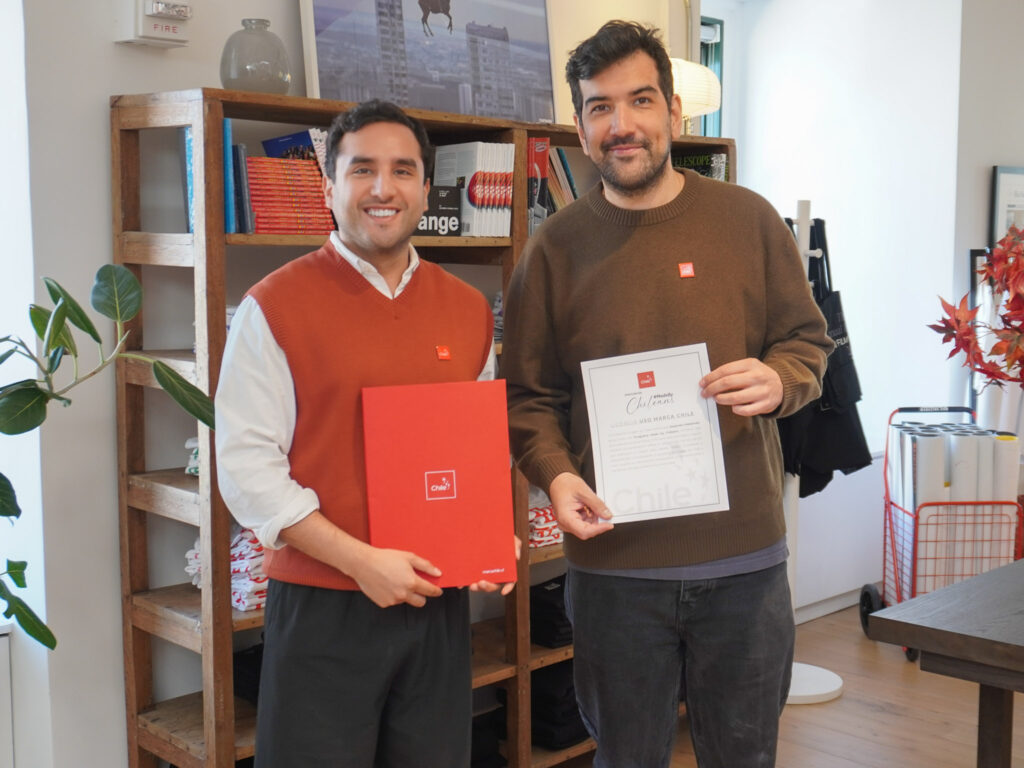
It is very striking that two Chileans are behind a leading company in an industry as competitive and cutting-edge as artificial intelligence. What does it mean to you that this project also has a Chilean seal?
We feel very proud to represent Chile through the work we do at Runway. We believe that in Chile there is technical and creative talent that is totally global, and that many times it just needs to go out into the world to show itself.
Being able to contribute, even if it is just a small grain of sand, from our role as Chileans in this industry is something that we deeply value and that motivates us to continue developing projects with impact.
I am happy to be able to collaborate and contribute to more Chilean talent going out into the world and demonstrating that we are capable of achieving great things at a global level.
Are there any lessons you would like to pass on to Chilean artists and entrepreneurs who are starting out in the creative world and are looking to combine technology and design?
My advice to founders, entrepreneurs and creatives is that we are living one of the best times to launch. We are facing not only a technological revolution, but also a cultural one, which will transform the way many things are created and produced. In that context, there are enormous opportunities to reimagine what already exists and explore new ideas using these emerging tools.
If someone is creating from Chile, my invitation is to think globally. This is a great moment to dare, experiment and show the world what we can do.