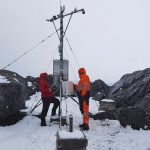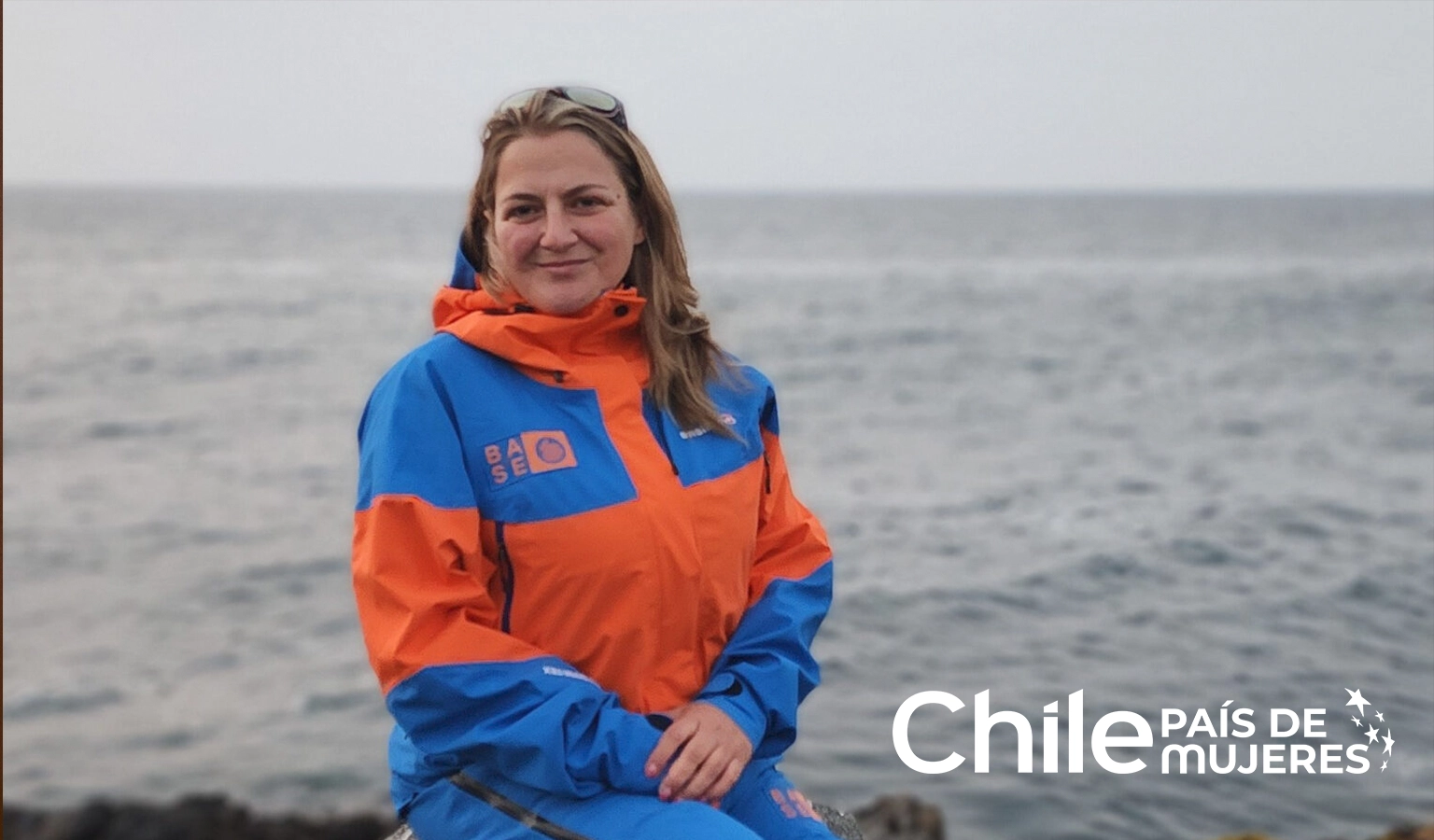


From the southernmost part of the planet, where the land merges with the ice and science becomes a way of life, I have discovered that Antarctica not only holds secrets of the past: it also cultivates talents of the future. As a microbiologist and polar researcher, I have had the privilege of studying microorganisms in extreme environments on the white continent. But the most transforming thing has been to see that, from this corner of the world, Chile has much to say to the planet.
Antarctica is more than a remote territory: it is a continent of talents of the future. This vision, promoted by the BASE Millennium Institute, invites us to rethink Antarctica not only from the natural sciences, but also from multiple disciplines: education, art, humanities, law, technology. Because in this "natural laboratory" not only life is studied: critical citizenship is formed, committed to the great challenges of our time.
One of the most notable examples is the Antarctic School Fair (FAE), organized by the Chilean Antarctic Institute (Instituto Antártico Chileno). Chilean Antarctic Institute (INACH). Every year, this fair invites students from all over the country -from Putre to Puerto Williams- to imagine, investigate and propose solutions from and for Antarctica. It is a space where young people from different social and geographic realities meet with frontier science, connect with researchers, and begin to dream of a future in which they will also be protagonists.
Chile, as a natural gateway to the white continent, has historically cultivated an Antarctic vocation that is today strongly consolidated. We see this not only in our scientific and educational programs, but also in the promotion of spaces for interdisciplinary and international reflection. At the end of July, the Los Ríos region will be the scene of a historic moment for Antarctic science and law: Valdivia will host three key events for contemporary polar thought -the X Latin American Congress of Antarctic Sciencethe XII Chilean Congress of Antarctic Research and the VII Chilean Conference on Antarctic Law.
These meetings will bring together scientists, academics, decision makers, students and representatives from across the region in a collective effort to strengthen the role of Antarctica in global knowledge. From Valdivia, a city with a river vocation and a southern outlook, Chile reaffirms its leadership in the promotion of a robust, inclusive and internationally responsible Antarctic science.
What we learn in the southern ice has implications for life on other planets, for understanding microbial resistance, for anticipating climate change, and for generating fairer and more sustainable public policies. Our gaze, born from this polar territory, is an essential part of global knowledge.
In a world facing multiple crises, Antarctica appears as a space of convergence: of knowledge, generations, disciplines and countries. And from Chile, we have the responsibility -and the privilege- of hosting this encounter. Because Antarctica is not the end of the world: it is its origin. And from here, the future is also written.