

By Gisselle Bracamonte, Executive Director of By More Chile
When we talk about foreign trade in Chile, we tend to focus on volumes, destination markets, or the trade balance. However, behind those figures lie business stories, strategic decisions, and leadership that are quietly transforming the country’s export ecosystem.
Today, 29.7% of companies in Chile that export are led by women, according to the 7th “Radiografía de la Mujer Exportadora 2025” report by Chile’s Undersecretariat for International Economic Relations. These companies also account for 42.6% of formal employment in the export sector and, on average, hire twice as many women as companies led by men.
This is a clear sign that international trade is no longer exclusively a male domain. Women are actively participating, leading companies, creating jobs, and building trade networks that connect Chile with the world.
ProChile’s recent 2025 Profile of Women-Led Businesses underscores this reality. In 2025, 805 women-led businesses were part of its user network, representing 14.5% of the total, reflecting sustained growth in recent years. However, despite this progress, barriers to export access still persist. While 255 women-led companies were exporting in 2024, that number dropped to 170 in 2025. This data reveals that, although more and more women are starting businesses and joining the export ecosystem, significant challenges remain in making the leap to international markets.
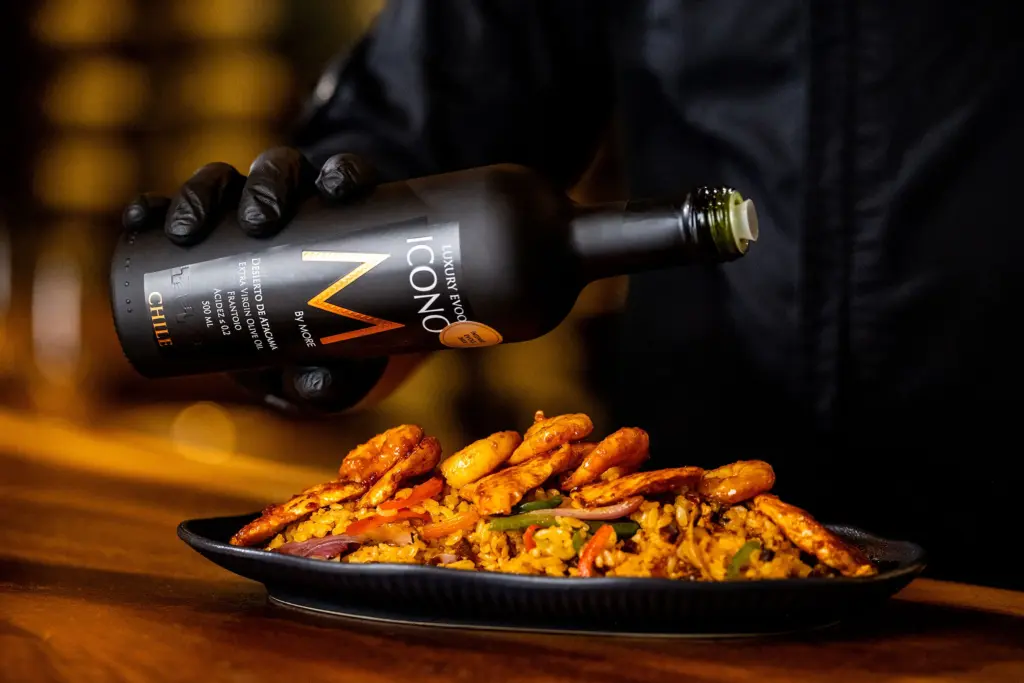
What is interesting is that, at the same time, the value of exports led by women increased. In 2025, shipments reached US$328 million, representing growth of nearly 14% compared to the previous year, and reaching 92 international markets.
This shows that women are not only exporting, but are also establishing themselves and growing in global markets. The main challenge today is not the ability to compete, but rather facilitating access to that first step in exporting. Undoubtedly, the goal must be for more women entrepreneurs to dare to bring their products and services to the world and, in doing so, position the Chile brand in new markets. Because exporting is not just about selling abroad. It involves building commercial networks, accessing financing, understanding international dynamics, and taking on business risks in highly competitive environments. These are significant challenges, but also enormous opportunities for companies seeking to grow.
And this is where the message is key: women are already proving that they can successfully lead in international trade.
Foreign trade is not the exclusive domain of a few sectors or a single type of leadership. An increasing number of companies led by women are bringing Chilean products and services to new markets, ranging from agribusiness to manufacturing, innovation, and services.
That is why, rather than focusing solely on current figures, the challenge lies in creating more opportunities for new women-led businesses to take the plunge and start exporting.
When more women export, it’s not just their businesses that grow. The business ecosystem is strengthened, the productive matrix is diversified, and Chile’s presence in international markets is expanded.
In this context, it is essential to advance public policies that not only encourage the creation of women-led businesses but also support their international commercial expansion. In this effort, institutions such as the Undersecretariat for International Economic Relations, Fundación Imagen de Chile, and ProChile play a key role, as they act as strategic facilitators to help more women entrepreneurs access markets that would otherwise be difficult to reach.
Ultimately, exporting is also an opportunity to lead, innovate, and grow. And more and more women in Chile are proving that this path is open to them as well.