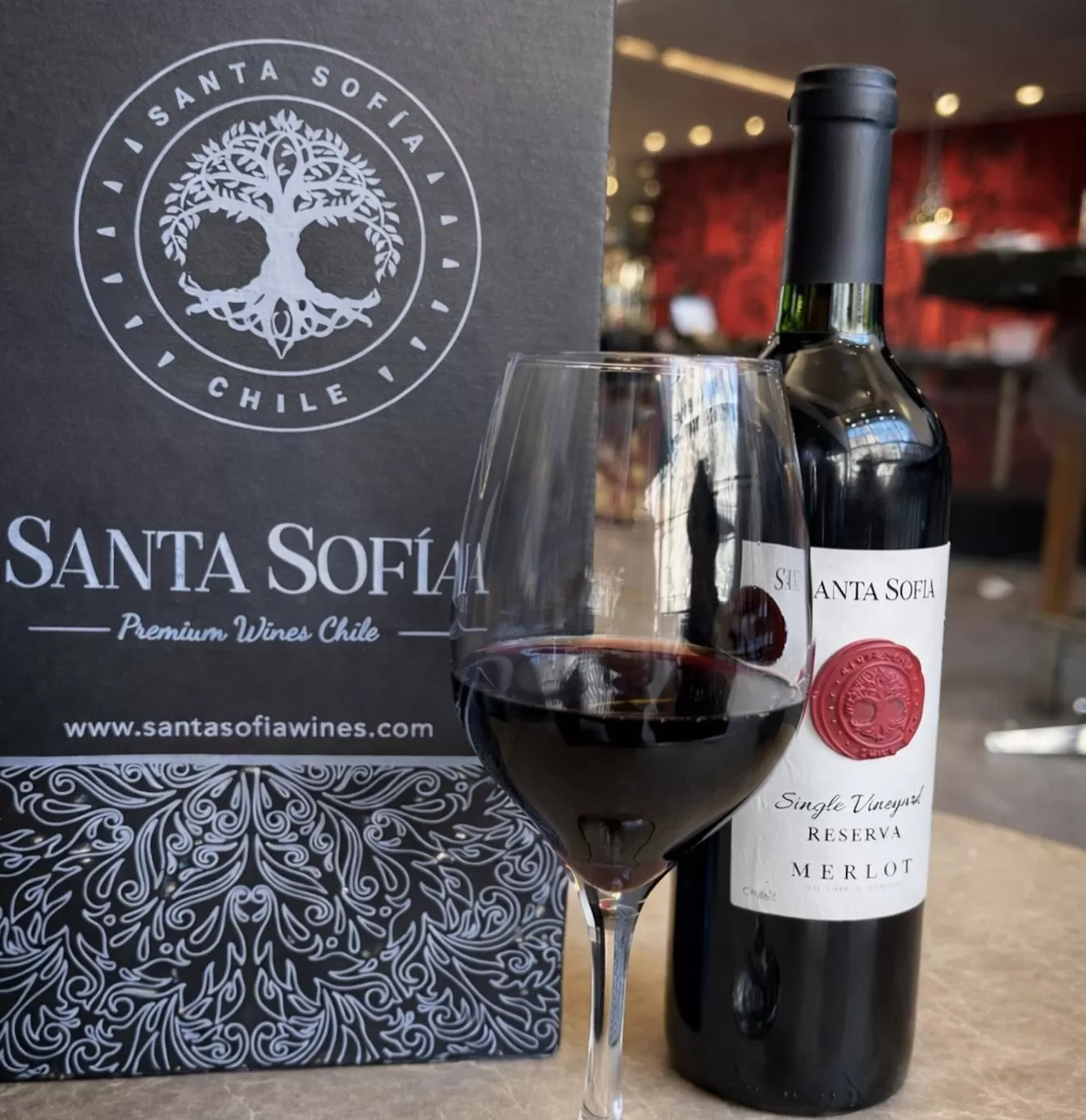
Behind this young winery, founded in 2020, is Fernando Bustos Latorre, who has developed the project from its inception and is now embarking on a new phase in a particularly challenging environment for the wine industry.
The world is drinking less wine. The International Organization of Vine and Wine (OIV) confirmed that global consumption declined again in 2025, continuing a trend shaped by economic and social changes and shifting consumer preferences.
Chile is no exception. A survey conducted by UC Davis Chile, UC Davis, and Arizona State University revealed that 77% of the respondents have experienced a sustained decline in demand over the past five years.
In the midst of that situation, Fernando decided not to slow down.
Since 2020, it has been developing Viña Santa Sofía, a small-scale production project that began by working with wines from the Maule region and is now expanding its focus to new territories, such as the Aconcagua Valley, while also incorporating new grape varieties.
“It’s clear that the industry is changing, and it would be a mistake to ignore that. But just because people are drinking less wine doesn’t mean there’s no longer any interest in it. We’re dealing with a different kind of consumer—one who opens fewer bottles and may be much more selective about which bottle to open,”says Fernando.
A Different Approach to Volume
Santa Sofía was deliberately established on a small scale and currently produces approximately 5,000 bottles per year.
The project began with the País grape variety, sourced from old vineyards in Cauquenes. Over time, the portfolio expanded to include Merlot, rosé, and sparkling wine, and the winery is currently preparing to launch a new variety.
“A small winery is unlikely to win a battle of volume, and I don’t think it should even try. We can produce small batches, experiment with different things, and build a much more direct relationship with the person who ultimately opens our bottle,”he explains.
First, captivate the eye; then, the palate
In an industry dominated by large wineries and established brands, Santa Sofía is carving out its niche as a small venture that needs to stand out in a different way.
“We know we’re small compared to a huge and highly competitive industry. That’s why we want a bottle of Santa Sofía to first catch the eye and spark curiosity, but what’s really important comes next: the wine has to win over the palate. A bottle can get people to choose us for the first time; the wine has to get them to choose us again,”explains Fernando.
And although the current situation presents challenges, our sights are set on the future.
“I’m not building Santa Sofía with just today in mind. I’m thinking about where I want the vineyard to be in five or ten years, and every decision we make is meant to bring us closer to that goal,”he concludes.