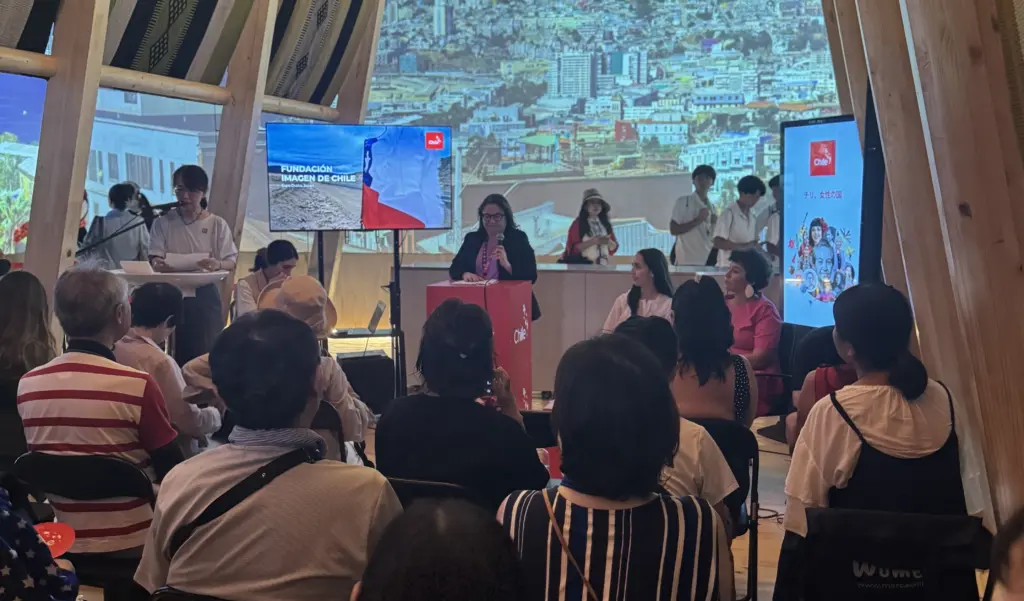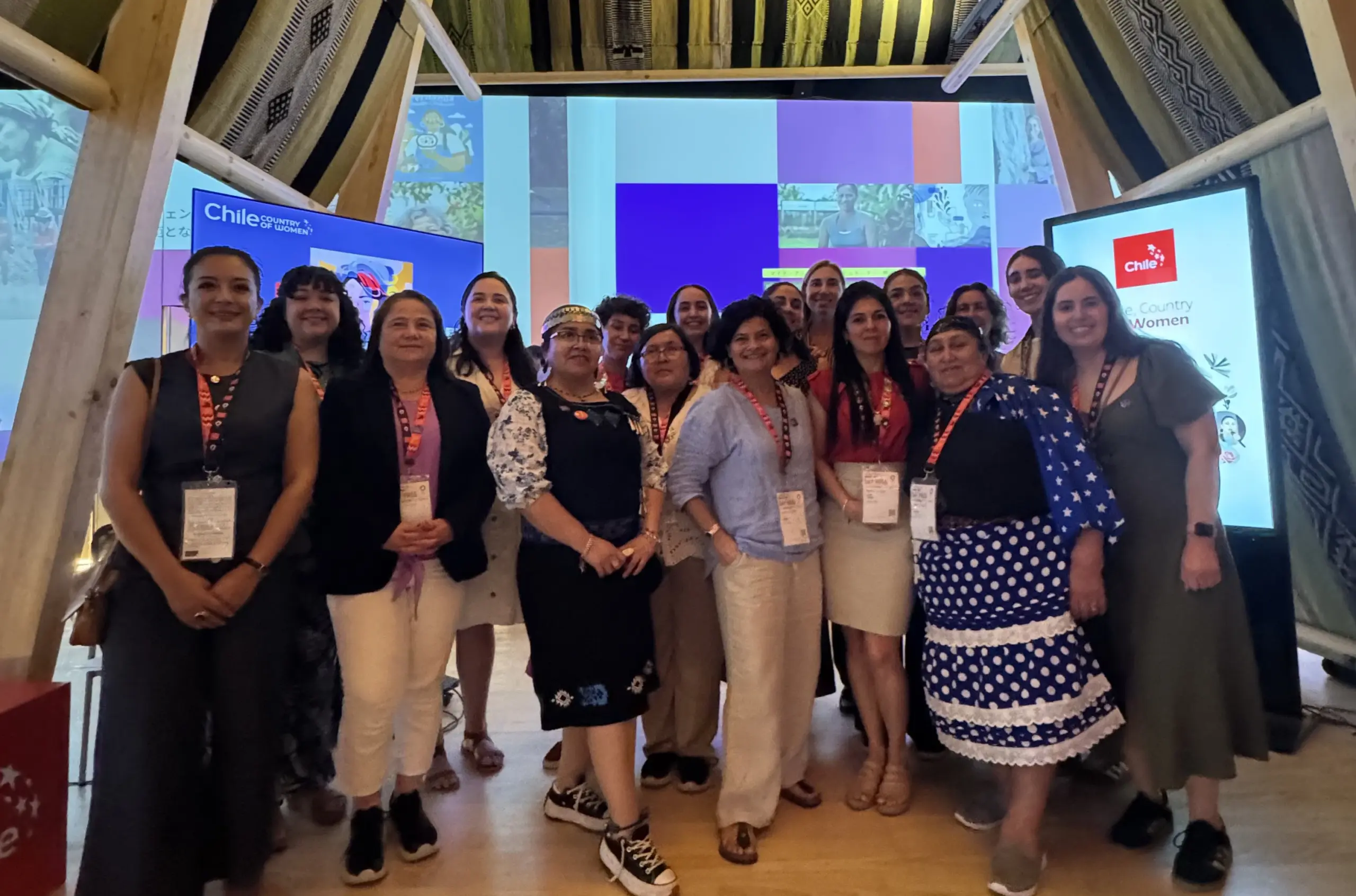


During the first days of September, Chile' s pavilion at Expo Osaka 2025 received an outstanding delegation of women who participated in the theme week: Chile, a country of women.
A sub-brand created by Imagen de Chile in 2024 with the objective of making visible and projecting, inside and outside the country, the stories, achievements and contributions of Chilean women in all areas of national development.
In order to show the Japanese public the female leadership that is setting standards in different areas of the country, a panel was held that brought together four prominent Chilean women: the young founder of Girls in Quantum, Elisa Torres; the writer and executive director of Fundación Plagio, Carmen García; the researcher of the Millennium Institute BASE, Claudia Maturana; and the microbiologist and entrepreneur Yisel Parada.
Each one shared her experience and vision, showing how, from different corners and disciplines, the women of Chile are pushing for transformations that transcend borders.
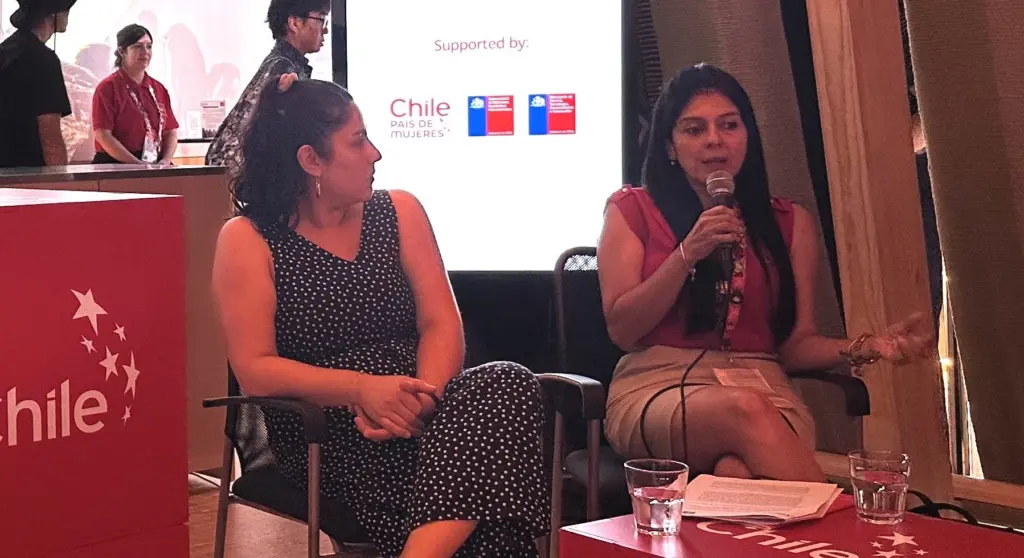
"I believe that Chile is a country that thanks to its women has developed and has reached places where perhaps otherwise it would not have been possible. It is very exciting to be representing Chile in the context of women's week, with such a diverse and enriching group," said Carmen García, executive director of Fundación Plagio, in charge of the Santiago in 100 words project.
For Elisa Torres, founder of Girls in Quantum—an organization that seeks to attract and support girls and students from around the world in the field of quantum computing—being in Japan presents a major challenge. “It’s been great to be here in Japan, to meet Chilean Chilean women with incredibly diverse backgrounds. But above all, I think there’s a great responsibility behind this: to represent more girls, to represent Girls in Quantum, and, most importantly, hopefully to bring more women into science, technology, engineering, and mathematics,” said Elisa Torres.
Yisel Parada, who has been living in the north of Chile for more than 20 years in the Tarapacá region, works as a microbiologist and studies spirulina microalgae. "From the Tarapacá region, we produce spirulina microalgae, which is considered today the oldest food of the future. For me to be in Osaka is a complete honor, to be able to share with other Chilean women and to know that we are that feminine force that from Chile we project for the whole world", says Parada.
Claudia Maturana, a biologist and researcher at the Millennium Institute for Biodiversity of Antarctic and Subantarctic Ecosystems (BASE), who spoke with the Japanese audience about her experience with motherhood and fieldwork, said she was “so honored. Meeting all these Chilean powerful in the delegation has opened my mind to my role in this mission and has taught me to respect and admire the work of others.”
The Chile Country of Women week at Expo Osaka not only showcased the talent and diversity of Chilean women's voices, but also generated a significant space for dialogue with the Japanese public. This was highlighted by the executive director of Imagen de Chile, María Teresa Saldías: "The conversation was really inspiring. There was a lot of interest from the Japanese public who also wanted to participate with questions and reflections. Chile, a country of women, left a deep impression and demonstrated that our women inspire, generate conversation and represent the best of our country in the world".