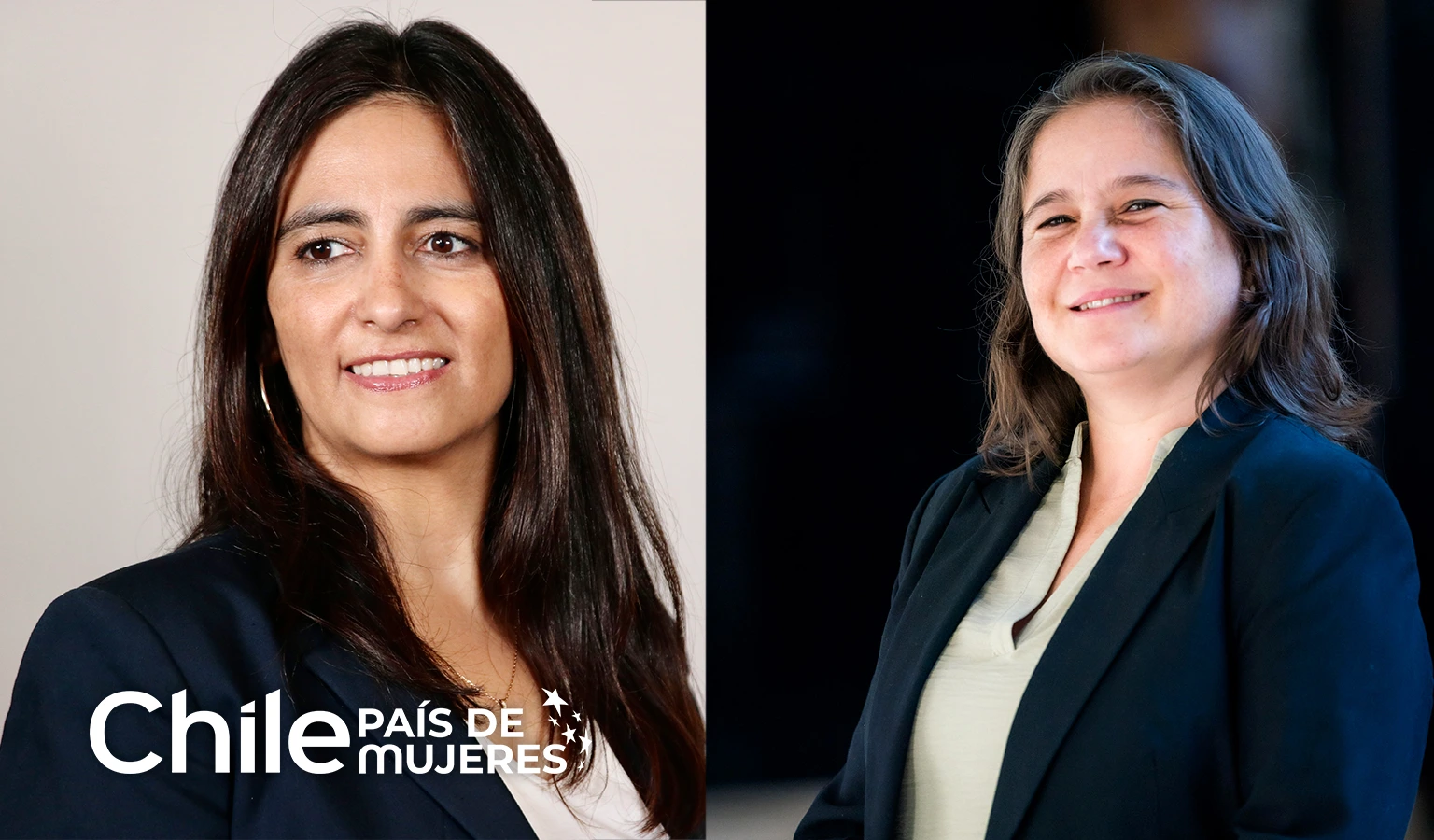


By Claudia Sanhueza, Undersecretary for International Economic Relations, and María Teresa Saldías, Executive Director of Imagen de Chile
From the south of the world, this country demonstrates that female leadership can be an engine of global change. Because Chile, a country of diversity, contrasts and extreme landscapes, affirms itself today as a country of women.
We begin a new patriotic month with news that fills us with pride: at Expo Osaka 2025, the Chilean pavilion dedicated a thematic week to highlighting the country's progress in gender equity, under the concept "Chile, a country of women". This is not just a slogan, but a way of recognizing that the history, present and future of our nation are marked by female protagonism.
The country has traveled a sustained path towards greater gender equality, with advances that today position it as an international benchmark. The Global Gender Gap Report 2025 ranked our country 22nd worldwide (five places higher than in 2023) and fourth in Latin America. This improvement is explained by long-term public policies, legislative reforms and a growing social awareness of the importance of equality.
Progress is visible in different areas. In recent decades, Chile has undergone a profound transformation in terms of gender equality. In the political sphere, the country went from having a ministerial cabinet composed exclusively of men to one of the highest representations of women in ministerial cabinets in the region, according to UN Women, and in Congress it advanced from barely 6% female representation in 1990 to a range close to 30% today. Female labor participation has also doubled, from around 30% in 1986 to 60% in 2023. Historically masculinized sectors, such as mining, also show progress: in 2014 only 7% of the workforce were women, a figure that grew to 22% by 2024. These changes have been accompanied by legislative milestones, such as the Parental Responsibility and Effective Payment of Child Support Law in 2022 and the recently approved More Women on Boards of Directors Law, consolidating a regulatory framework that supports gender equity in the country.
The presence of women in leadership positions -from international leaders to young researchers who today innovate in areas such as green hydrogen or biotechnology- is increasingly decisive. It is they who are transforming politics, science, economics and culture, demonstrating that equality is not only a principle of justice, but also of progress.
There is still a long way to go, no doubt. Gaps persist in labor participation, in science and technology, as well as in positions of high responsibility. But progress is undeniable and reflects a country that has decided to move forward with determination towards greater equality.
From the south of the world, this country demonstrates that women's leadership can be an engine of global change. Because Chile, a country of diversities, contrasts and extreme landscapes, affirms itself today as a country of women, with the conviction that in this strength lie our greatest challenges and also our greatest opportunities.