The Andes: the landscape that defines us
From the city to the mountain peaks, from photography to conservation, the Andes Mountains are an essential element in understanding who we are.
From the city to the mountain peaks, from photography to conservation, the Andes Mountains are an essential element in understanding who we are.
The Andes Mountains are always there. Their presence is a constant in daily life from the north all the way to Patagonia: they appear in childhood drawings, in the backdrop of cities, along the roads leading to the valleys, in the volcanoes, forests, glaciers, and peaks that have shaped the way we inhabit this land. But more than just a landscape, the Andes are also a way of seeing, of orienting ourselves, and of recognizing who we are.
For this episode of Voices from Chile, we’ve gathered four perspectives on the mountain range: those of Rodrigo Jordán, leader of the first South American expedition to reach the summit of Everest; Pablo Valenzuela, a photographer specializing in Chile’s natural and cultural heritage; Valentina Guzmán, a park ranger with the Parque Cordillera Association; and Paulo Cox, author of *The Long Book of the Chilean Andes*. Through the lens of mountaineering, photography, conservation, and territorial memory, their voices invite us to take a fresh look at the landscape that has always been right before our eyes.
Professor, founder of Vertical, and leader of the first South American expedition to reach the summit of Everest.
_ I was six or seven years old. My family moved into a house on Pedro de Valdivia Norte, right below San Cristóbal Hill, which became our backyard. That’s where I used to play cowboys and Indians or go on treasure hunts. It wasn’t mountaineering, but I really loved nature and the woods. Then my grandmother gave me a geography book, *The Earth and Its Resources*, and in it was a photo of Tenzing Norgay, the Sherpa guide who led the first successful ascent of Everest. And something stirred deep inside me. I said, “I want to do that.”
_ The central Andes mountain range is quite unique on the planet because it lies so close to cities, and the landscape changes dramatically in a very short time. It’s a truly special experience to go from the city to a mountain environment that’s quite hostile and rugged, with very little vegetation and wildlife, and a highly changeable climate—yet spectacularly colorful.
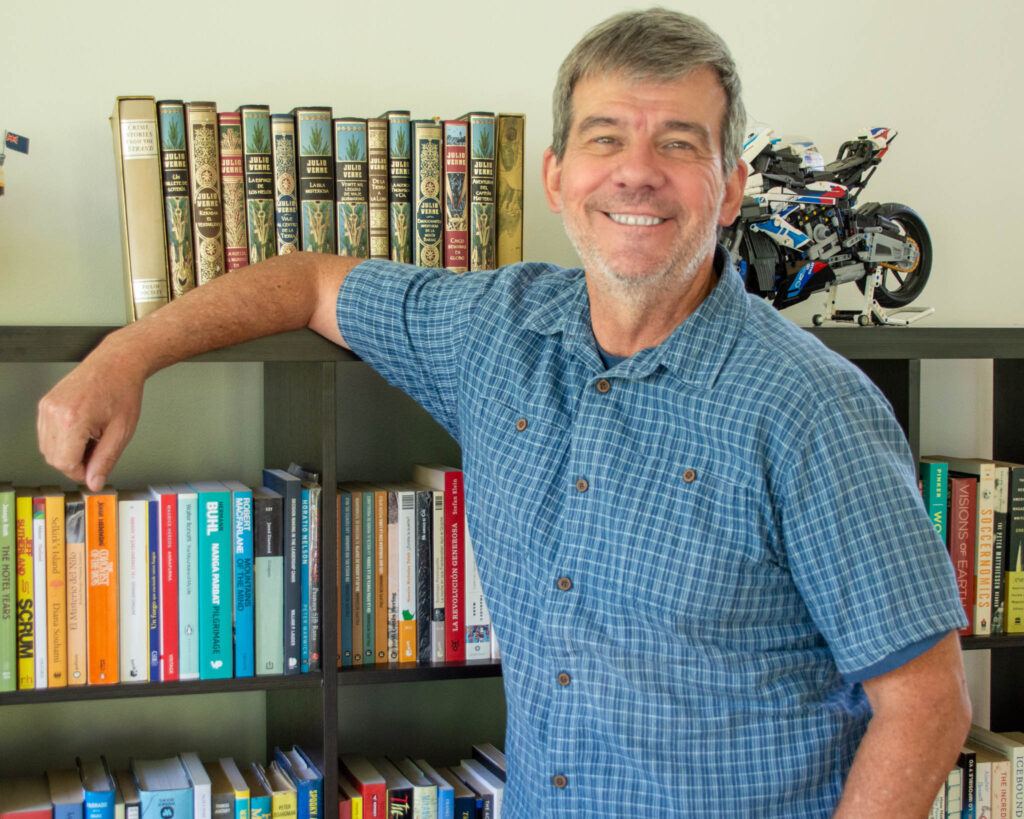
_ The mountain range acts as a barrier, effectively turning Chile into a sort of island. Our culture is more isolated than that of other countries on the continent. Peru, Ecuador, and Colombia are more similar to each other than they are to us, you know? And I don’t mean to say we’re better or worse. We’re just different.
_ Going to the mountains is a kind of retreat: you find yourself, and what truly matters. It’s also a spectacular classroom—for history, geology, geomorphology, and nature, but also for social skills. When you’re tired, your companion offers you a drink or a peach; you help them, you lend a hand. The mountains make us all equal, regardless of your family background, financial situation, social status, or education. It doesn’t matter if you’re a millionaire or a union member: up there, you realize that we’re all pretty much the same.
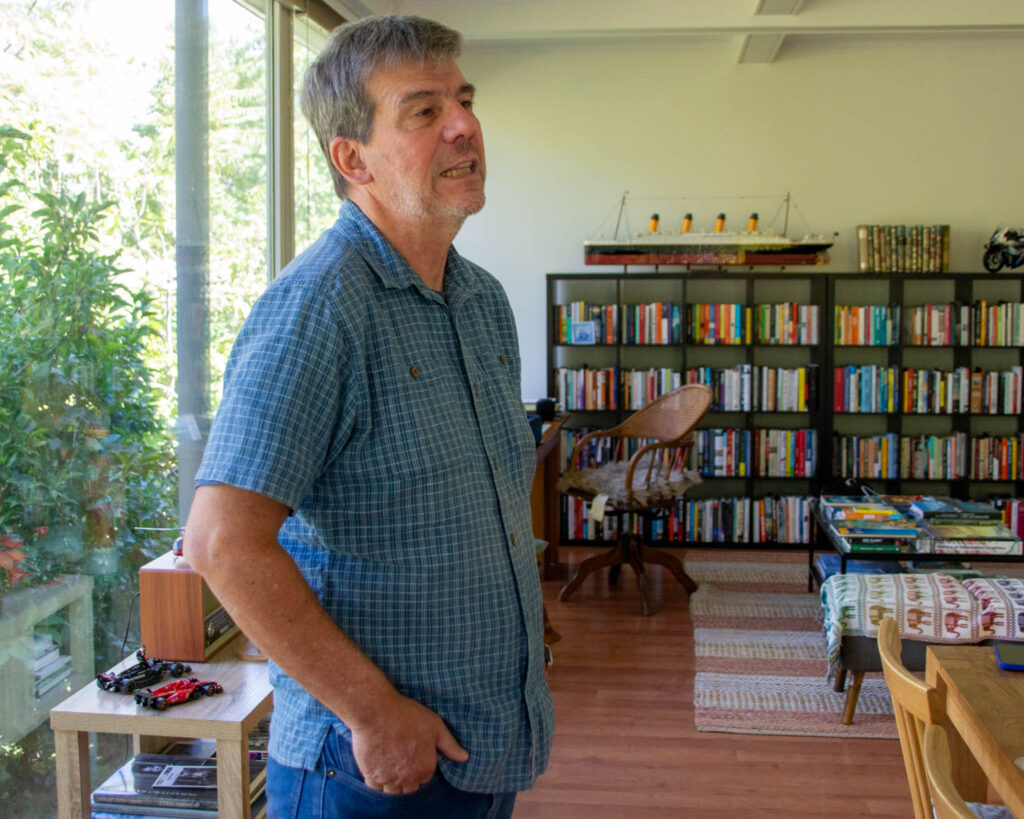
_ Until, I don’t know, 15 or 20 years ago, parks like Aguas de Ramón didn’t exist. It was closed off; you had to climb over a fence to get in. Today it’s a very popular spot; it’s packed on Sundays. People go there to take walks with friends or family. I see grandparents with their grandchildren. It’s a really enjoyable, enriching experience of the outdoors, because it gets you away from your phones, out of the city, and connects you with nature and with others.
_ If I had to tell a foreigner—and I have many—what the best thing about Chile is, I’d say the Andes. They’re truly impressed. Going to a place like that, so close to Santiago, is a one-of-a-kind experience.
_ My favorite Chilean song is " Canción a Magdalena" by Julio Zegers.
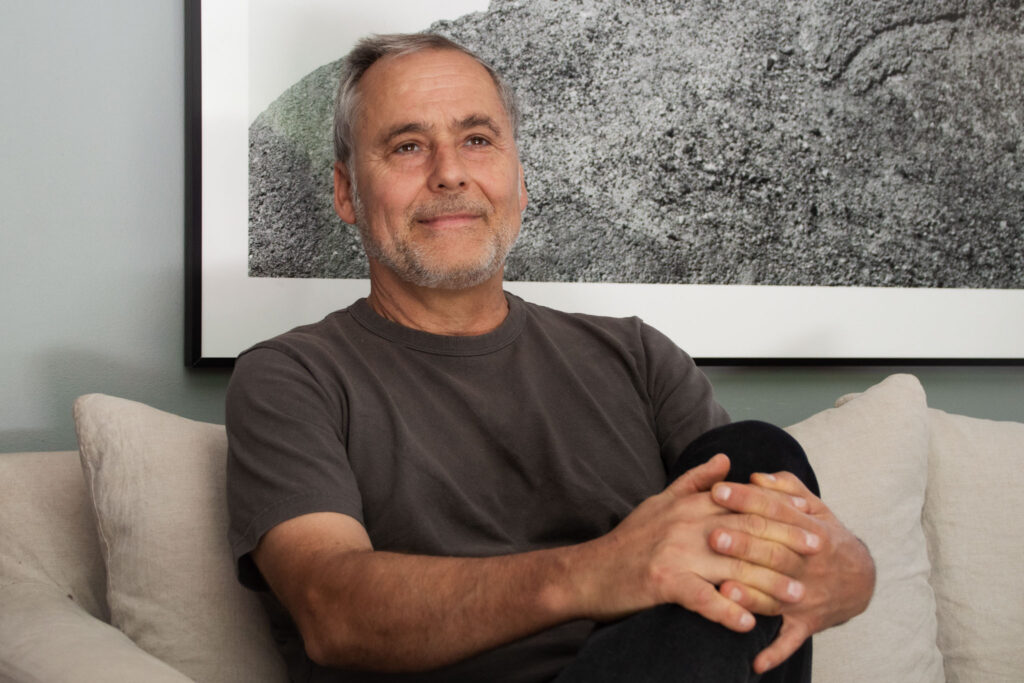
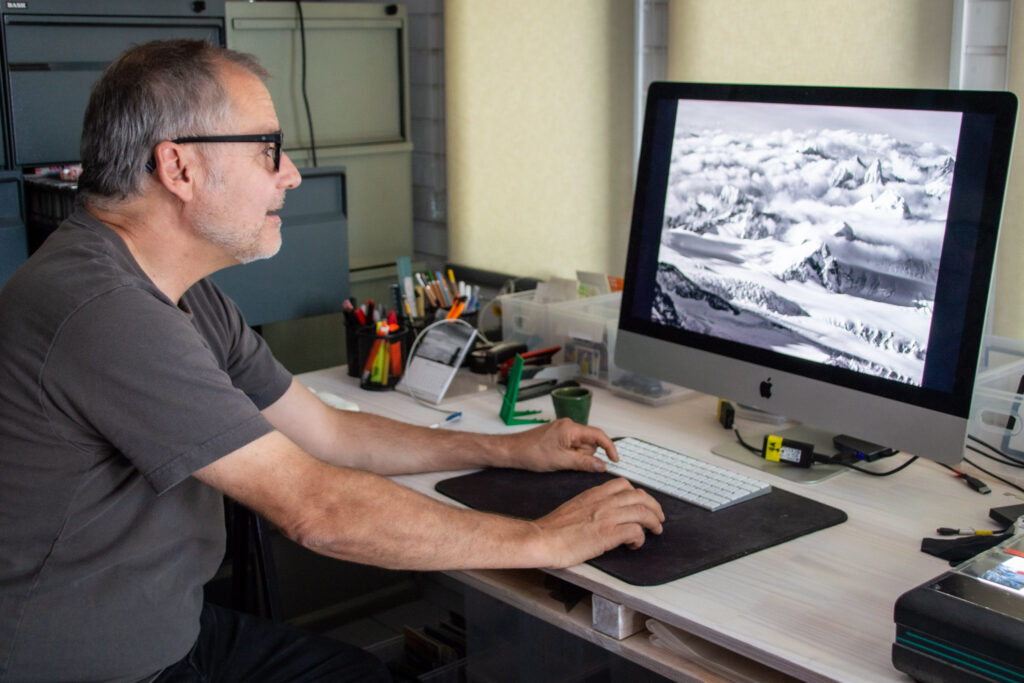
A photographer specializing in Chile's natural and cultural heritage for over 30 years.
_ The Andes Mountains left a lasting impression on me from a very young age. By the time I was 12 or 13, I was already climbing hills, and thanks to that connection I felt with the mountains, I decided to become a photographer. At first, my goal was to reach the summit; later, that goal shifted to taking photographs.
_ The mountains aren't just a place that teaches you to observe the landscape; they're also a place that offers a well-rounded education in life. They teach you to know yourself, to appreciate the simple things, and to understand that up here in the mountains, we're all equal. We all face the same problems and the same challenges.
_ The mountain range is very challenging for photography because of its harsh, unforgiving climate, which forces you to walk slowly and not rush. In photography, it’s important to fight that sense of urgency, because it requires observation, composition, and time. The mountains teach you to be patient.
_ To understand Chile’s geography, one must view it not only as a very long and narrow country, but also as an oasis within South America. The more than 4,000 kilometers of the Andes mountain range that run through Chile shape our landscape. We have high volcanoes in the north, a central region with rugged mountain ranges, then a forested mountain range in the south, all the way to Patagonia, where it practically plunges into the sea. Thus, the Andes in Chile consist of several mountain ranges, but they share a common feature: they are always very close to the valleys and the sea.
_ In recent years, there has been a dramatic increase in the number of people visiting the mountains, hiking, or trekking. You see it in the national parks—most of which are located in the mountains—all across Chile. Back in the late 1980s, I went to Torres del Paine and camped there with just a friend and a Scottish guy—no one else. Today, if you come down from Base Torres, you might run into 300 people.
_ I always say: in Chile, there’s no place from which you can’t see a hill. When you travel or live abroad, you miss those mountains that are always there.
_ My favorite Chilean song is “A mi ciudad” by Santiago del Nuevo Extremo.
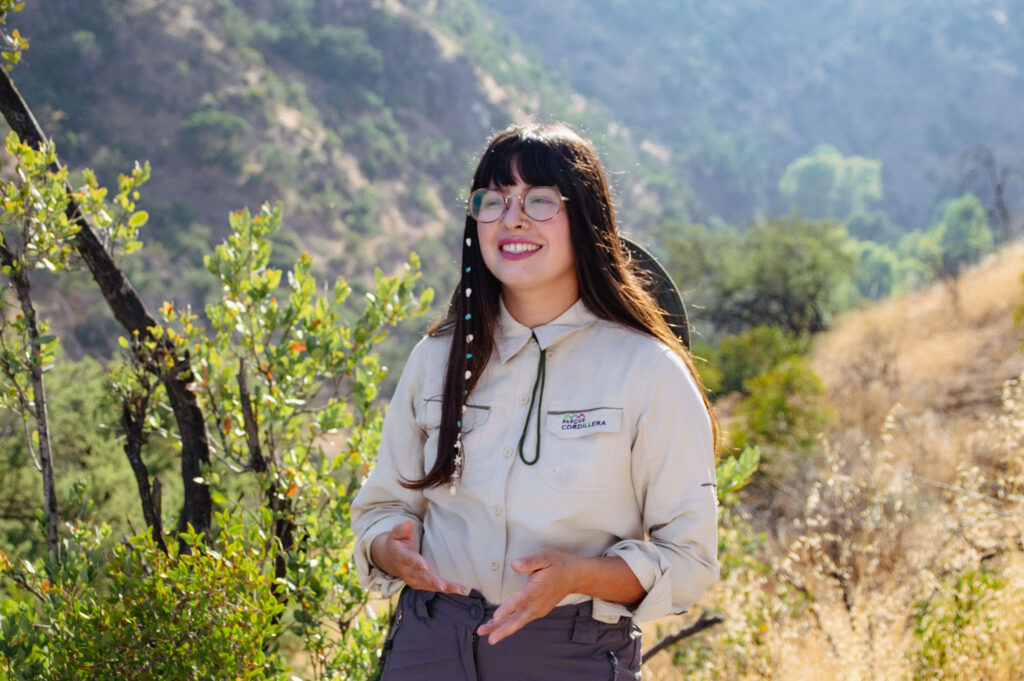
Park ranger with the Cordillera Park Association.
_ Working in the mountains every day is always a unique experience. We spot birds—species we haven’t seen in a long time that are now reappearing. That’s one of the things that fulfills me the most: every day is a new encounter with nature.
_ Recently, at La Plaza Sur Park, we were doing maintenance work in a reforestation area when we came across a family of yacas, a species of marsupial endemic to Chile. It was a very exciting and unusual encounter, because they appeared in the foothills, whereas they are usually found further up in the mountains.
_ The mountain range is one thing by day and quite another by night. At dusk, everything changes: different species appear, and a whole new world opens up. I’m particularly fascinated by spotting nocturnal birds, like owls, which aren’t seen during the day.
_ I think having more female park rangers has been a huge asset. We bring a different perspective, especially when it comes to welcoming visitors and conveying the importance of staying safe in the mountains. We’re thorough and approachable, and that allows us to connect with the public in a unique way.
_ Foreign visitors are truly impressed by the beauty of the sclerophyllous forest that we protect through the Parque Cordillera Association. They are struck by the well-maintained trails, the signage, the visitor center, and the care taken to preserve this natural conservation area. Many come from Europe—including the Swiss Alps—and greatly appreciate our mountain culture.
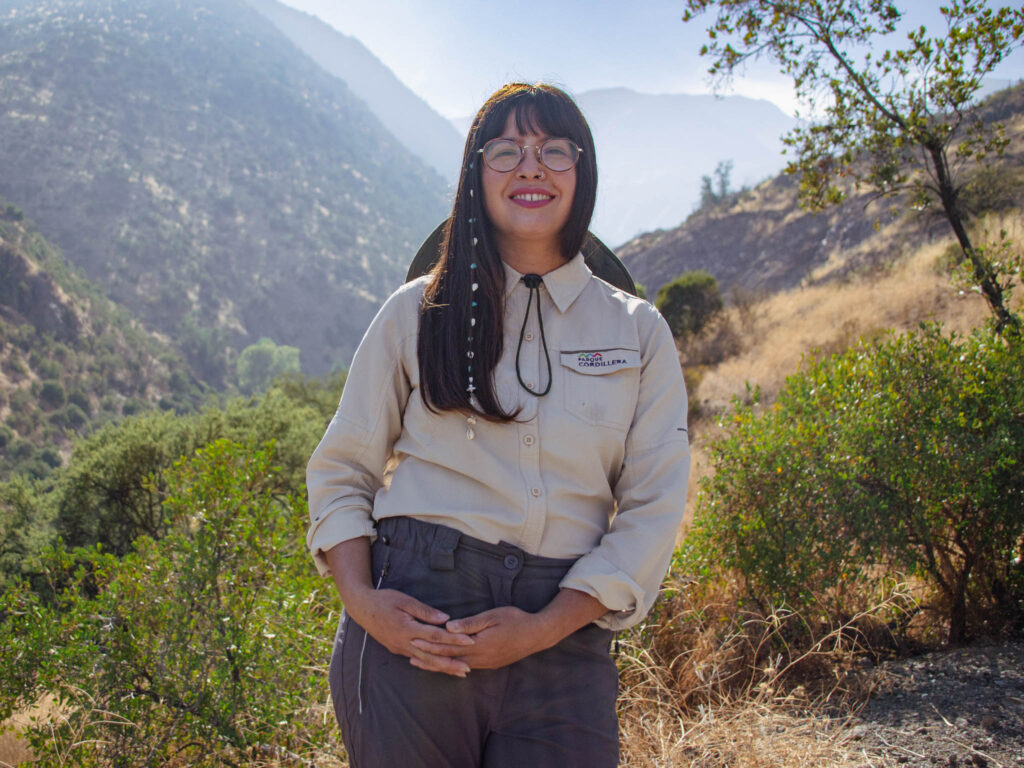
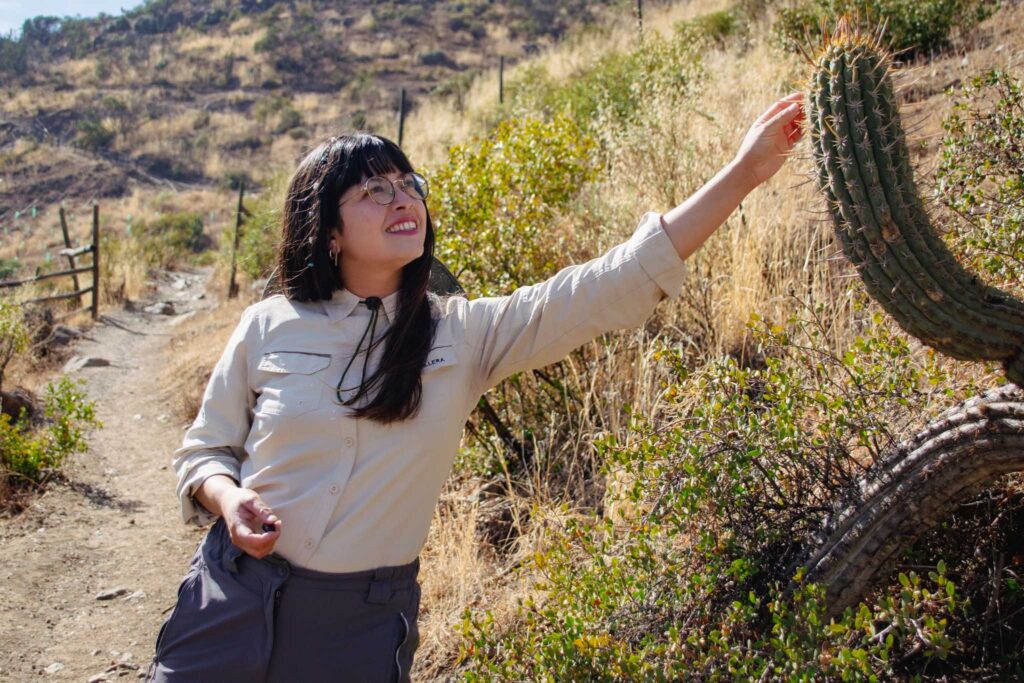
_ The mountain range is a very important natural heritage site for Chile. It sets us apart from other cultures, serves as a point of reference, and, in the Santiago basin, also gives us a sense of security. I feel it’s a key element in defining who we are and in making us proud of where we come from.
_ My favorite Chilean song is " La poderosa muerte" by Los Jaivas.
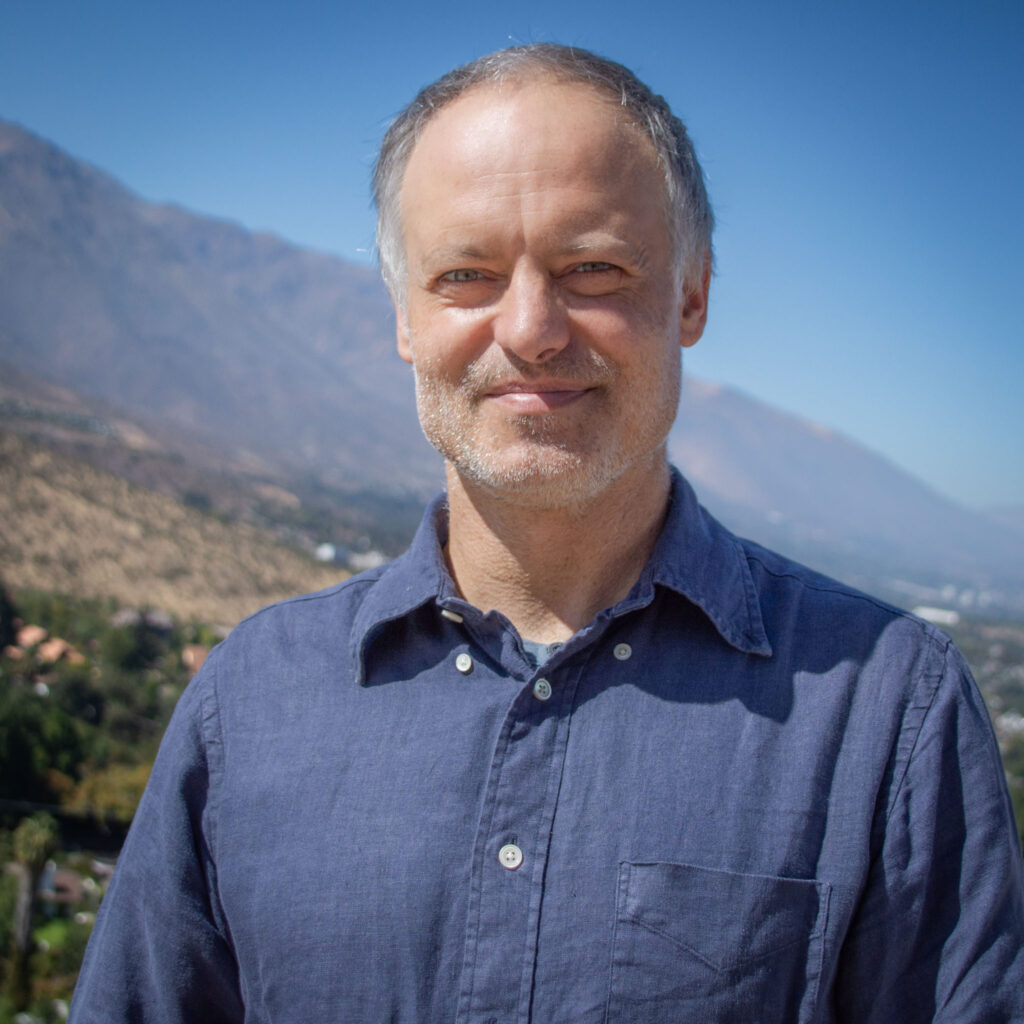
Economist, founder of the Andean Documentation Geographical Society, and author of *The Long Book of the Chilean Andes*.
_ Although I was born in Santiago, I moved to England with my parents when I was very young—a country without mountains. My first exposure to the Chilean mountain range came from London, through the stories and photos my mother showed me. She told me about Chile, about the longest mountain range in the world, about immense mountains, and about condors soaring over the Andes. That made a big impression on me.
_ Then, David Attenborough released the documentary *The Flight of the Condor*, filmed largely in the Chilean Andes, and my mother took me to see it at the Natural History Museum in London. That’s where my passion for my country was born: my first connection to Chile was through the mountain range. When we returned, I was still a child, and every mountain I saw drew me in immensely.
_ I have no doubt that the mountain range is deeply ingrained in our identity, whether we turn our backs on it or acknowledge it and make it part of our lives. It is present in our land and in the first thing many children draw when asked to depict a landscape: a mountain range. That is not a given; it is not necessarily the case in the rest of the world.
_ When I walk through these places, I feel something akin to meditation. Reaching the top, a summit, fills me with enthusiasm. And enthusiasm, etymologically speaking, means “to carry the gods within.” It is a connection that takes us beyond ourselves and our petty concerns.
_ One of my fondest memories was reaching the summit of Aconcagua with my father. We had the privilege of spending nearly two hours alone at the top, talking and crying with emotion. We could see the Pacific Ocean, and we said, “The Chilean mountain range.” It was truly beautiful.
_ We Chileans are shaped by the Andes, but since we were born looking at them, we often take them for granted. No one remembers the moment they first discovered their own hands; something similar happens with the Andes. On the other hand, when foreigners visit Chile, they are awestruck by their majesty and immensity.
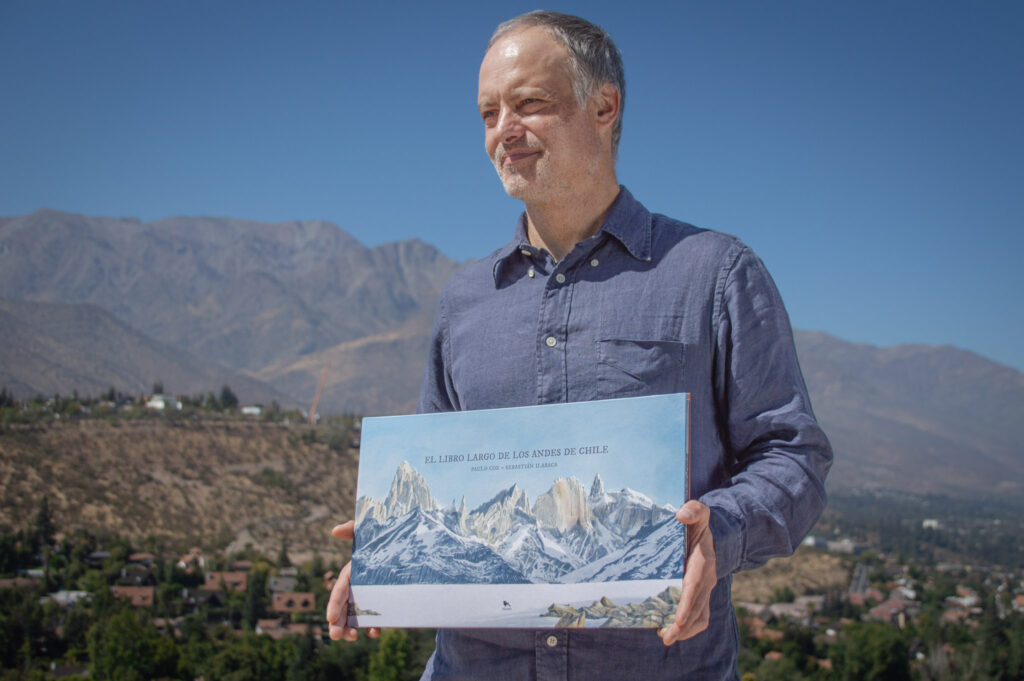
_ *The Long Book of the Chilean Andes* seeks precisely to evoke that vastness: an illustration of our entire mountain range, from the Tacora volcano on the border with Peru to Dientes de Navarino in the far south. Not everything is entirely accurate, but it captures the variety and diversity of the Andes as they change toward the south.
_ My favorite Chilean song is " Alturas" by Inti-Illimani.