Pure Chile is your starry sky
How looking at the universe from Chile became part of who we are
How looking at the universe from Chile became part of who we are
Astronomy has become one of Chile's greatest sources of pride. Practically every month, new discoveries made at observatories located in the country are announced. This pride is not only due to Chile's privileged geography for observing the sky, but also because the country has made a firm commitment to developing world-class science on its own territory.
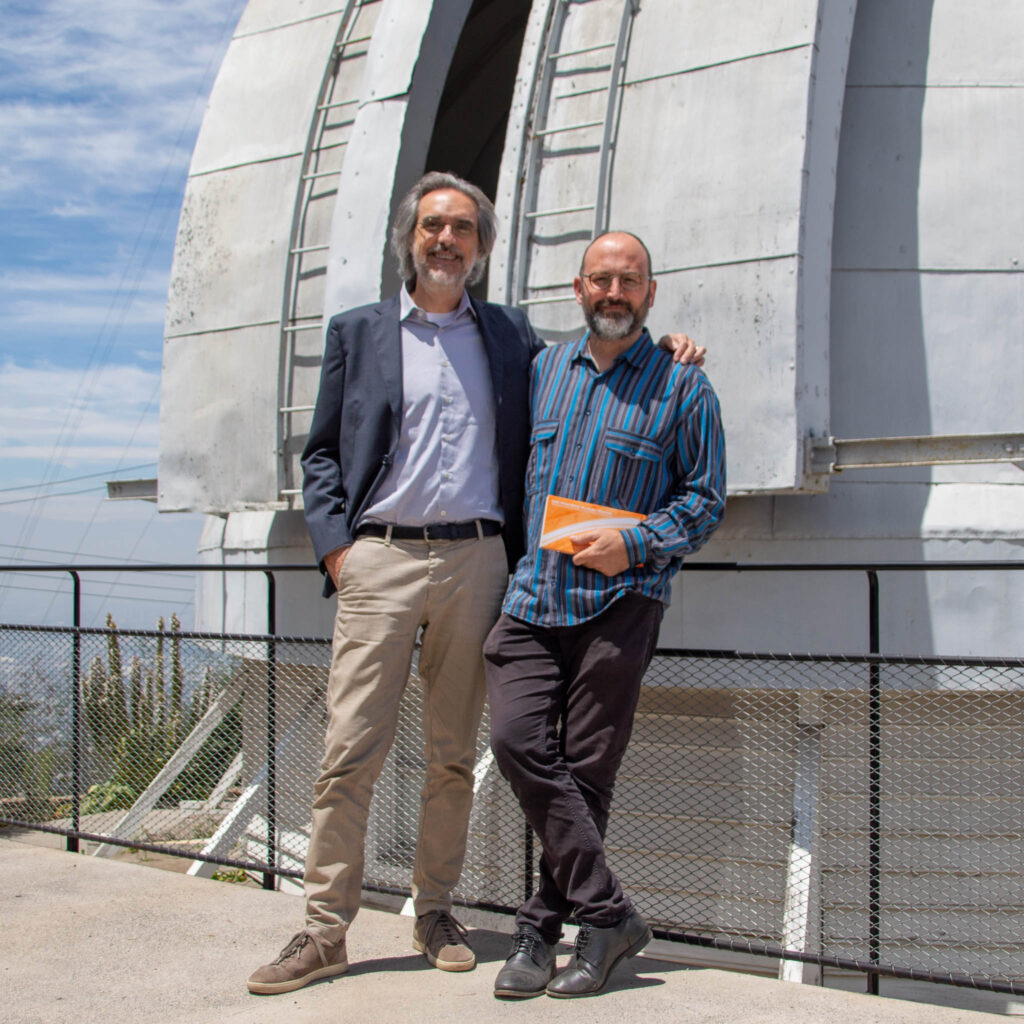
It is estimated that, by 2030, 50% of the world's astronomical capacity will be installed in Chile. To understand why this science has become so important to our national identity, we spoke with astronomer and National Prize for Exact Sciences winner Mónica Rubio; with professors Leonardo Vanzi and Umberto Bonomo from the Pontifical Catholic University of Chile, authors of the book Guía de Arquitectura, Arte e Historia del Observatorio Manuel Foster(Guide to the Architecture, Art, and History of the Manuel Foster Observatory); and with Jacqueline Morey Compagnon, executive director of the Planetarium at the University of Santiago, Chile.

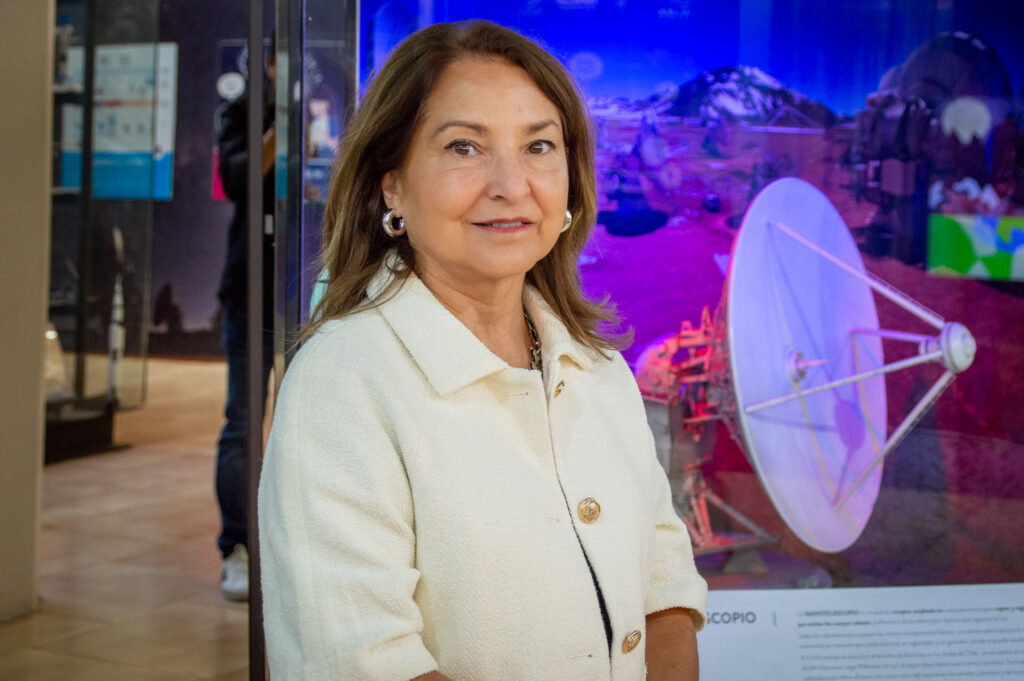
Vice President of the International Astronomical Union, winner of the 2021 National Prize for Exact Sciences, and professor in the Department of Astronomy at the University of Chile.
We all have a special connection with the sky. When we look at a starry night, a sunset, or go for a walk under a full moon, we feel part of this enormous universe; a special connection is created. Personally, despite having spent so many hours observing the sky, I still never miss a sunset.
Scientific research is fascinating. In my case, I study how stars are born, which form in invisible places, impossible to observe with the naked eye, so we must resort to new technologies. Every time a new telescope appears, the discoveries that the universe reveals to us always amaze us. Sometimes we think we are going to study one thing, and the universe responds with something else: that there are even more interesting phenomena, or that the answer is different from what we imagined.
Northern Chile offers unbeatable conditions for astronomical observation: more than 300 clear nights per year, very dark skies, and an atmosphere of great transparency and stability, which allows for extremely sharp images. All these conditions have led major international observatories to continue setting up here. Whenever a new project arises, everyone wants to be in the best place in the world: northern Chile.
It is a tremendous honor and a great responsibility to have been elected vice president of the International Astronomical Union, an institution with more than 100 years of history that brings together more than 91 countries and nearly 13, 000 professional astronomers from around the world. In 2030, Chile will host its General Assembly, and that same year, the giant telescopes currently under construction will begin operations. Chile will be the world center of astronomy.
I have witnessed exponential growth in Chilean astronomy and its professionals. Twenty years ago, there were around 30 astronomers with doctorates; today there are more than 300. Previously, there were only three universities offering astronomy programs; today there are 24 throughout the country. Chile has one of the highest rates of scientific publications in Latin America, comparable to developed countries. The quality of science in Chile is excellent.
There is growing public awareness that astronomy belongs to us as Chileans, not only because of our geographical conditions, but also because new astronomical discoveries are constantly being made from Chile. This generates pride, knowing that both observations and publications are made from here. Together with wine, copper, and salmon, we have the perfect cocktail for then looking up at the sky.
Talent and abilities have no gender. If many women do not pursue careers in science, engineering, or mathematics, it is usually due to social factors rather than a lack of interest or ability. That is why I invite you to explore these areas if they appeal to you: the results can be very positive. In fact, today, nearly 50% of those who enroll to study astronomy in Chile are women.
My favorite Chilean song is Si vas para Chile, by Chito Faró.
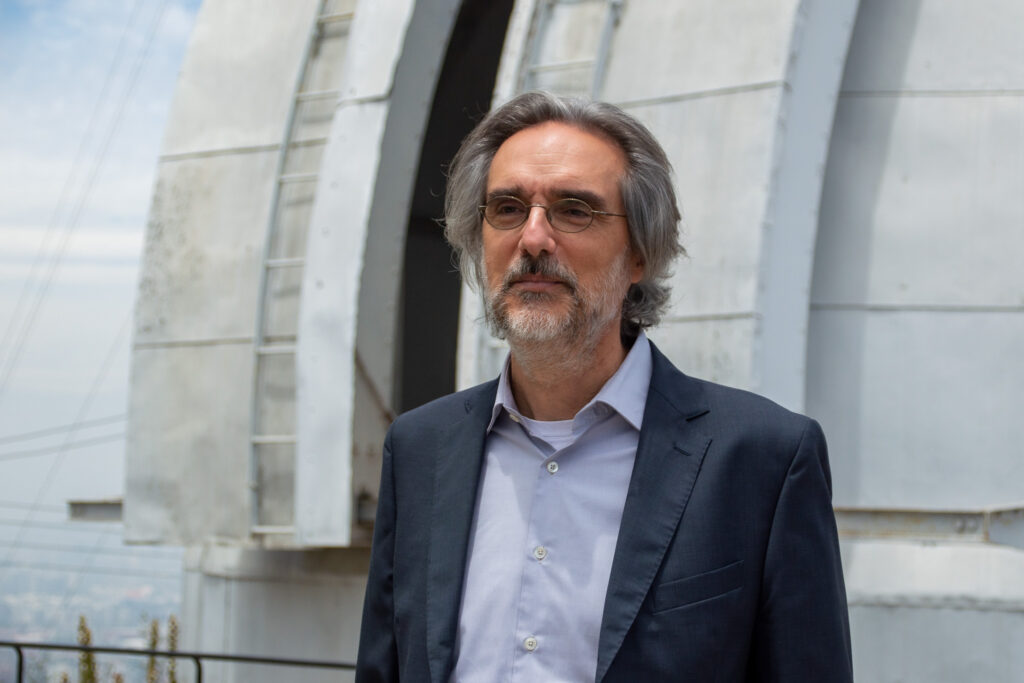
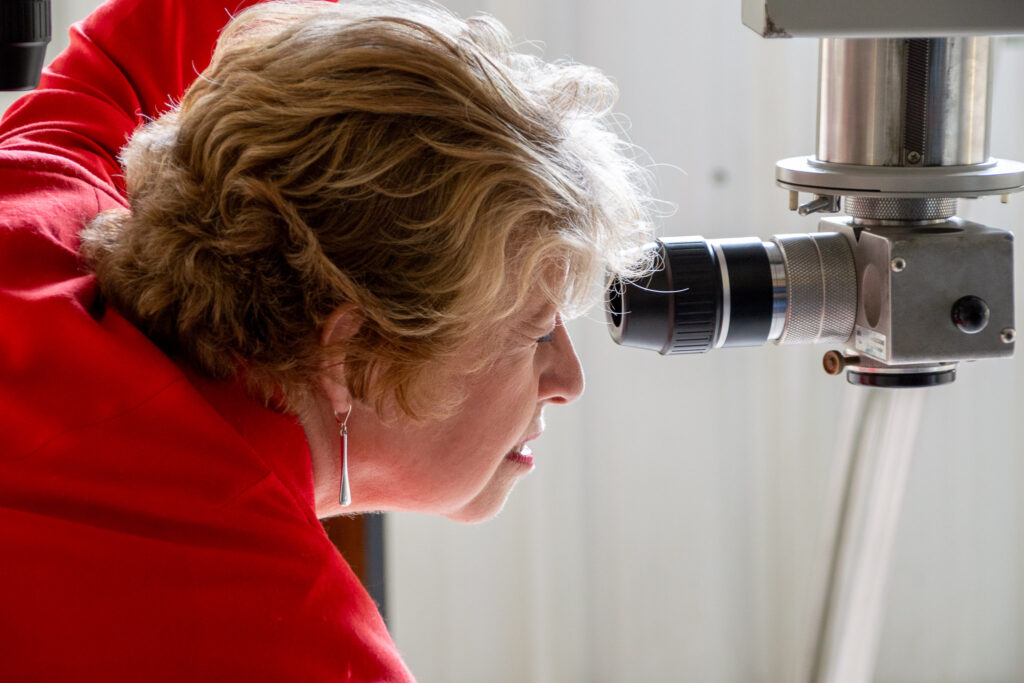
Professor at the School of Engineering and the Center for Astroengineering at the Pontifical Catholic University of Chile.
I left my country—I am Italian—to come to Chile to do science, because the astronomy that is developed here is excellent. Chile also has very solid research in multiple disciplines: in engineering, biology, and the development of clean energy, the science that is carried out has international standards and can compete with anyone. But, without a doubt, astronomy is exceptional. Wherever you go in the world, if you say you're from Chile, people look at you with genuine envy, because the sky you see here is beyond compare. It's a privilege to do science in this place.
I have always been passionate about technology, especially astronomical technology, because it represents humanity's effort to understand the universe. For many years, we observed with our own eyes; today, we do so with instruments that allow us to make much more extensive discoveries. The history of this technological development is extremely interesting.
Astronomy in Chile did not appear overnight; it has been a long journey. Today's giant telescopes could not exist without those previous stages. The first astronomical expedition to Chile dates back to the mid-19th century. The Manuel Foster Observatory was founded in 1903, becoming the first in the southern hemisphere. Each of these steps has contributed to the recognition of Chilean skies as the best in the world. It is the result of many, many years of work.
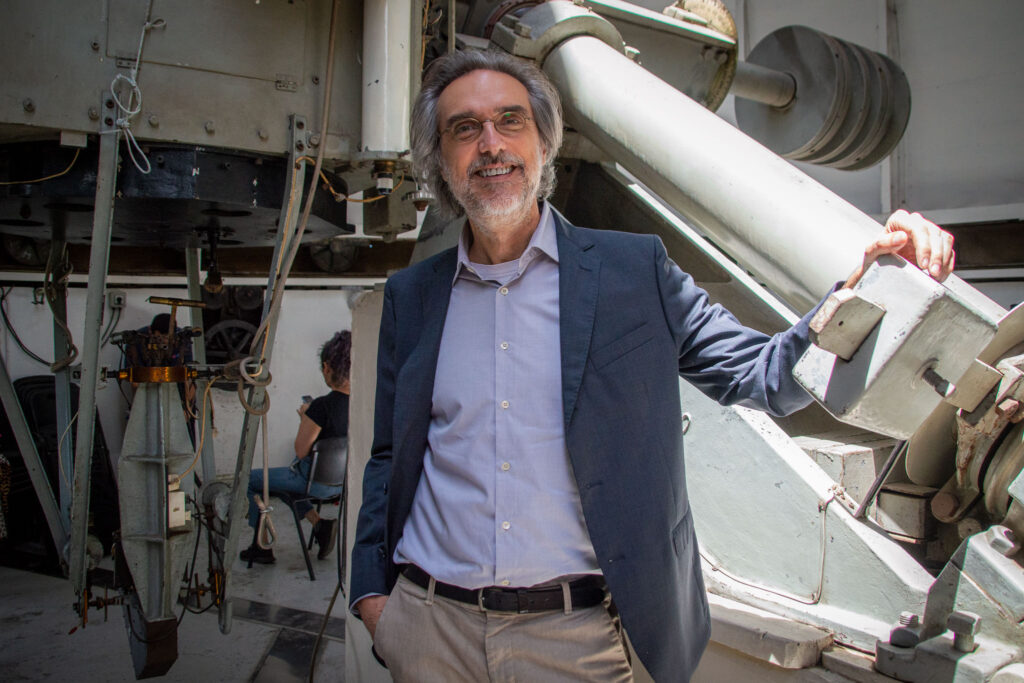
It is very important for Chile to have a telescope like the one at the Manuel Foster Observatory. The fact that Chile has a telescope as old as this one—even when compared to countries in Europe or the United States—is particularly striking. There is a tradition, a legacy from the past, that drives us to continue discovering.
My favorite Chilean song is Volver a los 17, by Violeta Parra.
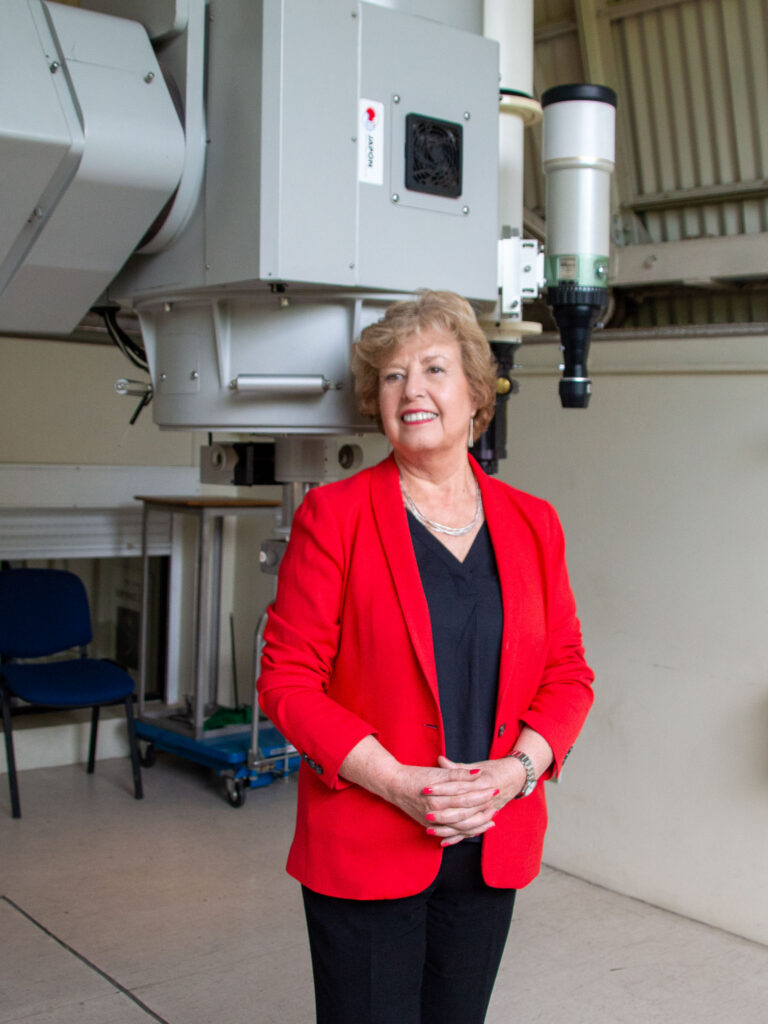
Director of the Outreach and External Services Department at the Pontifical Catholic University of Chile.
Having an observatory like Manuel Foster allows us to understand the passage of time, how we have changed as a society, and also to appreciate those who came before us.
The main value of the Manuel Foster Observatory is its location. When it was created, downtown Santiago was much smaller and there was no air or light pollution, so the sky could be observed with great clarity from here. These conditions caught the attention of astronomers from the University of California, who found this hill to be a suitable place to operate. That marked the beginning of the country's prominence in global astronomy.
This place plays a very important educational role. It conveys a message all by itself: the importance of caring for our history and valuing how things were done in the past, with equipment that may seem archaic today but was cutting edge at the time. It does not perform as well as today's instruments, but it shows the path of technological development that Chile and global astronomy have traveled over the last 120 years.
This is not just a place of history, heritage, or technology; it is also part of an ecosystem within a country that has demonstrated how to sustain scientific research and development over time.
My favorite Chilean song is Gracias a la vida, by Violeta Parra.
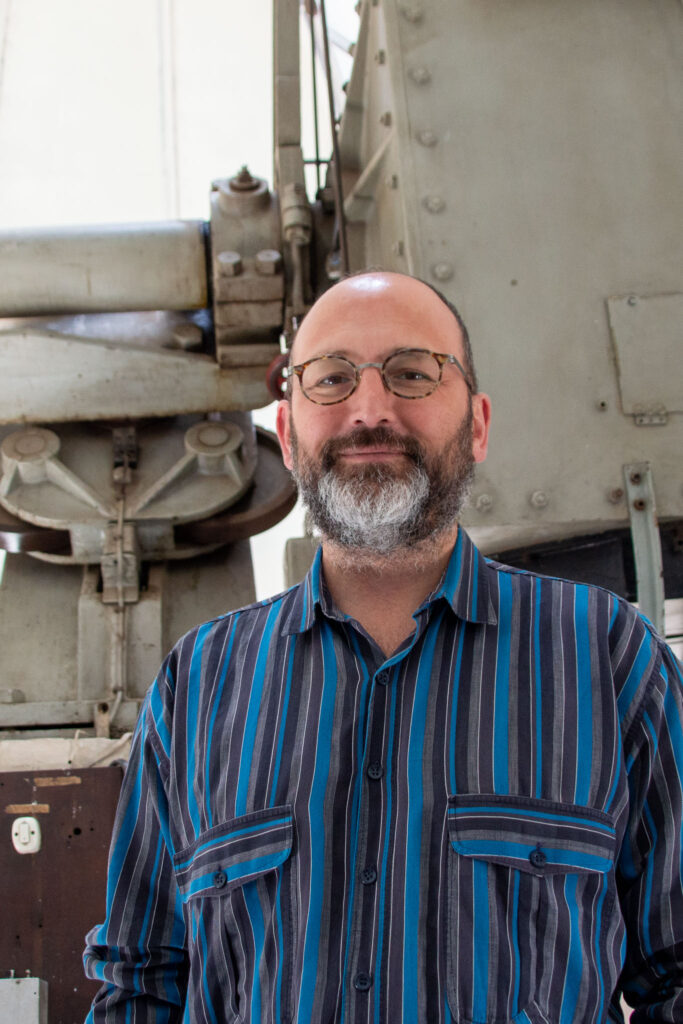

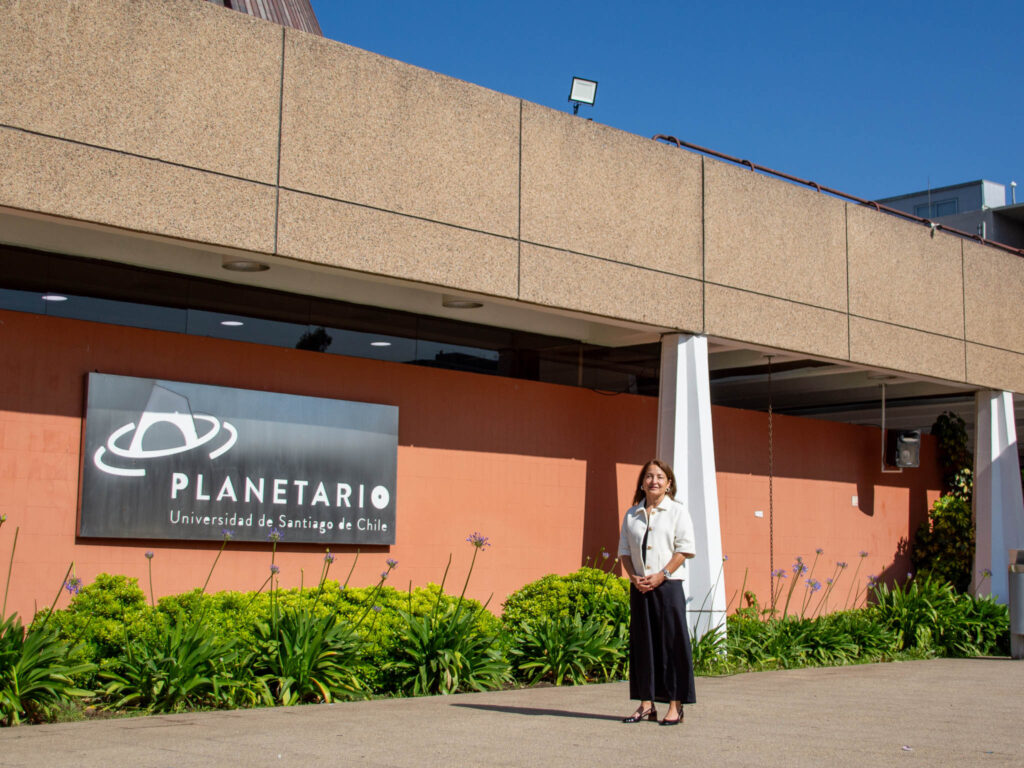
Executive Director of the Planetarium at the University of Santiago, Chile.
The planetarium allows visitors to share a collective experience of wonder at the universe, and that is very important because museums and cultural spaces strengthen social ties. Last year, the planetarium welcomed 189,000 people from all districts of Santiago and other cities near the capital, especially schools. All our offerings—talks, events, and productions—are packed with visitors. People leave excited and grateful for the experience they have had.
My training in art has helped me create content for the planetarium that is aesthetically pleasing, friendly, and playful, very much in the style of Pixar. We try to make references to popular culture, such as showing the rover that is on Mars, but driven by a Barbie doll. With this, we seek to convey clear messages: that girls can also drive a rover and pursue a career in science.
Europeans and Americans love our approach to dissemination because it is not just documentary, but incorporates narrative. One of our productions, 3, 2, 1... Lift Off, was taken to Mexico and seen by more than 300,000 people. Our productions have become a real calling card for Chile around the world.
I think that, among the general public, there is already an understanding that Chile is a world leader in astronomy, but certain authorities still need to understand this. The planetarium, for example, does not receive state funding. Today's children will be the workers in the technologies of the future and in astronomy, and much more could be done to encourage more children to pursue a career in science. The books of our most renowned astronomers should be part of the school curriculum.
If we review the news from the last twenty years, much of Chile's best news is related to astronomy. When you travel abroad, Chile is recognized for that.
My favorite Chilean song is " Sube a nacer conmigo, hermano" by Los Jaivas.