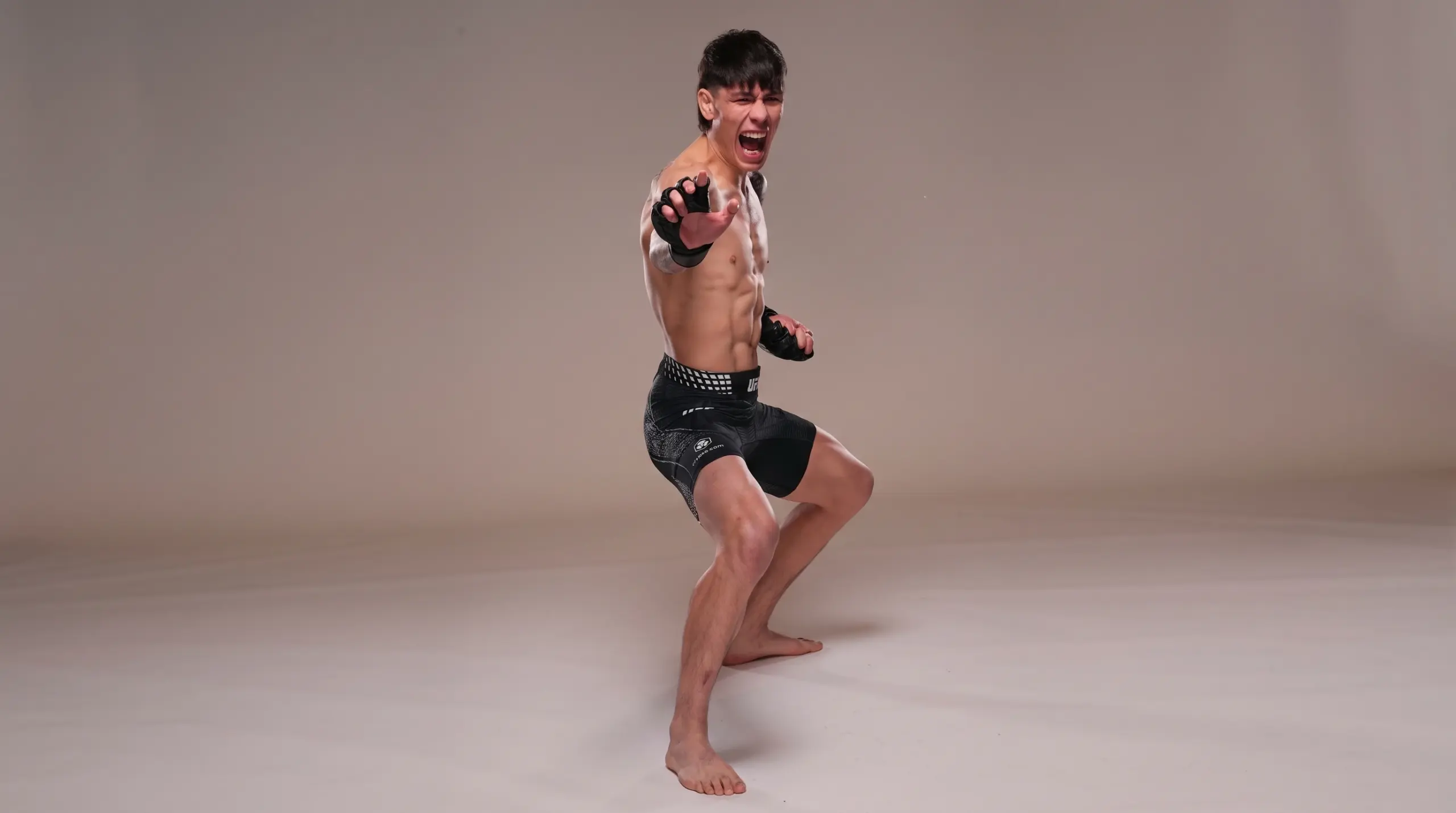


For me, being Chilean is what sets me apart from others; I've always said so. Being Chilean is a plus.
Ignacio Antonio Bahamondes, known in the world of MMA (Mixed Martial Arts) as “La Jaula,” is the most prominent and successful Chilean fighter in the history of the Ultimate Fighting Championship (UFC). This recognition stems from the fact that he is the only Chilean fighter to have reached the world’s Top 15 and the one with the most fights in the competition, with nine appearances.
On Saturday, September 12, starting at 6:00 p.m. Chilean time, Bahamondes will face Russian fighter Muslim Salikhov at the UFC Fight Night event in Seattle, United States. For this fight, “La Jaula” will move up to the welterweight division (approximately 77.1 kilograms), and his bout will be available to watch on Paramount+ Chile.
Ignacio, you've been representing Chile in the major mixed martial arts leagues for years. What does it mean to you to be an “ambassador” for Chilean sports in such a competitive circuit?
It’s a pleasure for me to represent my country and show that Chilean fighting spirit inside the cage every time I step into the Octagon, to show what we Chileans are made of. History has shown that we don’t know the meaning of the word “give up”: we’ve been through it all—earthquakes, floods, tsunamis, coups—and we always get back up. We come back better, stronger, and with more grit. I’m proud to be able to demonstrate that Chilean grit in the world’s most important octagon.
The world of MMA demands relentless discipline and tremendous resilience in the face of adversity. How much of that “fighting spirit” and strength—so characteristic of Chileans—do you bring to every fight?
I’ve always said it: Chileans have a fire unlike any other Latin American. We have that mischievous spirit, and, as I said before, we never give up. We always find a way. That comes through in my fighting style every time I step into the Octagon. I think we Chileans are born with it: you can’t teach it, you can’t pass it on, and you can’t learn it; we’re born with it.
Even though you live and train abroad, you’ve always maintained a very strong connection to your roots. How do you feel about the support from your Chilean fans?
Yes, I’m proudly Chilean. Honestly, I’m more Chilean than beans with reins. I always maintain that connection with my Chilean fans. Even in the tough times, my people have been there for me, giving me their support and a word of encouragement—when I step into the Octagon, I really feel it.
A lot of people ask me, “Don’t you feel pressure or a burden from having an entire country on your shoulders?” And I tell them no—on the contrary: I feel that rather than a burden, they’re a driving force, a motivation to keep inspiring young people and those who are used to losing or being told they can’t. That’s why I’m here: to motivate them and tell them that yes, they can do it. With hard work and discipline, no one can take your dreams away from you.
After so many years away, is there anything about Chile that catches people's attention and that you've received comments about?
I think the thing people comment on most is my accent. When they hear a Chilean speak—even people who speak Spanish, like Mexicans or other Latinos—they don’t understand a thing, and they ask me, “So how do you understand them?” (laughs). The truth is, my accent is much more neutral now, but when I talk to a Chilean—my brother or my nephew—my “flaite” side comes out; my Chilean side comes out. But here, practically all my Mexican friends have picked up at least one Chilean word they like, so we’re spreading Chilean wisdom and knowledge.
As an ambassador for Chilean sports, what would you say to someone thinking about visiting our country? How would you invite them, and what would you say?
First of all, they'll treat you as if you were at home! Second, you'll fall in love with the food: the portions are generous, which is another thing that foreigners really love about Chile. Plus, with all the warmth and kindness the people show you, you won't want to leave Chile. People make you feel right at home.
Today, many young people in Chile look up to you as a role model for achieving success through sports. What message would you give to a child in our country who dreams of reaching the world’s sporting elite?
The best advice I’ve ever been given is that nothing will take you further than your discipline and your love for what you do. Whatever you do, do it with love and passion, and it will never feel like work. I’m 29 years old, and I feel like I haven’t worked a single day in my life because I love what I do. No one can take your dream away from you. No one but you can take your own dream away from you.
What does being Chilean mean to you?
For me, being Chilean is what sets me apart from others—I’ve always said that. Being Chilean is a plus. When the fight is on, that fighting spirit pushes me a little further: when the intensity rises, I ramp it up twice as much because I have that Chilean pride and fighting spirit. The word “give up” isn’t in my vocabulary.