The latest edition of Congreso Futuro brought together more than 65,000 in-person attendees, featured 120 national and international experts—including three Nobel laureates—and sparked debate on topics such as artificial intelligence, the future of work, and the major transformations facing the world. Over the course of more than a decade, the initiative has evolved from a science outreach event into a platform for collaboration among the political sphere, academia, the private sector, and the public to anticipate and discuss the challenges of the future.
In this context, Guido Girardi, a former Chilean senator, executive vice president of the Encuentro del Futuro Foundation, and founder of Congreso Futuro, spoke with Marca Chile about the evolution of this initiative, the value of a collaborative model that is now beginning to be replicated in other countries, the development of projects such as LatamGPT, Chile’s leadership in neuro-rights, and the role that science and technology can play in building a more competitive national image.
An export model
Congreso Futuro has established itself as one of the leading platforms for science communication in the region. From your perspective, what has been its main contribution to placing science and forward-thinking on the Chilean public agenda?
We are living in an era of massive change, where the world of tomorrow will be shaped by technology. This has always been the case, but now it is happening at an exponential rate; we are in an era of technological acceleration that is beginning to render all institutions obsolete. In this context, Congreso Futuro acts as a window into the future. By inviting 120 of the world’s leading minds, we are able to anticipate and design possible scenarios to understand the world to come.
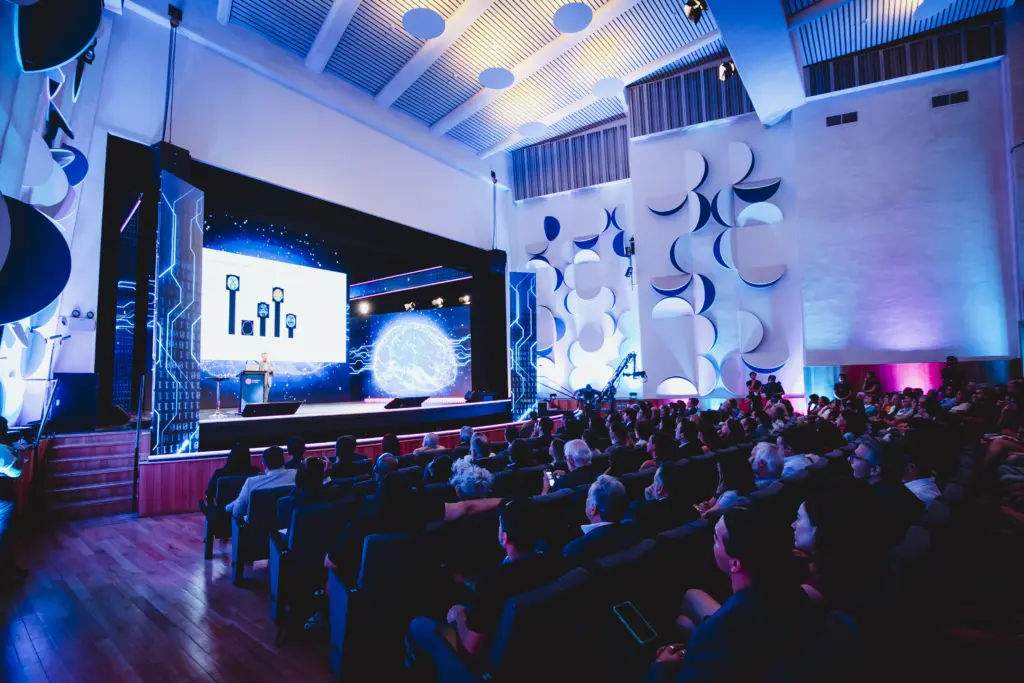
Furthermore, we are democratizing knowledge. We are helping to ensure that this conversation is no longer the privilege of an elite but becomes a debate involving all of society. What makes us unique is that we have managed to bring together all Chilean universities—both public and private—the Academy of Sciences, the regions, and the territories. We have brought the Senate, the Chamber of Deputies, and the private sector to the same table.
In this way, we are restoring a space that was being lost in society: that of democratic conversation, consensus, and agreement. Congreso Futuro is a laboratory for social innovation and a beacon that does not merely wait for the future to arrive, but builds it by understanding and capitalizing on our opportunities.
Along those same lines, what are the distinctive features of the Congreso Futuro model that make it an innovative Chilean format capable of being successfully replicated internationally?
Nowhere else in the world is it possible for a parliament to bring together all of the country’s universities—both public and private—along with the Academy of Sciences, the private sector, the regions, mayors, and young people. We have succeeded in nurturing and strengthening this value: that of creating cross-cutting and intelligent spaces for dialogue. Intelligence arises precisely from diversity. The greater the diversity, the smarter Chile can become.
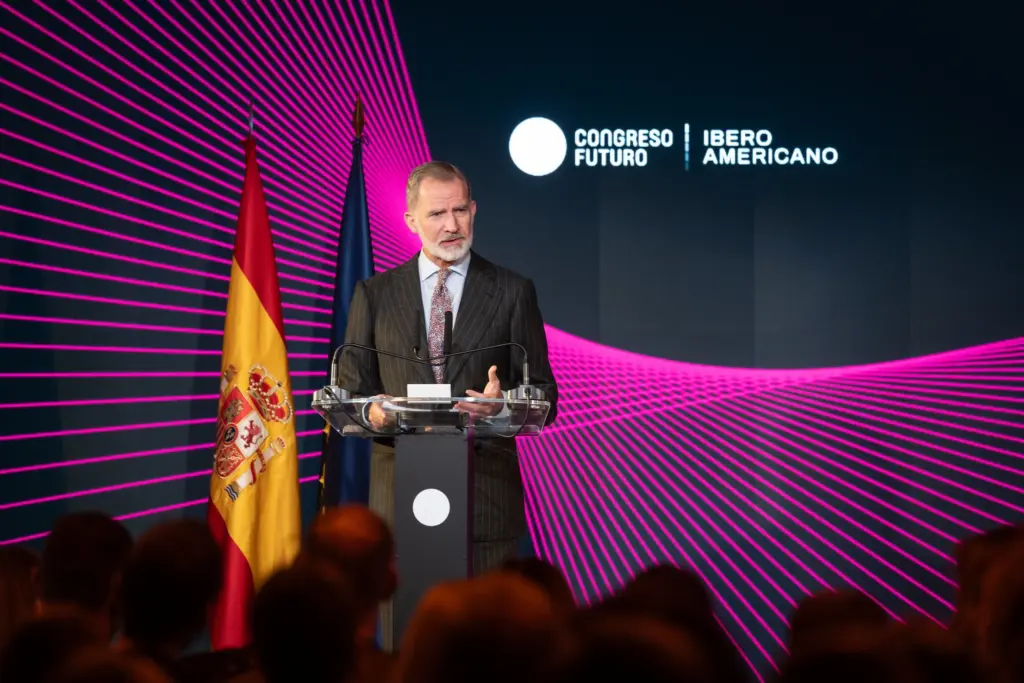
This model is unique, and we have already begun exporting it. We visited Bolivia and also organized a “Congress of the Future” in Spain in collaboration with SEGIB, which was attended by the King of Spain, Spanish universities, and their academies of sciences. We also took it to Morocco, collaborating with its Parliament and universities.
Even the United Nations has turned initiatives we’ve spearheaded into global models. UNESCO invited us because it wants the models of the Congreso Futuro and the Proyecta Chile project to become exportable international benchmarks. The goal is to develop relevant public policies that understand the current environment in order to provide effective solutions and maximize our many opportunities.
Initiatives such as LatamGPT have positioned Chile as a key player in artificial intelligence in the region. What conditions need to be strengthened to consolidate and build on that leadership?
The recent success of initiatives such as LatamGPT demonstrates that Chile’s standing in this field is a direct result of collaboration. When there is genuine cooperation between scientific and academic institutions, the country is able to make great strides and take the lead at the regional level.
This focus must align with the major areas where the country possesses unmatched comparative advantages. Chile needs to direct artificial intelligence toward its enormous mining and energy potential, the food resources of its oceans, and its exceptional astronomical capabilities. Furthermore, it possesses the ideal conditions to host the infrastructure for large data centers and to lead the way in sustainable wood construction—a key sector for the global future, given that 30 percent of Chile’s land is suitable for forestry and the country has accumulated vast experience in this field.
However, technological progress cannot be separated from a profound political and ethical discussion about the future of humanity. As papal encyclicals and contemporary international forums rightly warn, what is at stake today is the very essence of humanity itself in the face of the possibility of entering a post-human era—a reality that demands firm ethical decisions before control of the future slips from our hands.
Neuro-rights and Chile's Image
Advances in neurotechnology have opened up new opportunities for the treatment of diseases and scientific development, but they also pose unprecedented challenges for the protection of privacy, identity, and cognitive freedom. In this context, Chile has positioned itself as a global leader by incorporating so-called “neuro-rights” into its constitutional framework, thereby setting an essential ethical precedent for scientific development.
What message is Chile sending to the international community by including this protection in its legislative agenda?
Chile’s current leading position in the field of neurorights is a direct result of Congreso Futuro. In this context, we were honored to have the valuable participation of Rafael Yuste, global director of the Brain Project, who warned us about the future risks posed by neurotechnology devices currently under development.
These tools not only promise to read emotions, feelings, and even the unconscious, but by being able to read the mind, they also open the door to writing on it and manipulating us. While this development offers enormous potential to help tackle devastating diseases such as Alzheimer’s or Parkinson’s, it also raises the urgent need to establish clear boundaries. We must define when to use this technology for the benefit of humanity and not against it.
For this reason, we set out to establish a new human right to preserve our identity, and, as a result, this legislation has been adopted as a model around the world.
How do science and technology help build a much stronger, more competitive, and more attractive national image on the international stage?
Initiatives such as Congreso Futuro demonstrate the immense caliber of our intellectual community. In Chile, we are building on the shoulders of giants who came before us in areas such as health, education, and the economy, and today the country stands out for its unique business innovations.
Historically, the world has viewed Chile through the beauty of its landscapes, the warmth of its people, and the depth of its poets, cementing the identity of a deeply spiritual country. However, when we add to that cultural and natural wealth the scientific innovation of Congreso Futuro, the creation of pioneering laws such as the one on neuro-rights, and the impact of festivals like Teatro a Mil, we completely transform our international reputation.
By equipping the country with cutting-edge science, technology, and ideas, we project the image of a modern and sophisticated nation that people around the world want to visit, want to be a part of, and want to engage with actively.