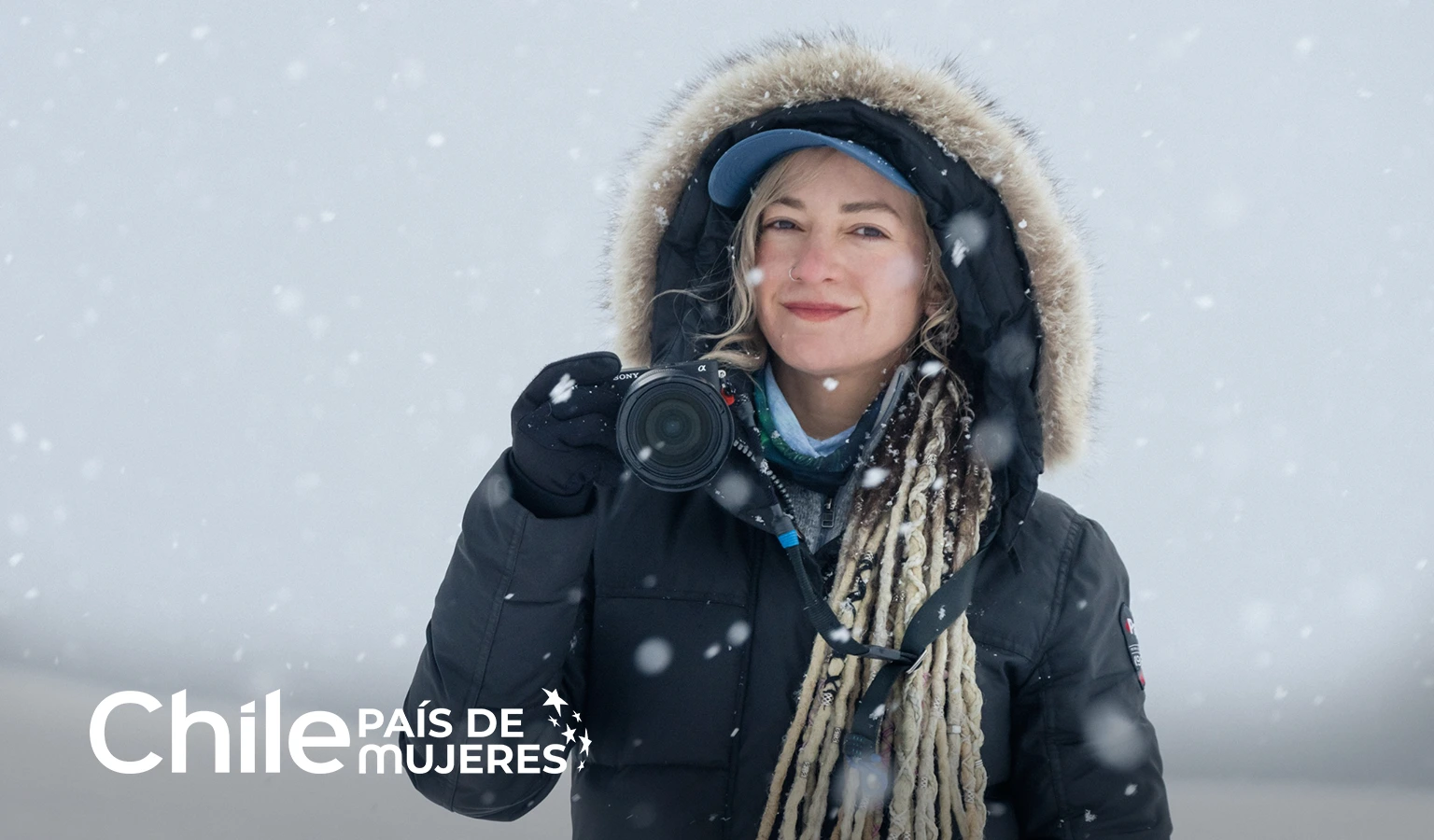


Born outside of Chile, but deeply connected to its skies, Cari Letelier grew up watching the stars with fascination and eight years ago decided to leave the corporate world behind to devote herself entirely to capturing the beauty of the universe, becoming a renowned astrophotographer, who travels the planet portraying dark skies and celestial phenomena, winning international awards, mentions from NASA and a place on the list of the 50 most creative Chileans in Forbes.
In parallel, she teaches classes, collaborates in science outreach projects and promotes astronomical tourism, convinced that looking upwards transforms our way of being on Earth.
How did you discover your passion for astrophotography?
The truth is that it was not a straight path. I came from a very structured world: I am an industrial civil engineer, with a master's degree and years of work in logistics. But something in me was always looking for something more essential, more connected to the deep.
One day I saw on the news that there was going to be a star shower. I had an SLR camera that I didn't know how to use, but I thought of trying to photograph it. It was a total failure: not a single star came out. However, that frustration awakened an enormous curiosity. I wanted to understand the sky, to learn how to photograph it... and that's how it all began.
The nicest thing of all was to discover that I could share this passion. Because there is nothing like seeing someone look up and really understand what they are seeing. That change of perspective can be transformative.
Why is knowing the heavens relevant to the future of the Earth and humanity?
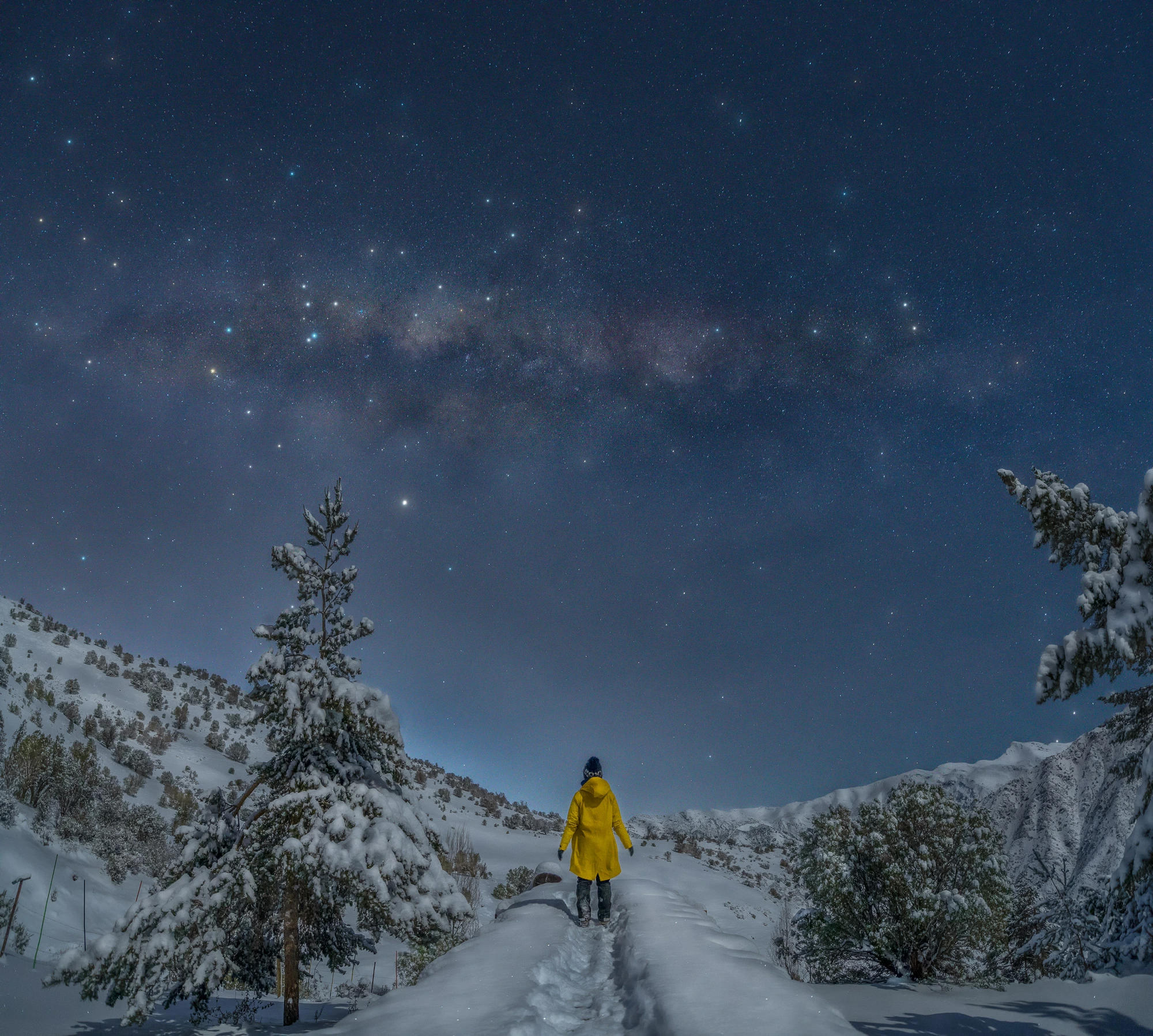
Because to know the sky is, in the end, to know ourselves. When we look up with awareness, we understand that we are part of a much larger and more complex system. We realize our smallness, yes, but also our responsibility.
Observing the sky teaches us patience, perspective and humility. It reminds us that the Earth is our only home and that we cannot continue to navel gaze as a species. If we want a more sustainable, more just and more conscious future, we need to reconnect with what is essential. And the sky -that which is there every day and every night, waiting for us to look at it- is one of the most beautiful ways to do so.
Which skies have had the greatest impact on you?
It's super hard to choose, each dark sky has its own magic! But if I have to choose two, the first one would be the sky of the Atacama Desert. It had a deep impact on me: the sharpness, the transparency, the amount of celestial objects visible... I remember seeing how the Scorpion constellation cast a shadow on the ground, crazy!
The second would be the Icelandic sky, especially when there are auroras. Whenever I go there, I am always impressed by the height of the north celestial pole: it is at 64° elevation! Also, seeing constellations so different from those in the southern hemisphere, encountering the Andromeda galaxy after an aurora or witnessing a meteor shower under that sky... it's an unforgettable experience.
From their own perspective
Through her experience, Cari has also reflected on her place in a historically masculinized field, and how her approach - linked to emotion, storytelling, and a bond with the Earth - brings a different dimension to astrophotography.
Do you face special challenges when you dedicate yourself to astrophotography as a woman?
Yes, there are. Although there are more and more of us women in this field, it is still a rather masculinized environment, especially when you combine photography, science and field exploration. Sometimes you have to work twice as hard to be taken seriously.
There is also the challenge of often working alone in remote places, with extreme cold and long night shifts. But far from being a barrier, it has been a driving force. Seeing how other women and girls approach the sky, become enthusiastic about astrophotography or dare to go out with their camera at night, is deeply exciting.
Is there a way of looking at the heavens that is particular to female astrophotographers?
I don't know if there is a unique feminine way of looking at the sky, but I do feel that those of us who do astrophotography from a sensibility more connected to the emotional, the symbolic or the narrative, bring a different perspective.
In my case, I am not interested in capturing the sky as an isolated object, but in dialogue with the landscape, with the Earth, with the human. Because when you know, when you understand what you are seeing, your way of looking changes. And that's where astrophotography becomes a powerful tool to teach, to inspire and to motivate other people to connect with the sky -and with their own curiosity- in a more conscious way.