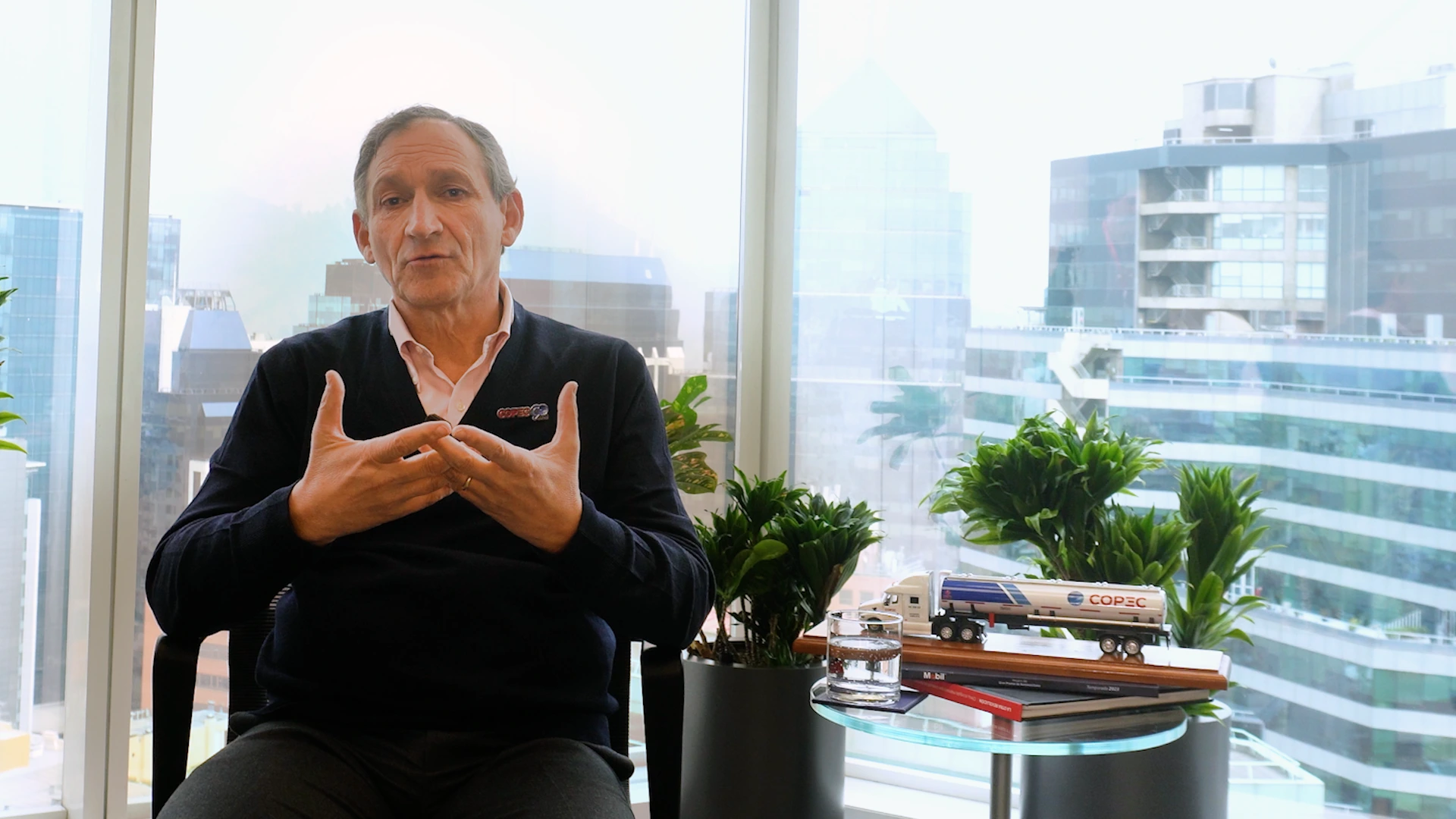


With a track record of nine decades, Copec has established itself as one of the most representative companies in Chile and with great international projection. Today, in the midst of the energy transition, the company is moving forward in the conversion of 100% electric stations, installing chargers in extreme points of the territory and developing sustainability initiatives recognized worldwide. In this interview, its general manager, Arturo Natho, explains how these milestones not only mark the company's transformation, but also reinforce Chile's reputation abroad.
Throughout the company's history, how have you managed to keep that purpose alive while adapting to the challenges of the energy transition?
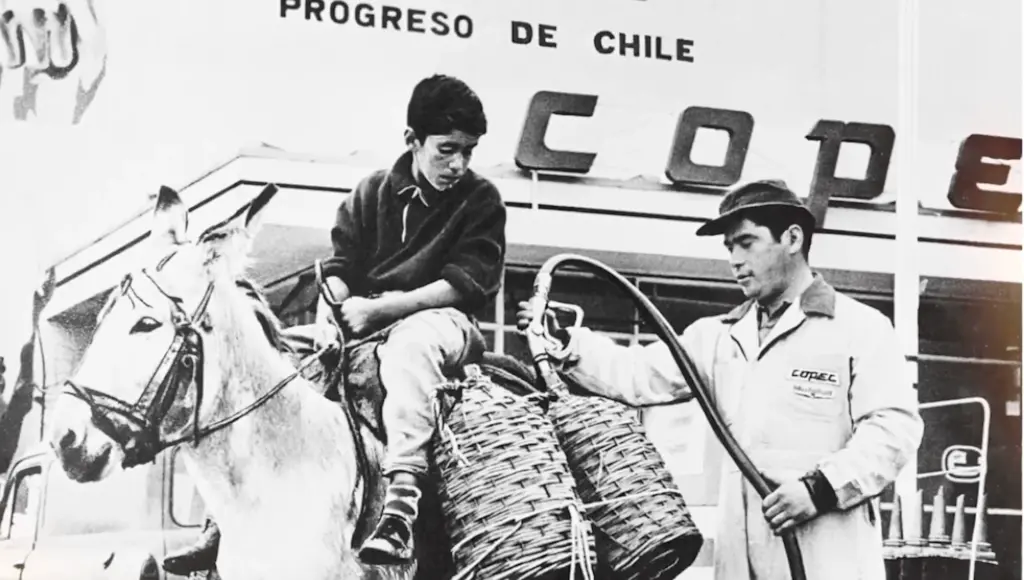
In 2025 Copec celebrates its 90th anniversary, a milestone to look back on with pride and, above all, to project ourselves into the future. Since 1935, our purpose has been clear: to serve people, make life easier for Chileans and contribute to the country's development. This focus on people - on their needs and expectations - has kept us in a permanent state of innovation. Today, we are also facing an energy transition that poses new and exciting challenges.
The conversion of the country's first 100% electric power station and the southernmost charger on the planet are milestones that have had repercussions abroad. What is the international image of Chilean companies and, specifically, of Copec?
The image of Chile abroad, and of Copec in particular, is based on the quality of our services and the fulfillment of our promises. Our commitment is to offer certainty, for example, that anywhere in the country and at any time, there will be a Copec available.
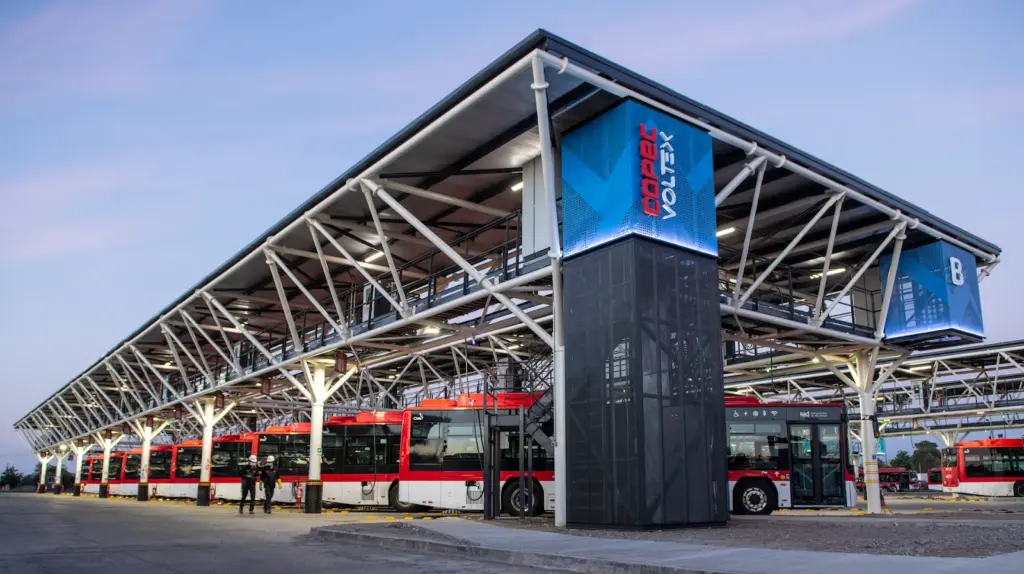
We are bringing that same standard to our electric fueling stations. We incorporated electric charging at the world's southernmost service station and transformed our first dedicated fuel station into a fast-charging center. These actions facilitate the adoption of electromobility and lay a solid foundation for its development, as customers rely on this new technology.
Copec leads one of the largest wetland conservation programs in the country. How do you balance the energy business with such an ambitious environmental commitment?
Chile is a long geography that is traveled from service station to service station. Copec, along the entire highway and throughout the territory, offers refuge points. With the wetlands we wanted to replicate something similar for birds: in their movement and development processes they move around the country, and we seek to emulate that network as a contribution to our ecosystem and environment. In addition, we tend to be close to the wetlands that we are recovering.
We have just received special recognition for the La Chimba wetland in Antofagasta, which we recovered together with the Kennedy Foundation. It was recently highlighted at the COP on Wetlands, held in Zimbabwe, as an example of natural heritage recovery of which we are very proud.
Through Terpel and other operations, you have expanded your regional presence. What attributes of the "Chilean seal" do you seek to convey in other countries?
We have been with Terpel for 15 years now. It has been a rewarding and interesting journey. What we have brought to Terpel - starting in Colombia, its parent company, and then in Panama, Peru, Ecuador and the Dominican Republic - are the same fundamentals as in Chile: an unwavering commitment to service, to customers and the certainty of offering a higher standard than the traditional one.
Today, Terpel is one of the most reputable companies in Colombia. It leads in customer recognition, mainly because of its service and innovation. In other words, we are replicating the same formula we have built at Copec.
Along these lines, is there any attribute that stands out in Chile at the international level?
One interesting thing we introduced at Terpel was, for example, the restroom feature. When we arrived in 2010, Colombia could not travel all over the roads and there were no clean, decent restrooms, like the ones Copec has and provides on the roads. We introduced it and today it is an attribute of enormous value for Terpel, but also to give dignity to a people like the Colombian people.
With ChileTur Copec, you have opted for authentic and decentralized tourism. How do these types of initiatives strengthen Chile's image as a tourist destination?
We are starting work on ChileTur, the transition from the traditional tourist guides - with maps and recommendations that we used to have in books - to a marketplace: a place where you can book attractions and tours throughout the country directly with the tour operators that offer them. It is an opportunity to generate a better quality experience for tourists, ensuring quality standards, certainty and compliance, while allowing Chilean operators to develop.