

Geographic isolation has made Chile one of the places on Earth with the greatest diversity of endemic plant species. Over millions of years, the Atacama Desert, the Andes Mountains, the Pacific Ocean, and the southern ice fields acted as natural barriers that isolated the country from the rest of the continent, allowing plant evolution to follow its own path.
As a result, nearly 45% of the more than 4,600 species of vascular plants found in the country exist naturally only within its borders. This botanical uniqueness places Chile’s reserves on the map of international scientific research. The country’s wilderness areas not only protect the world’s largest concentration of primitive southern conifers but also safeguard gene pools that survived the last ice ages.
To commemorate the centennial of the creation of the first national parks, Natural es Cuidar, Ladera Sur, and Marca Chile invite you to discover these environments, which are cementing their role as true sanctuaries of resilience in the face of climate change and global biodiversity loss.
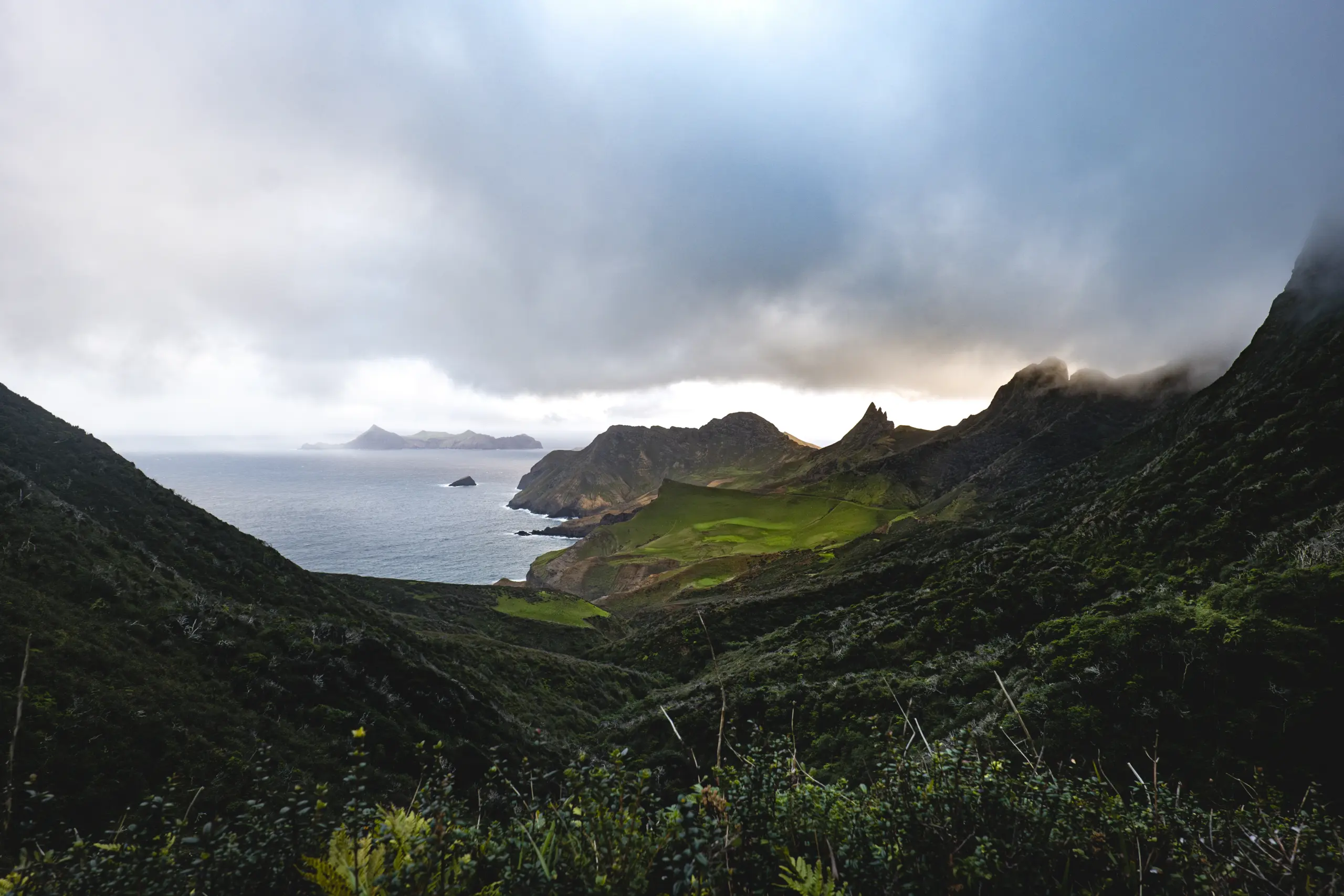
Chonta from Juan Fernández
If there is one island territory that reflects the unique character of the country’s flora, it is the Juan Fernández Archipelago National Park. Designated a UNESCO Biosphere Reserve, it boasts the highest density of endemic species per square kilometer in the world. Among them is the Juan Fernández chonta (Juania australis), a stunningly beautiful endemic palm tree that grows on the steep, forested slopes of the islands. Its survival depends entirely on the protection of this island ecosystem from introduced species and habitat loss.
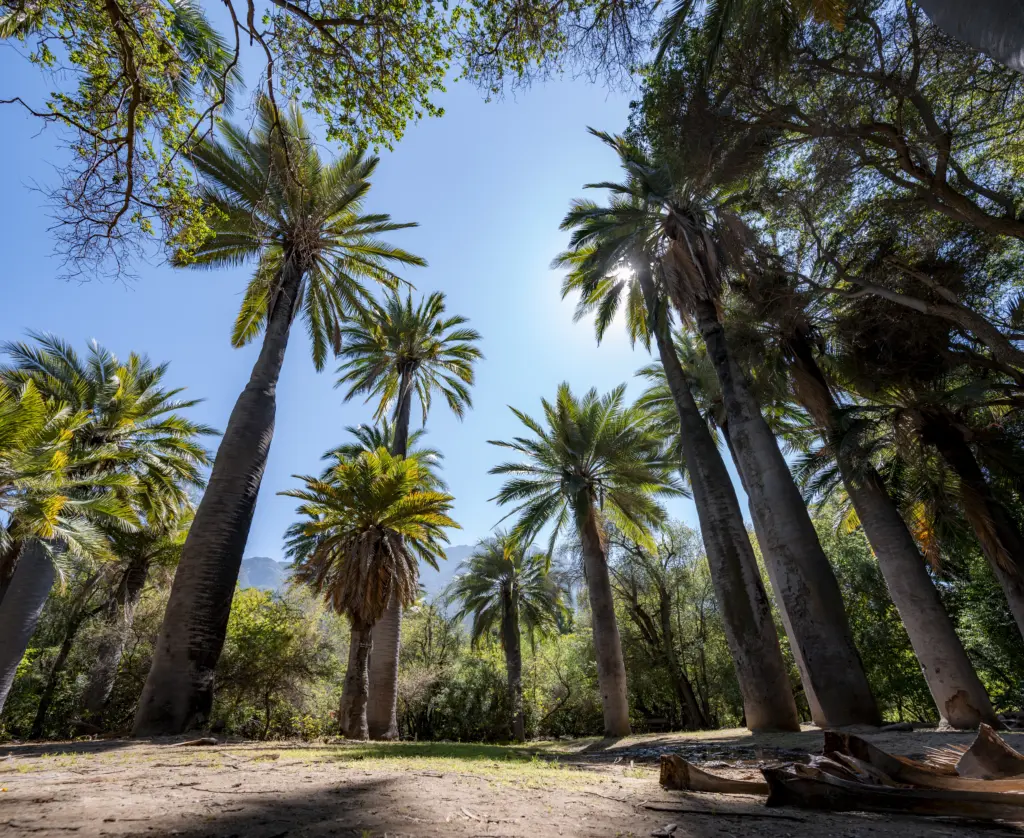
Chilean palm
With a lifespan that can reach 1,000 years, the Chilean palm (Jubaea chilensis) holds the title of the southernmost palm tree on the planet. This iconic species of the central region finds its primary habitat in La Campana National Park. Its imposing trunks store water, enabling the species to survive even during prolonged periods of drought; however, it faces severe threats from climate change, habitat fragmentation, and wildfires, making its protection an absolute priority for biodiversity in the central region.
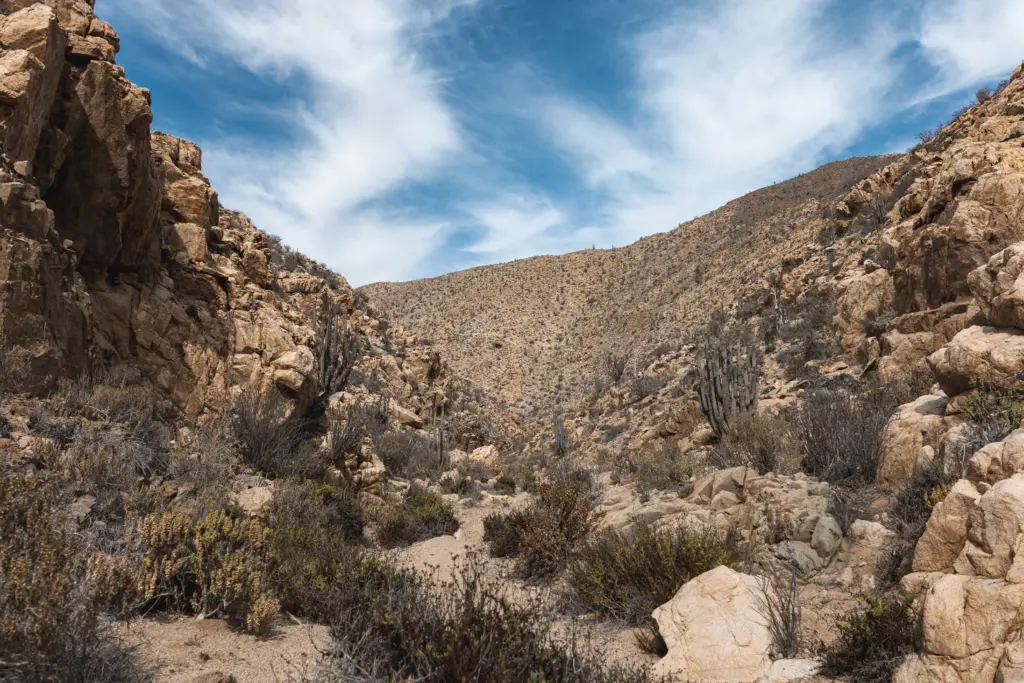
Copiapoa
Few species better exemplify extreme adaptation than the cacti of the genus Copiapoa, which are endemic to the country’s northern coast. In Pan de Azúcar National Park, the species Copiapoa cinerea survives in one of the world’s most arid regions thanks to its ability to capture moisture from the marine camanchaca. This globular, extremely slow-growing plant now faces critical international pressure due to the illegal trafficking of wild specimens, transforming the northern parks into essential botanical strongholds.
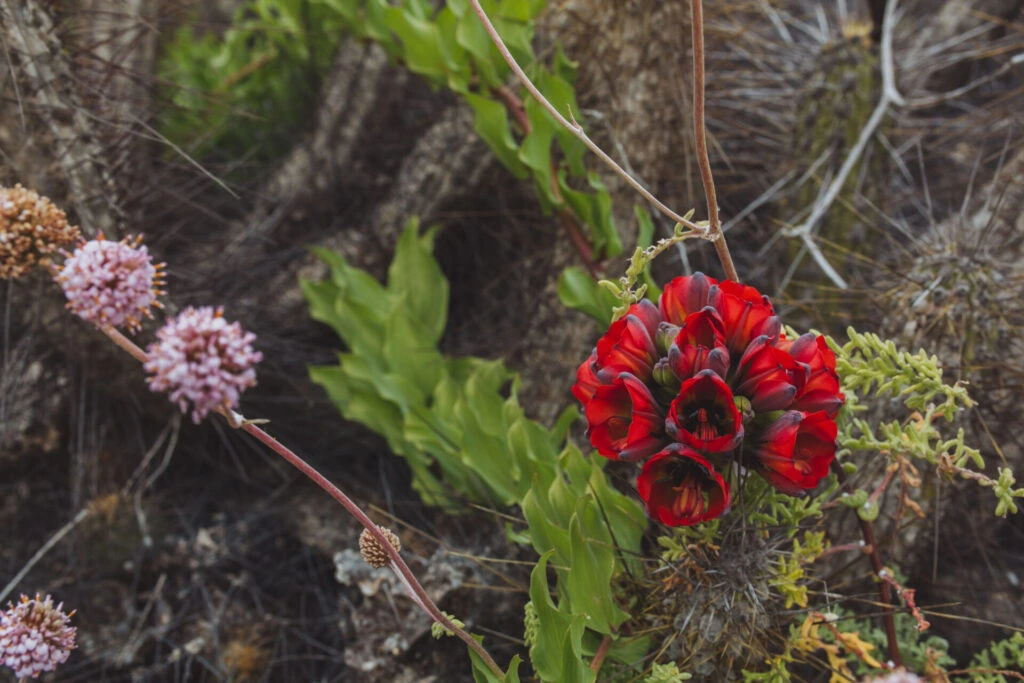
Lion's Claw
Considered the crown jewel of the Flowering Desert, the lion’s claw (Bomarea ovallei) is a creeping plant endemic exclusively to the Atacama Region. Strictly protected within the Llanos de Challe National Park, this species has underground bulbs capable of remaining dormant for years beneath the sand. When exceptional rainfall occurs, it emerges with spectacular globular red flowers, showcasing a phenomenon of ecological resilience unique in the world that attracts not only the attention of tourists but also that of the global scientific community.
Coastal Larch
To the south, Alerce Costero National Park is home to the iconic “Gran Abuelo,” which, at 3,500 years old, is considered one of the longest-living organisms on Earth. The alerce (Fitzroya cupressoides) is a millennia-old conifer designated as a Natural Monument. Growing at a rate of just a few millimeters per year, this species not only stores centuries of climate data relevant to global science but also stands as the crown jewel of a network of protected areas that preserves biological diversity unmatched anywhere in the world.
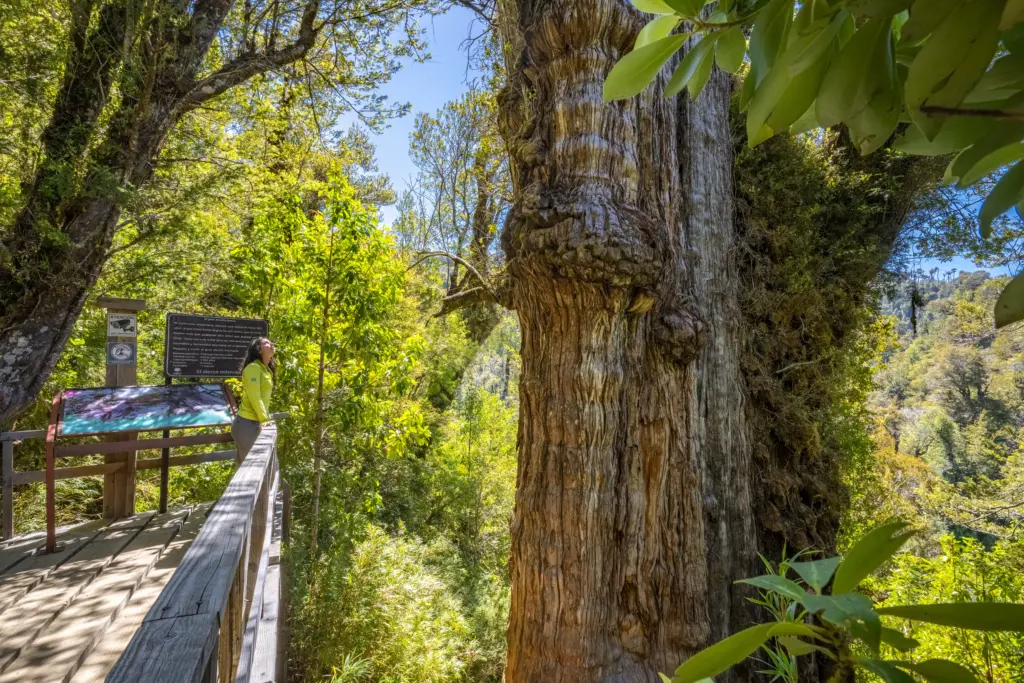
The value of this network extends throughout the entire country, where other valuable living fossils coexist, such as the Chilean araucaria and the Guaitecas cypress in the southern channels, as well as critically endangered trees such as the ruil, the queule, and the aromatic pitao. Together, these silent guardians reaffirm the commitment of protected areas to preserve an irreplaceable botanical heritage, consolidating a fundamental ecological legacy at the very beginning of the world.