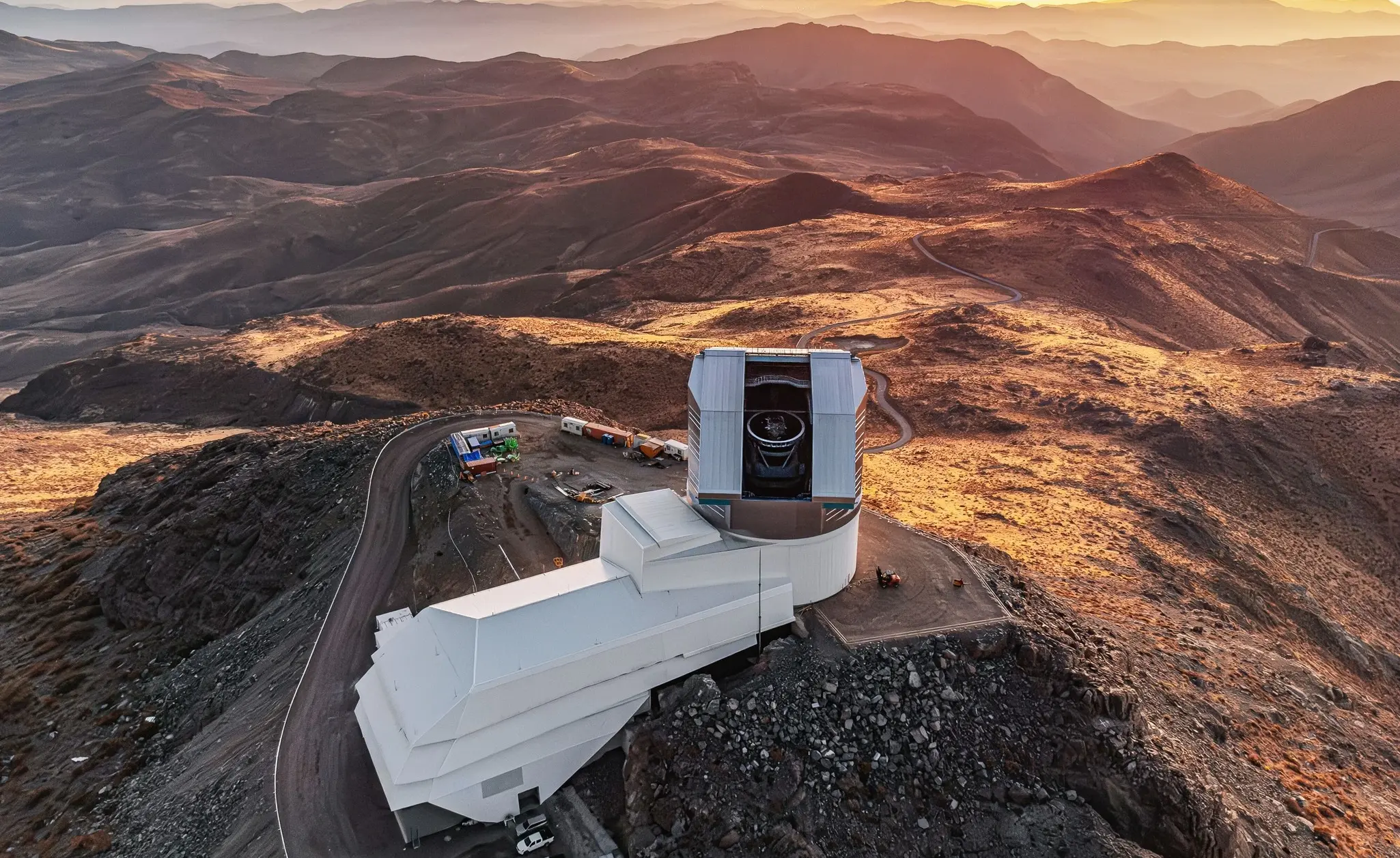


On Monday June 23rd, the Vera C. Rubin Observatory, located in Cerro Pachón, in the Coquimbo Region, published its first images of the cosmos, marking a milestone for global science and reinforcing Chile' s role as a privileged window to the universe. The records were replicated by media from all over the world, which highlighted both their scientific impact and their spectacular visual quality.
"A powerful new telescope in Chile released its first stunning images," headlined The Washington Post. "Observatory in Chile unveils never-before-seen photos of the cosmos," wrote Deutsche Welle.
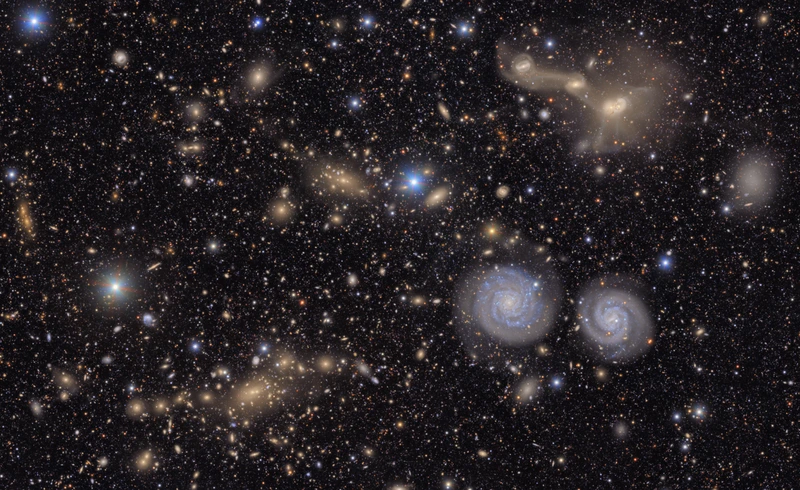
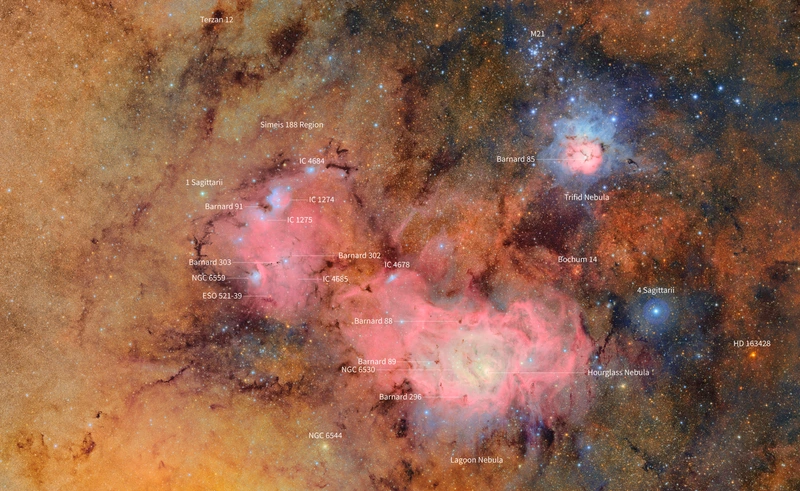
The initial images, including a mosaic of the Trifid and Lagoon nebulae and a view of the Virgo cluster of galaxies, reveal unprecedented depth and detail. To display the full field of view of Rubin's camera would require 400 high-definition televisions.
Among its early achievements, the observatory has already detected 2,104 asteroids, including seven never-before-seen asteroids that are close to Earth. A video released by the science team shows more than 10 million galaxies, just 0.05% of those expected to be observed over the next decade.
The universe through the skies of Chile
Dubbed the "Ferrari of telescopes," the Rubin began scientific operations in 2025 and has the capacity to scan the entire visible sky every three to four nights, generating about 1,000 images per night. Its digital camera, the largest ever built for astronomy, has 3,200 megapixels, and its mirror measures 8.4 meters.
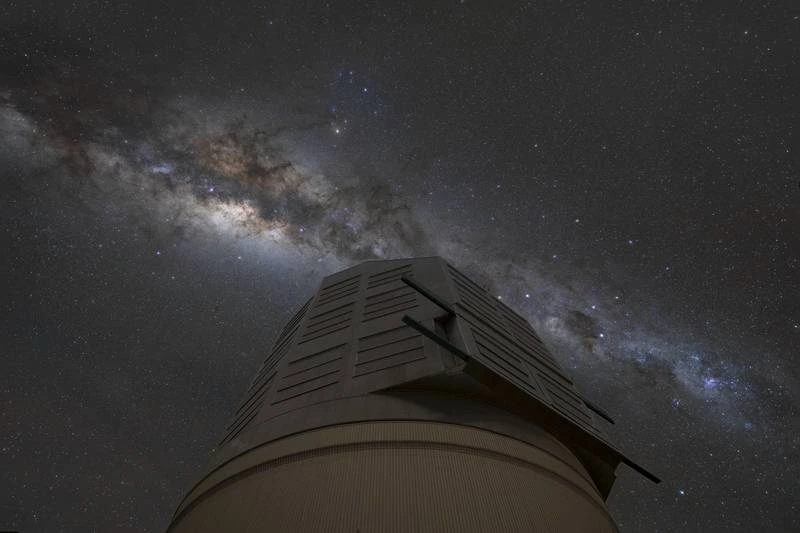
"It's an observatory that has no competition worldwide. The other telescopes can take pictures of a patch of the sky. With Rubin you're going to capture the entire sky every three days, which is the equivalent of having a movie of the universe in motion. That will allow us to understand how it works," Stuartt Corder, AURA's chief scientist in Chile, explained to Imagen de Chile en 2024.
The Vera Rubin Observatory is managed by AURA (Association of Universities for Research in Astronomy), which manages world-class scientific facilities for the U. S. National Science Foundation. Its installation in Chile reinforces the country's position as one of the most important astronomical centers on the planet, thanks to its privileged skies, stability and first-class infrastructure.