

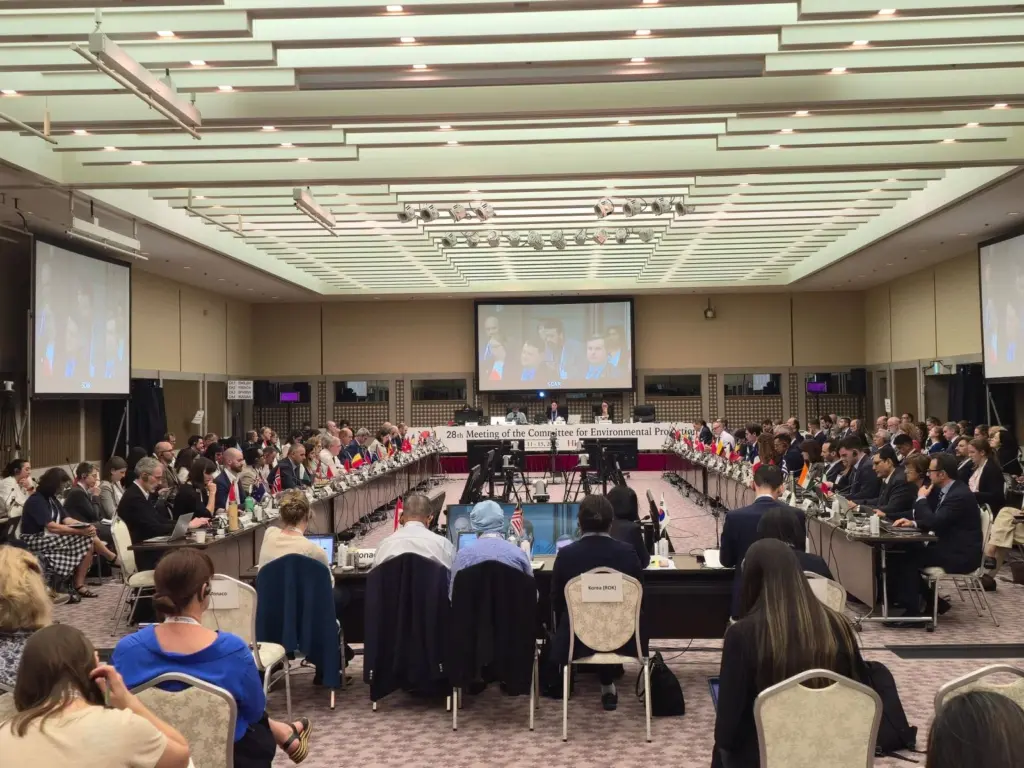
This week, the city of Hiroshima, Japan, became one of the world’s leading hubs for discussion on the future of Antarctica. Scientific and diplomatic delegations from various countries traveled there to participate in the 48th Antarctic Treaty Consultative Meeting (ATCM) and the 28th meeting of the Committee for Environmental Protection (CEP), forums where governments and scientific teams discuss measures regarding conservation, biodiversity, and climate change on the white continent.
In this context, Chile stands out for its scientific contributions and active role in decision-making. Dr. Hugo Benítez, a professor at Andrés Bello University and a researcher with the PIC² Anillo Project, the Cabo de Hornos International Center (CHIC), and the BASE Millennium Institute, serves as a delegate to the Scientific Committee on Antarctic Research, contributing to discussions on terrestrial biodiversity and the control of invasive species.
“Scientific evidence must also be taken into account in forums where environmental protection, conservation, and governance measures for Antarctica are discussed, ”says Benítez, emphasizing the role of science in international decision-making.
For his part, Dr. César Cárdenas, a researcher at the Chilean Antarctic Institute (INACH) and the Millennium Institute BASE, brings his expertise in marine conservation and the governance of Southern Ocean resources. His involvement is linked to the Commission for the Conservation of Antarctic Marine Living Resources, where he currently chairs the scientific committee for the 2026–2027 term.
“These forums are key to making progress on shared issues, especially in a context where climate change demands greater coordination between scientific and political bodies,” says Cárdenas.
Chilean science in the service of Antarctic biodiversity
Hugo Benítez's work focuses on the study and monitoring of non-native species in Antarctic and sub-Antarctic ecosystems, one of the main emerging threats to polar biodiversity. His research examines how climate change facilitates the spread of insects and other species, disrupting highly sensitive habitats.
Through the Cabo de Hornos International Center (CHIC), its work also addresses the connectivity between southern ecosystems, providing key evidence to strengthen biosecurity strategies, preventive conservation, and ecological monitoring in Antarctica.
In the marine sector, César Cárdenas participates in discussions on the sustainable management of the Southern Ocean’s living resources, including fisheries regulation and the monitoring of key species such as Antarctic krill, which is essential to the ecosystem’s balance.
The Commission for the Conservation of Antarctic Marine Living Resources plays a central role in these matters, developing technical recommendations that guide member states’ decisions on marine conservation.
Consequently, the significance of these meetings stems from a growing body of scientific evidence regarding the impacts of climate change in Antarctica. Reports from the Intergovernmental Panel on Climate Change indicate a steady rise in temperatures over the past few decades, particularly on the Antarctic Peninsula, one of the fastest-warming regions on the planet.
Read the full article on the Instituto Milenio BASE website .