Chilean speech
How our way of speaking became a profound feature of our identity
How our way of speaking became a profound feature of our identity
It is a question that all of us born in this country have asked ourselves at some point: why do Chileans speak the way we do? Other Spanish-speaking countries tend to make fun of our particular way of speaking, but rather than offending us, it gives us a certain sense of pride.
But how different is our speech really? Is it true that we speak the strangest Spanish of all? What characterizes our speech, transforming it into a feature so unique to our identity? To answer these questions, we spoke with journalist Verónica Franco, American influencer Christian Fetterman (Gringo Mode On), freestyler Martín Acertijo, and University of Chile linguistics professor Darío Rojas.
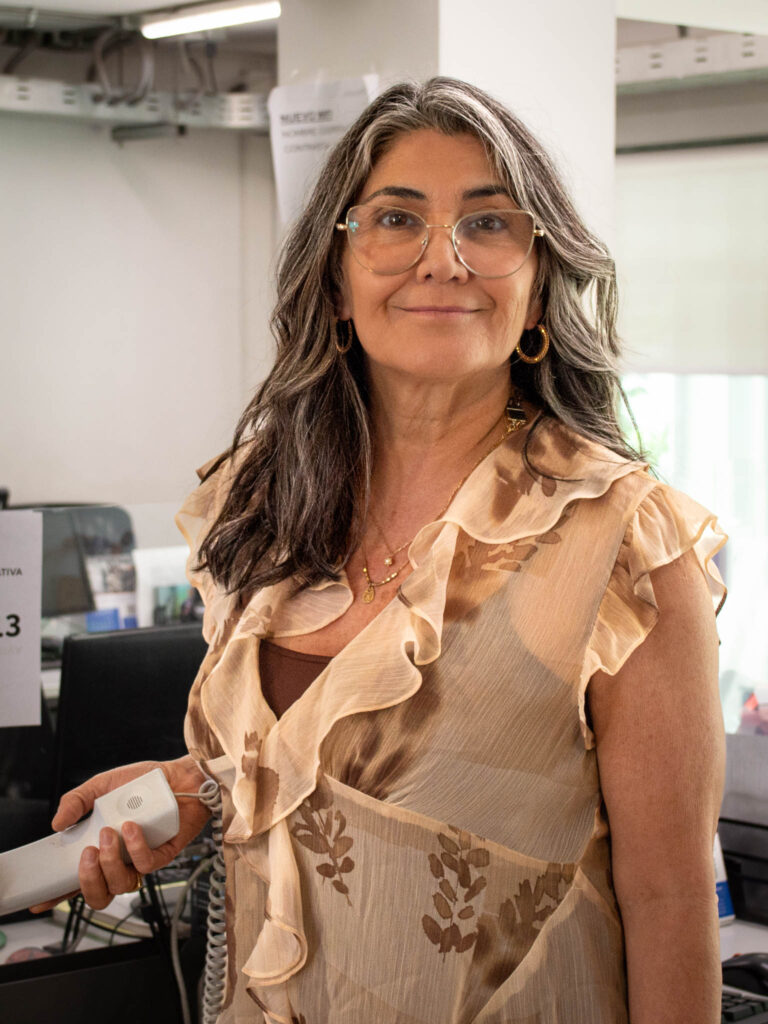
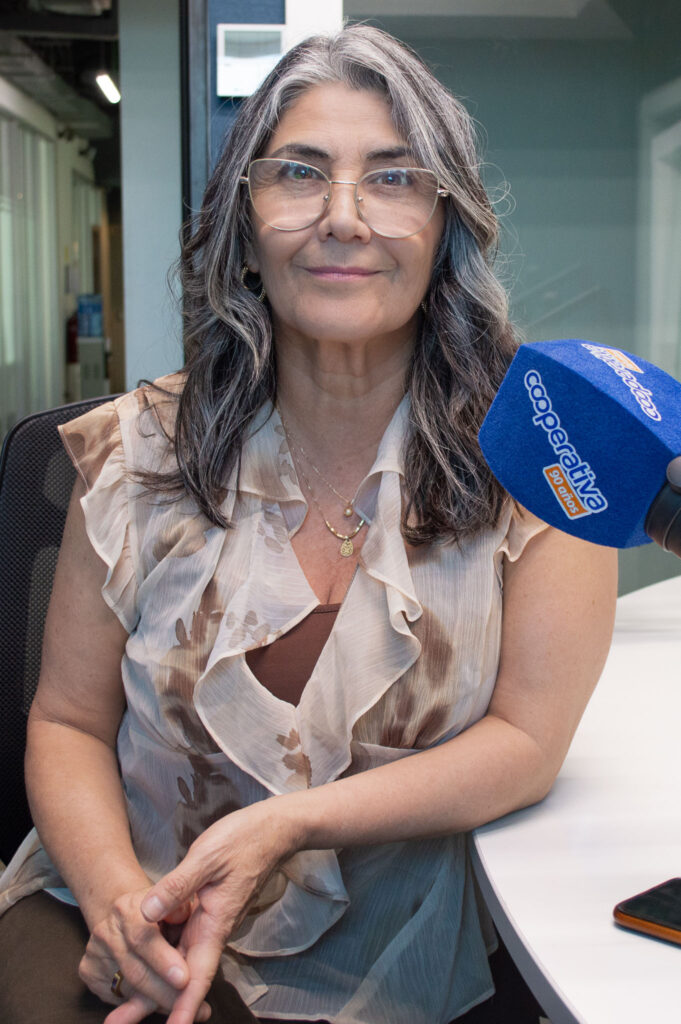
Journalist, general editor of press at Radio Cooperativa
Chilean speech is not just a way of expressing ourselves; it is the way we find and recognize each other. When we are abroad, we can identify a Chilean within ten seconds. If we hear a "cachai?" (you know?), we immediately feel at ease.
I think the most characteristic features of our speech are certain inflections, shortening words, and the speed with which we speak. We also tend to take certain things for granted with minimal information: three words are enough to convey a message. And anyone who doesn't understand is not Chilean.
The idioms that most identify us are cachai and the use of po ': yapo', altiro po'. For many people, it could also be hueón.
In Chile, language marks people socially, socioeconomicly, educationally, and geographically. Do you say marraqueta, pan batido, or pan francés? Do you say Chile with a ch or an sh? Depending on your answer, we already know your origin.
I believe it is valuable to preserve words that have indigenous roots and that we use in our daily lives, such as guagua or cahuín. They are an essential part of our Chilean language.
My favorite Chilean song is Corazones Rojos by Los Prisioneros.
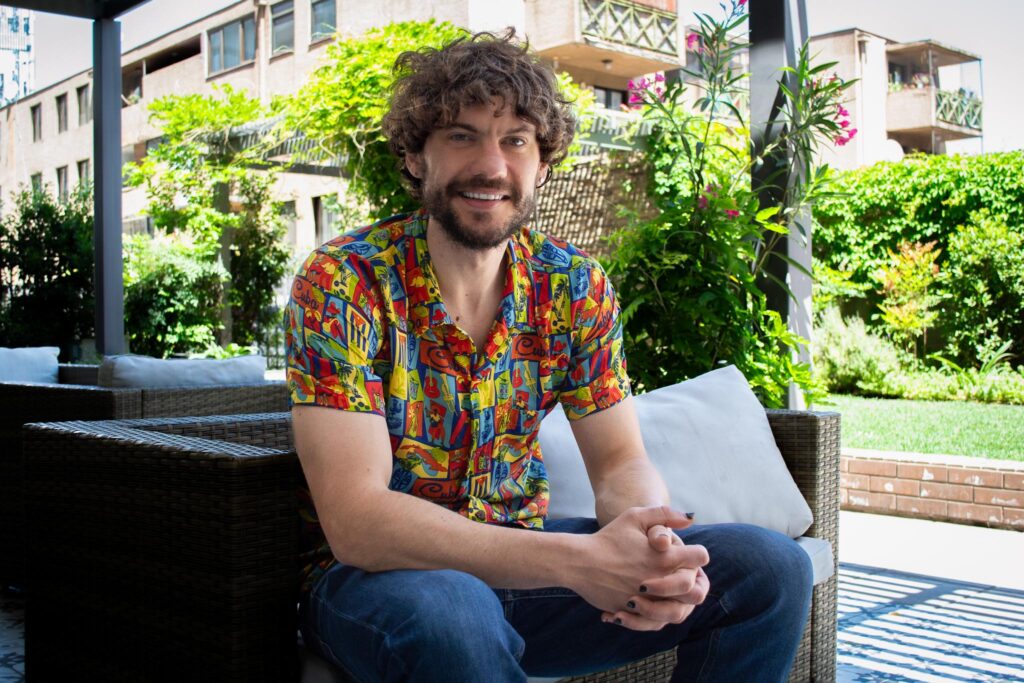
American comedian and influencer based in Chile
When I arrived in Chile, I was surprised by how fast people speak. I discovered some very unique words: pichintún, guagüita, guata. But what struck me most is that they play with the second person; for example, they use "yo soy" ( I am) but they also say "voh' soy" (you are). It's a total contradiction. It took me about four years to feel fluent in Chilean Spanish.
_ Emphasis through repetition is also very Chilean: "Esto es bueno, pero bueno bueno" (This is good, but really good).
If I had to choose one from the infinite sea of expressions they use, the one that best illustrates Chilean identity is the use of hueón. As an example, a phrase: "la hueá buena po' hueón" (the good stuff, dude). It's a family of words that can be used for everything, whether verbs, adjectives, or nouns. There is hueón and hueá, but also huevear and ahueonarse. Any expression can be converted to hueón.
Perhaps because Chile is a country that has been more isolated and prone to natural disasters, Chileans use humor frequently, almost competitively. It's like a mandate that forces them to joke around and be good at joking around, to not take things so seriously. The worst thing in Chile is to be serious or boring. I think that makes life more entertaining.
If you're a foreigner and want to learn to speak Chilean, you have to be brave and go for it. At first, people will tease you, but that's part of the learning process. After that, you'll have a great time!
My favorite Chilean song is El hombre que yo amo by Myriam Hernández.
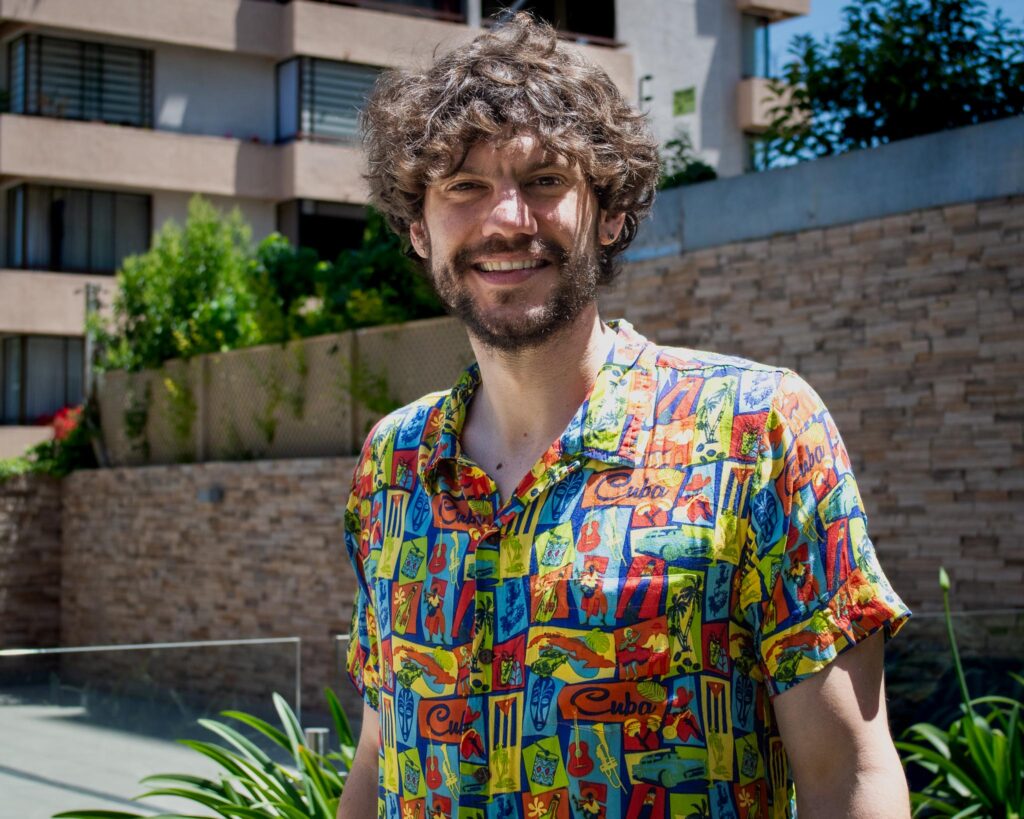
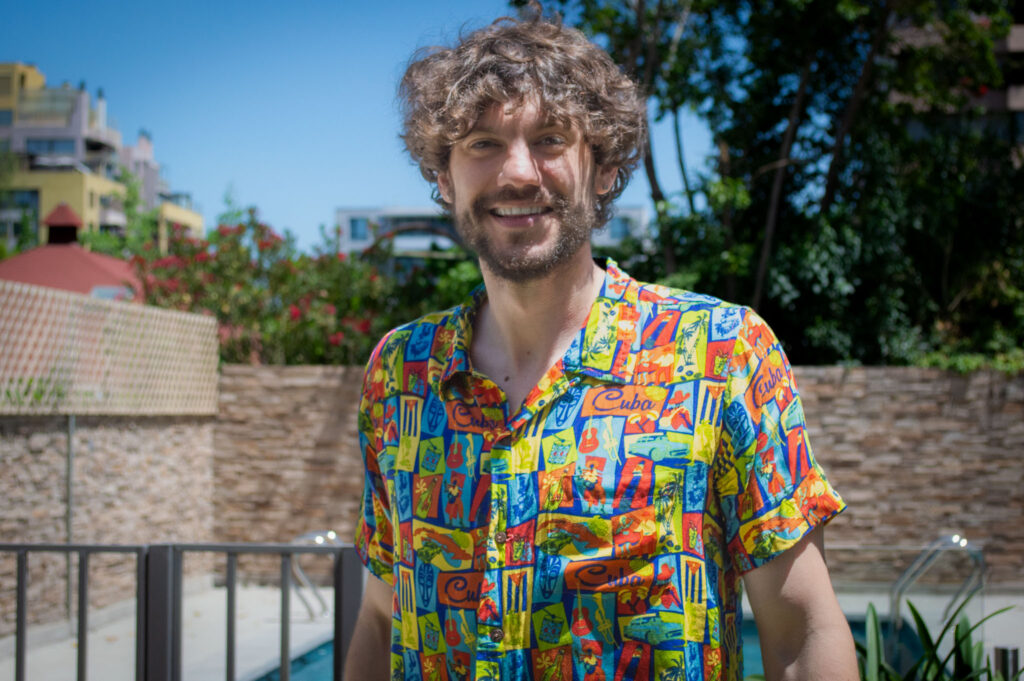
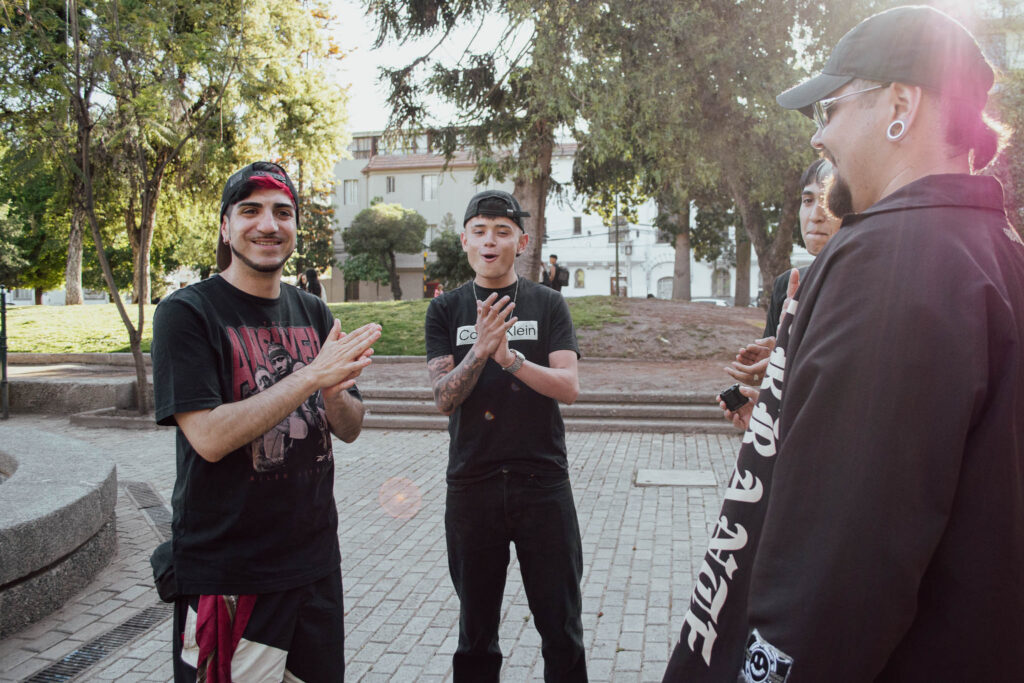
Freestyler, musician, and sociologist
My experience abroad is that foreigners love Chilean Spanish... oncethey understand it.
_ When people say that we Chileans speak strangely, differently, we don't realize that perhaps that very thing is what has made our literature so important on a global scale, and that our freestyle and Chilean urban music are recognized abroad. Instead of being ashamed of how poorly we speak, I think that richness of language is our pride and our export.
A well-placed "conchetumare" is always appropriate, whether to cheer someone up or to complain about something. It's a very Chilean expression.
I like phrases that refer to food, expressions that only Chileans understand and that are part of our culture. Estar donde las papas queman (to be where the potatoes burn), donde pica la jaiba (where the crab bites), arrastrar la bolsa del pan (to drag the bread bag), nacer con la marraqueta bajo el brazo (to be born with a marraqueta under your arm), me sacaste los choros del canasto (you took the mussels out of my basket), los choros me los como con limón (I eat mussels with lemon), el raspado de la olla (the scrapings from the pot)...
When my colleagues and I represent Chile in international freestyle competitions, I believe we stand out because we have a linguistic richness that is uncommon in Latin America. We use literary devices, complex words, puns, A/B structure, metaphors, and antithesis. The use of irony is also very characteristic of Chilean language.
I realized that various foreign urban music artists were reviving the sounds of their countries, such as corridos in Mexico or flamenco in Spain, and I wanted to do something similar with cueca. So I began experimenting with mixing urban music, hip hop, and cueca, and the concept of corte chilenero was born.
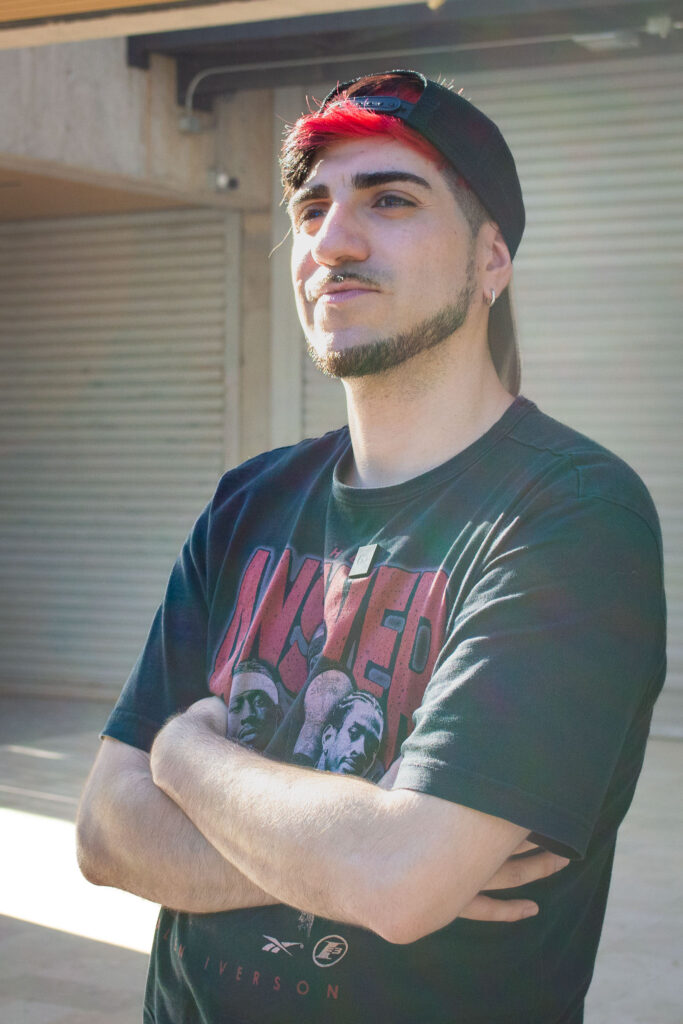


I think that even though we say we speak poorly, we still love our language. Typical phrases like "sacar la vuelta," "ir altiro," "¿cómo tan asopao?" or "pégate la cachá" are, for me, Chile itself.
My favorite Chilean song is Estrechez de Corazón by Los Prisioneros.
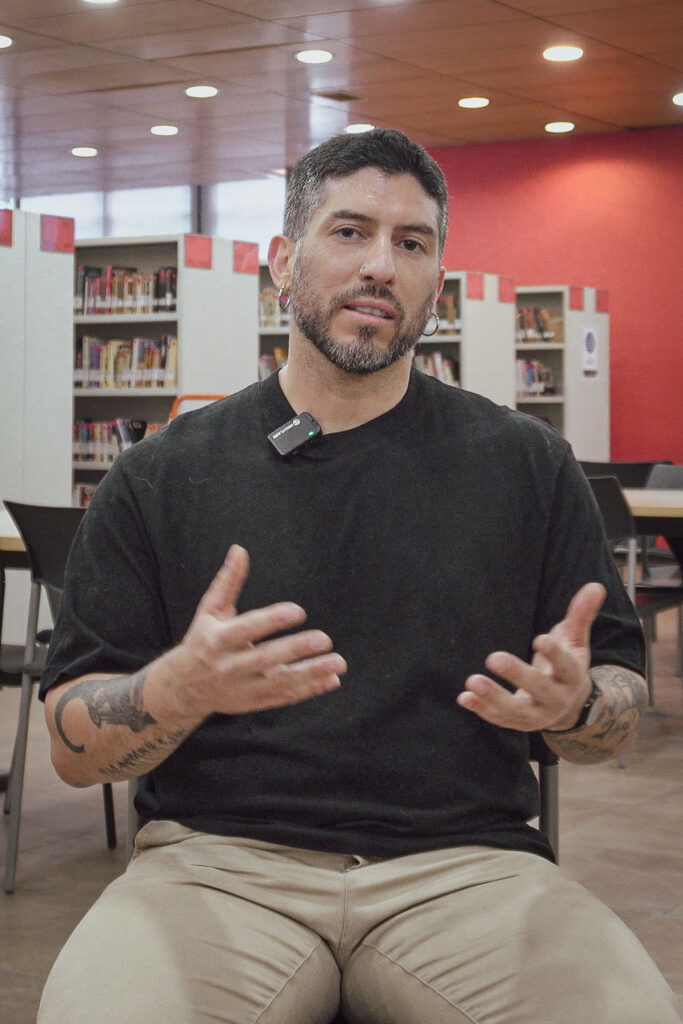
Professor and researcher in Linguistics at the University of Chile
Since the 19th century, various linguistic studies have contributed to the myth of the supposed exceptional nature of Chilean speech, theorizing that we speak in a particularly different or incorrect way. But this idea is not true: everywhere, people use idioms and are creative in their use of language.
There is a set of practices—associated with vocabulary, intonation, pronunciation, and the use of certain expressions—that, holistically, give us a recognizable personality. But we cannot reduce Chilean speech to a handful of words.
There are idioms that we believe are Chilean, but they are shared with the rest of the Spanish-speaking world, such as the use of hueón. There are words that are only used in Chile, such as fome, but the differences are fewer than we think.
The Andalusian influence is very strong in our way of speaking, for example in the aspiration of the final "s." Contact with indigenous languages is also very relevant, in our case mainly Mapudungún and Quechua.
At the end of the 19th century, German linguist Rodolfo Lenz stated that if there was anywhere where the conditions existed for a new language to emerge from Spanish, it was in Chile. He considered it particularly innovative and advanced in terms of linguistic change.
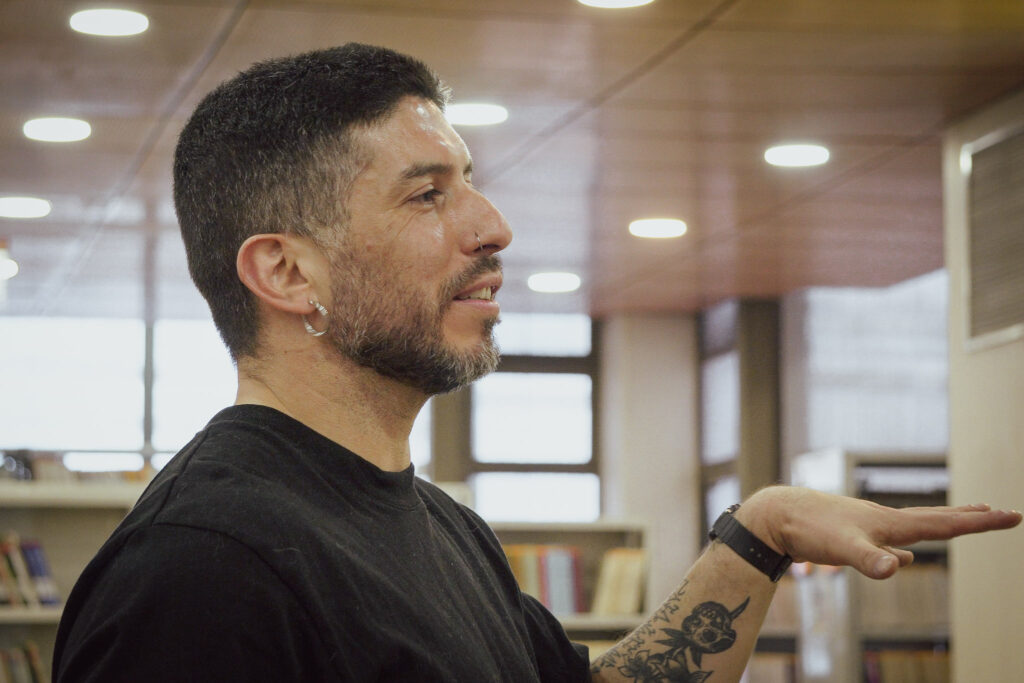
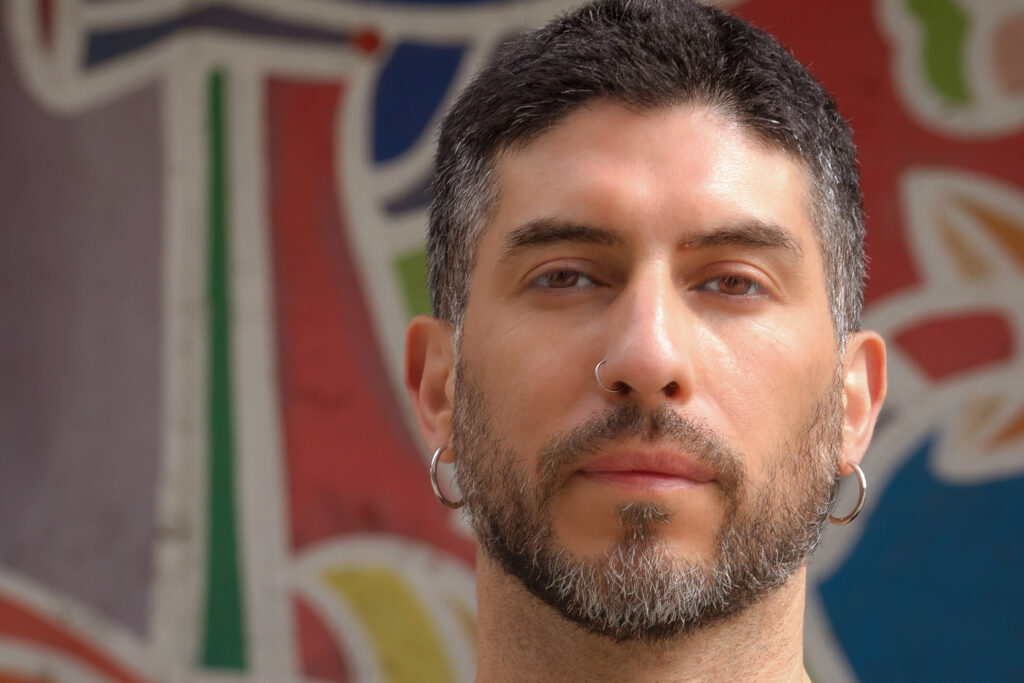
The idea that Chileans speak poorly has a lot to do with classism. If you want certain sectors of the population to end up being naturalized as subordinate to a certain position, one way to do so is by saying that their language is deficient. There is a lot of social prejudice imposed on our idea of language use.
Studying Chilean speech also allows us to understand our identity, cultivate historical memory, and improve the linguistic self-esteem of the population. It is a way to improve social well-being.
My favorite Chilean song is El baile de los que sobran by Los Prisioneros.