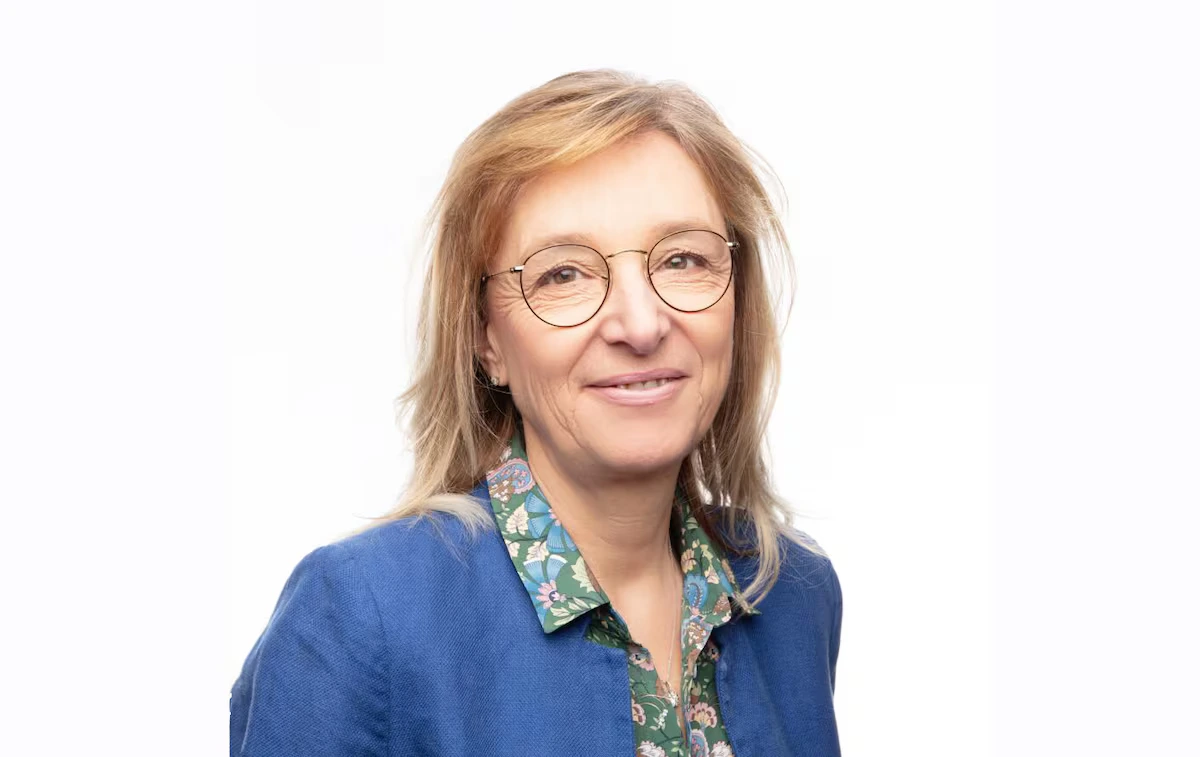


The World Health Organization (WHO) estimates that around 300,000 women die each year during pregnancy. "In other words, over a 10-year period we have three million deaths," says scientist Véronique Thouvenot (Concepción, Chile, 67 years old), who has dedicated her career to fighting this global problem that mainly affects countries with extreme poverty. In 2012, the Chilean-French scientist led the development of the mobile application Zero Mothers Die, which to this day provides women, especially in Africa, with information on pregnancy.
"It answers questions related to what happens in each week of gestation and in the baby's development during its first months. It also warns of signs that mothers should pay attention to for possible complications and when to go to the doctor," Thouvenot explains in a video call from Lyon. "The app gives simple but life-saving advice," he says of the technology that has also been implemented in parts of Peru and Brazil.
Zero Mothers Die App
Thouvenot's concern for maternal and neonatal mortality has its roots in Chile, where she lived for the first 11 years of her life. From that stay, the scientist remembers a woman named Mercedes, her family's maid. With her, she visited some poor neighborhoods of the Chilean capital in the 1960s:
"On her days off, my nana would go to see her friends who lived in towns in Santiago. Many times with my parents we accompanied her and took clothes, food and hygiene items. I was a child, but I already understood the conversations of the adults and I remember that they talked about a woman who had died in pregnancy. I also saw very sick children suffering from polio and dying at that time. So, all that was a very early sensitization in my life," says the doctor of mathematics and public health specialist who has been a consultant for the United Nations on health programs.
"That extreme poverty that I saw very young always stayed with me and it's desperate that it still exists in the world," she says. In countries where the Zero Mothers Die application is implemented, such as Ethiopia, Nigeria or the Democratic Republic of Congo, what continues to cost the lives of mothers and their children are "infections, inadequate health care, lack of prevention, lack of vaccines, discrimination and violence," she explains. The scientist also points out that in many of these places the death of pregnant women is seen as something that "cannot be solved, but accepted.
Zero Mothers Die's impact on vulnerable communities
About the women who seek help through the app, Thouvenot says that, for the most part, they are very young: "Some are between 13 and 14 years old. They have no education, no information, they don't even know what is happening to their bodies because no one told them about it. But even though they are very poor, even though they have no drinking water and very little electricity in their homes, they have a cell phone and are very skilled with technology," she says. "Also, in these communities, women talk a lot. So it takes just one of them having a phone and downloading Zero Mothers Die to get 15 or 20 others informed as well." She explains that once the app is downloaded, it is possible to use it without an internet connection and that the information is available in nine dialects and adapted for the local communities and their culture.
Thouvenot points out that the good performance of Zero Mothers Die makes her understand technology as a great tool to address the health problems that today beset the planet. "It is an ally to go faster to the patient, to reach places where there are no health professionals or where there are no clinics or hospitals," she says about the scope of digital innovation.
About his mission, he says that making sure that "every human being in the world has access to quality health is fantastic because if you have health, you can do a lot in life, like study and work". "Without health you can achieve very little, especially when you live in places of extreme poverty. It's important especially for women, because women's empowerment comes from having good health," she says.
Read the original article on the website of El País