Located in Buin, in the heart of Chile’s Central Valley, Viña Santa Rita has developed a wine tourism experience that combines heritage, history, and culture. Founded in 1880, the winery features a 40-hectare park, a museum, a historic mansion, and the Hotel Casa Real—venues that invite visitors to discover Chilean winemaking traditions beyond simply tasting its wines.
With a 146-year history, Santa Rita has received major international recognitions, including Forbes’ “50 Best Wineries” award, a Michelin Key for its Hotel Casa Real, and accolades from the World Tourism Organization. In an interview with Marca Chile, Elena Carretero, Manager of Corporate Affairs and Sustainability at Viña Santa Rita, discusses the strengths that set Chilean wine apart in international markets and shares the key factors that have enabled Santa Rita to transform its heritage into a globally recognized experience.
Wine has historically been one of Chile’s most recognized ambassadors around the world. What is the true competitive advantage that defines Chilean wine today, and how does it help strengthen Chile’s image?
The first distinguishing feature that defines Chilean wine in international markets is its representativeness and scale. Today, we are the world’s fourth-largest wine exporter, trailing only the “Big Three”: Italy, France, and Spain. This demonstrates that Chile has long held a solid position and that the Chilean wine brand has a strong presence. All of this, backed by its quality, consistency, history, and tradition, is undoubtedly our main distinguishing feature.
Hosting events such as The World’s Best Vineyards and Vinexpo Explorer puts our region in the global spotlight. What does it mean for Chile to host these two landmark events, and what should they mean for the local industry going forward?
As I mentioned, Chile is the world’s fourth-largest wine exporter and plays an important role in this market, but today it is also taking on a very prominent role in global wine tourism. Not only do we host the 50 Best Vineyards, but a Chilean vineyard has also been winning this ranking, while last year Santa Rita won Forbes’ 50 Best Wineries award. Having two Chilean wineries at the top of the global wine tourism rankings speaks to our prominence: it not only reflects the work done in the wine market but also the development of a wine-growing history and culture through wine tourism.
Wine is no longer sold solely by the bottle, but through on-site experiences. How is wine tourism transforming the way international visitors perceive and remember Chile?
You’re absolutely right: wine isn’t sold just by the bottle—but then, it never has been. I think this is something we need to be very clear about, and it’s one of the main ways wine stands out from other alcoholic beverages. Wine has been part of human culture since 6,000 B.C. and has always been linked to an experience, a place, and a table. That’s the fundamental factor. The fact that we now have the “50 Best Vineyards” in Chile speaks precisely to that: how we must rediscover that essence that, for a time, we thought wasn’t so important—but it certainly is.
In the specific case of Viña Santa Rita, what can you tell us about everything it has to offer? How has it made a name for itself in wine tourism?
In the case of Santa Rita —and I believe this is precisely why Forbes recognized us as the world’s leading winery—what we’ve done is highlight that heritage, that history, and that culture. If wine is to be sustainable in the future and overcome current crises, it must draw much more from its history and tradition, while continuing to innovate. At Santa Rita, we’ve brought all that heritage and culture together to present it with pride and a touch of sophistication.
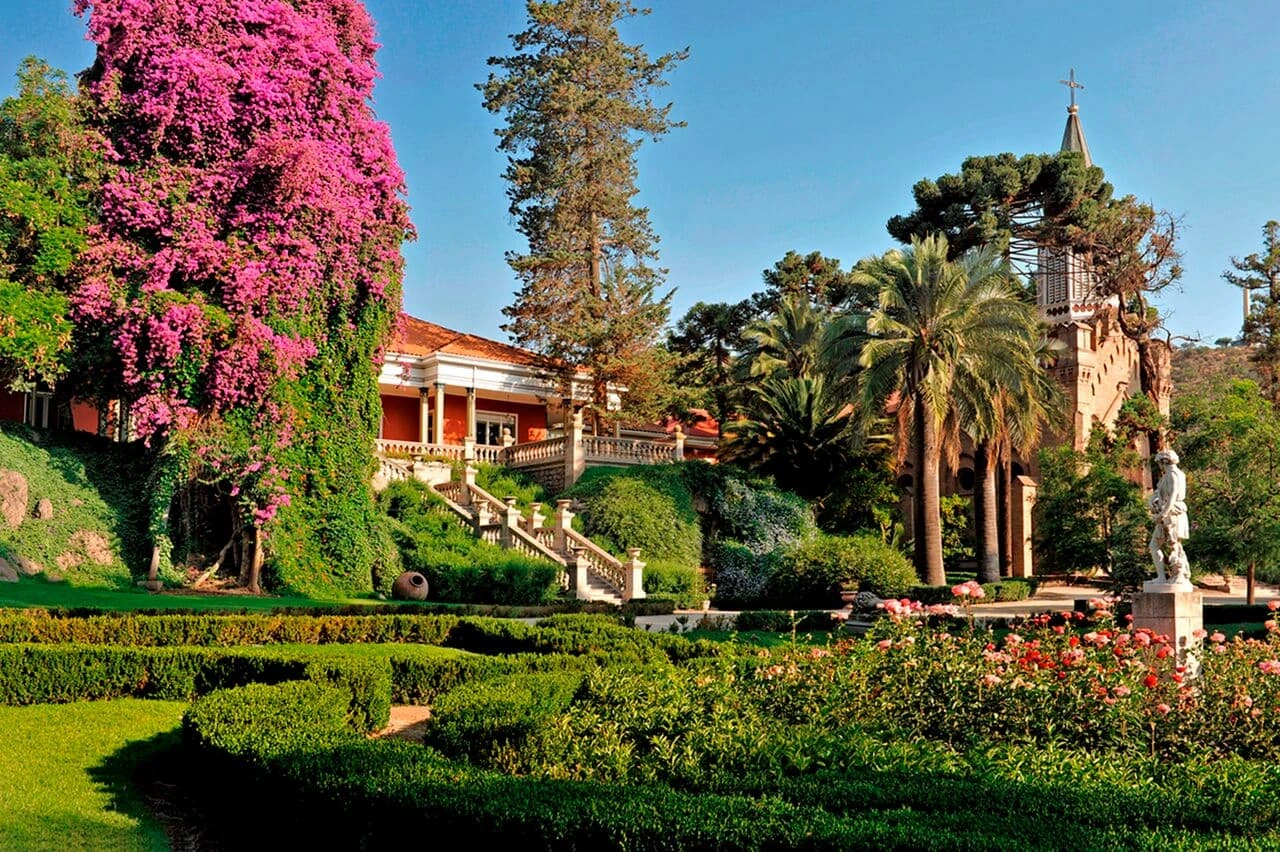
We have a 40-hectare park surrounding the historic mansion and the Claro Vial Foundation museum, which houses 3,000 artifacts representing the ethnographic culture of all the peoples who have inhabited Chile. We also have a chapel adjacent to the hotel, where we’ve been hosting classical music concerts for the past 15 years, and we’re preserving the history of the 60 families who lived on the vineyard—which even had a theater and a school—forming a true urban hub. That is what we seek to highlight: that Chile has always had a wine-growing culture dating back to 1880—more than 146 years ago.
The global industry is facing a challenging period due to declining consumption and changing habits among young people. How do you interpret this crisis, and what patterns are shifting?
I believe the crisis isn't caused solely by these new habits, but by having neglected our essence. Wine has always been the star of the table, and we've let that role slip away. That doesn't mean the industry can't innovate with new formats or alternatives for younger consumers, but both approaches must coexist.
Today, there is an opportunity to rediscover the joy of sitting down at the table, sharing, and reconnecting with traditional wine culture. We can offer alternatives with no alcohol or lower alcohol content for different occasions, but without ever losing the identity that defines us.
If I had to summarize the message that the Chilean wine industry should convey to the leaders and experts visiting the country for these events, what is the story about its future that Chile simply cannot fail to tell?
The first thing those of us in Chile must do is recognize the value of our wine culture and history. We’re the world’s fourth-largest exporter and have been a major player in the wine industry for many years; the first step is to “believe in ourselves,” as we say in Chile. Once you believe it, you can share it with more passion. Chile needs to explain to every visitor that it not only plays a significant role in international markets but also because of the way it has preserved its wine-making history and culture, and how it manages to convey them so that every wine lover is captivated by truly understanding the terroir, history, and culture.