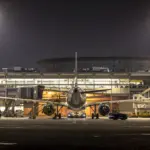
Better connectivity, shorter travel times, and greater comfort: that’s what the new train between Santiago and Chillán—the most modern in South America—has to offer. Launched in 2024 by EFE Trenes de Chile (EFE Central), this service represents a significant leap forward in the quality of public transportation in the country.
There are six trains manufactured in China by CRRC Sifang, featuring dual-mode technology—meaning they can run on either electricity or diesel. Each train has a seating capacity of 238 passengers and can reach speeds of up to 160 km/h. In addition, they offer an enhanced travel experience with universal accessibility, accessible restrooms, reclining seats, a café, screens displaying real-time information, and more.
This new service is part of the "Trains for Chile" Plan, an ambitious public policy initiative aimed at modernizing the country’s rail network, improving connectivity, and making train travel a comfortable, fast, and sustainable option once again . Thanks to this initiative, the journey between Chillán and Santiago will take just 3 hours and 40 minutes on the express service, and 4 hours and 5 minutes on the regular service.
Chile as a regional reference
“This train, the most modern in South America, has some very special features. For example, its top speed, which undoubtedly improves the conditions and travel times that a service like this can offer,” said Mabel Leva, president of EFE Central. “It represents a leap forward in terms of our country’s modernization, in the direction we want to move, and also in terms of sustainability and comfort for our citizens and those who visit us,” she added.
The initiative also includes the improvement of 10 stations in key cities such as Rancagua, Talca, Linares and Chillán, as well as the construction of a new maintenance workshop. The total investment is US$ 70 million.
The service began operations in March 2024, and is projected to have carried 500,000 passengers by the end of this year, with the goal of reaching 800,000 passengers annually once it is operating at full capacity.
“The modernization of public transportation being driven by Chile improves people’s quality of life and reinforces our commitment to sustainable development. It is a step forward that positions the country as a regional leader. This train represents the Chile we want to show the world: a modern country that invests in connectivity and puts innovation at the service of its people,” says María Teresa Saldías Morales, executive director of Imagen de Chile.
141 years connecting Chile
Founded in 1884, EFE Trenes de Chile is the country’s oldest public company. Today, it has a project portfolio worth over $8 billion, including the new Biobío railway bridge, the Melipilla–Alameda and Quinta Normal–Batuco rail lines , the Limache–Quillota–La Calera project, and the modernization of the Chillán–Alameda service—a development that also aims to triple the number of passengers transported by 2031 and achieve carbon neutrality by 2035.
“People, in general, were really nostalgic for trains, and this is a major step forward that makes us feel like our country is moving forward. It’s a sign that fills us with pride, and we can sense it in our passengers as well—they want us to keep moving forward and have more trains for Chile,” said Leva.