

1. It wasn't launched in its own magazine
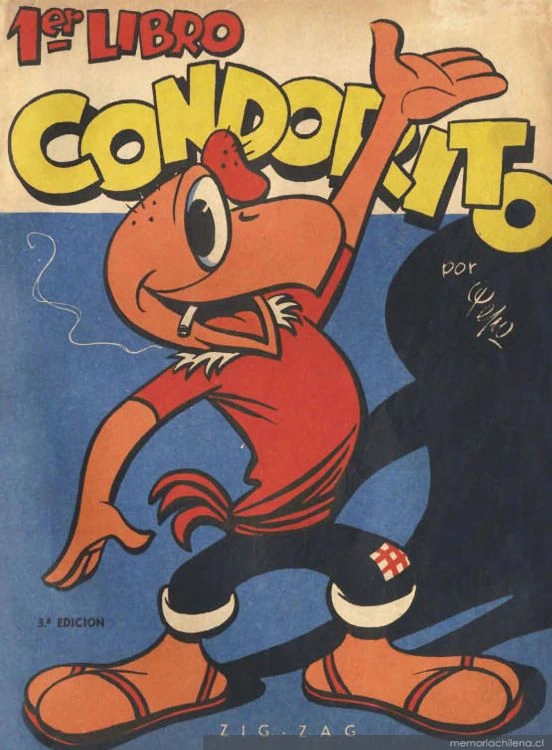
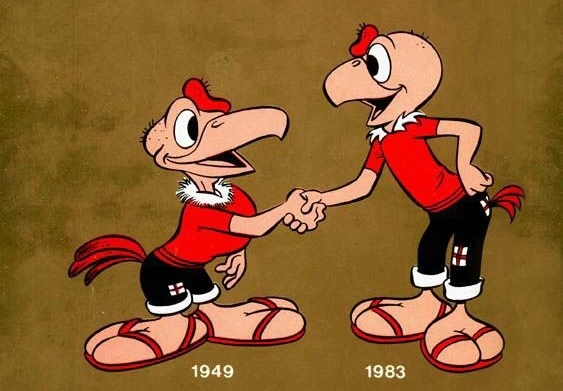
Contrary to what many people think, Condorito didn’t always have his own magazine. He first appeared on August 6, 1949, in the pages of *Okey*, a comic book published by the renowned Zig-Zag Publishing House.
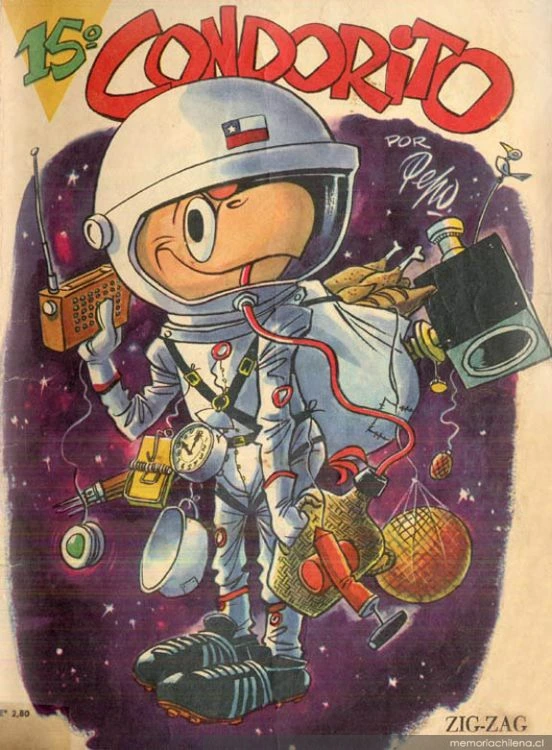
Six years later, on December 21, 1955, the first issue of Condorito magazine was published, with a print run of nearly 10,000 copies. What began as an annual publication gradually increased in frequency until it became a monthly magazine and, later, a biweekly publication during its period of greatest expansion.
2. Pelotillehue on the map
In his early stories, Condorito was a peasant who arrived in a small town in search of better opportunities. Over time, that setting took on a name, identity, and personality of its own: Pelotillehue.
There, an entire universe came to life, featuring characters such as Yayita, Don Chuma, Coné, Pepe Cortisona, Ungenio, Doña Tremebunda, and Garganta de Lata, as well as unforgettable locations like the bar “El Tufo,” the pharmacy “Sin Remedio,” and the restaurant “El Pollo Farsante.” All of them helped turn this fictional town into one of the most recognizable settings in Chilean comedy.

3. Soccer and Other Rivalries
If Pelotillehue had a heart, it also had a classic rivalry. The matchup between Club Deportivo Pelotillehue and its counterpart from Buenas Peras was much more than just a soccer game: it was the big event of the year. The rivalries, the arguments among fans, and the chaotic endings to the matches reflected—in a humorous way—a passion that would be very familiar to any reader.
The rivalry between the two towns was also reflected in their newspapers. Just as the residents of Pelotillehue got their news from the pages of “El Hocicón”—a modest but honest newspaper—Buenas Peras had “El Cholguán,” which was marketed under the slogan “A reliable and truthful tabloid.”
4. Diplomatic Inspiration
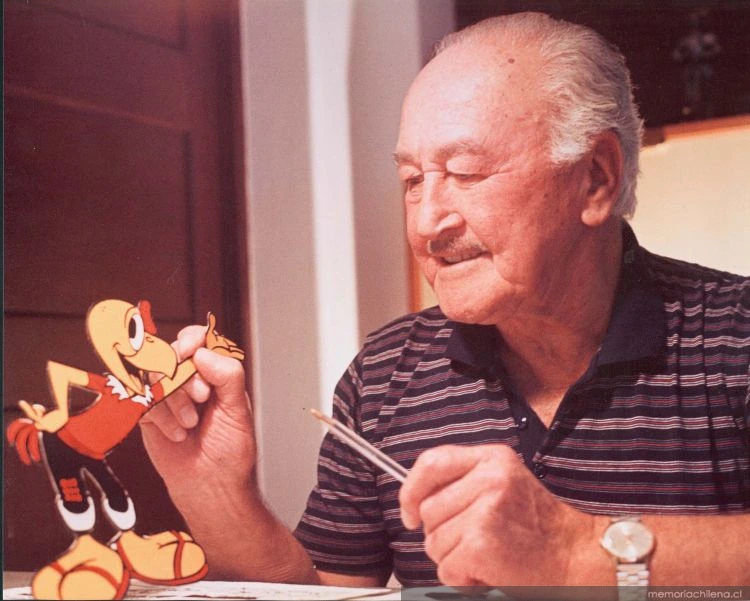
Behind the residents of Pelotillehue lie more than a few stories drawn from real life. Among family members, friends, and people he met over the years, Pepo found inspiration to create several of his characters. One of the most intriguing examples is Huevoduro.
With his distinctive oval head and extremely pale skin, he was inspired by an official at the Canadian Embassy in Chile whom the cartoonist knew personally. According to Pepo, he was so pale that he seemed to have no blood in him—an observation that ultimately led to the creation of one of the comic’s most distinctive characters.
5. Condorito: The Universal
Perhaps Condorito's greatest achievement was becoming a quintessentially Chilean character while still remaining relatable to millions of people outside the country.
The comic strip was eventually published in more than 100 newspapers across 19 countries, ranging from Latin America to markets such as Japan and Italy. To achieve this, many expressions specific to Chilean Spanish were adapted to standard Spanish, and some local references were altered in the international editions. The result was so successful that generations of readers in countries such as Peru, Ecuador, Colombia, and Mexico grew up convinced that Condorito was part of their own culture—a testament to the reach achieved by Chile’s most universal comic strip.
Learn more about Condorito on Somos Chile.