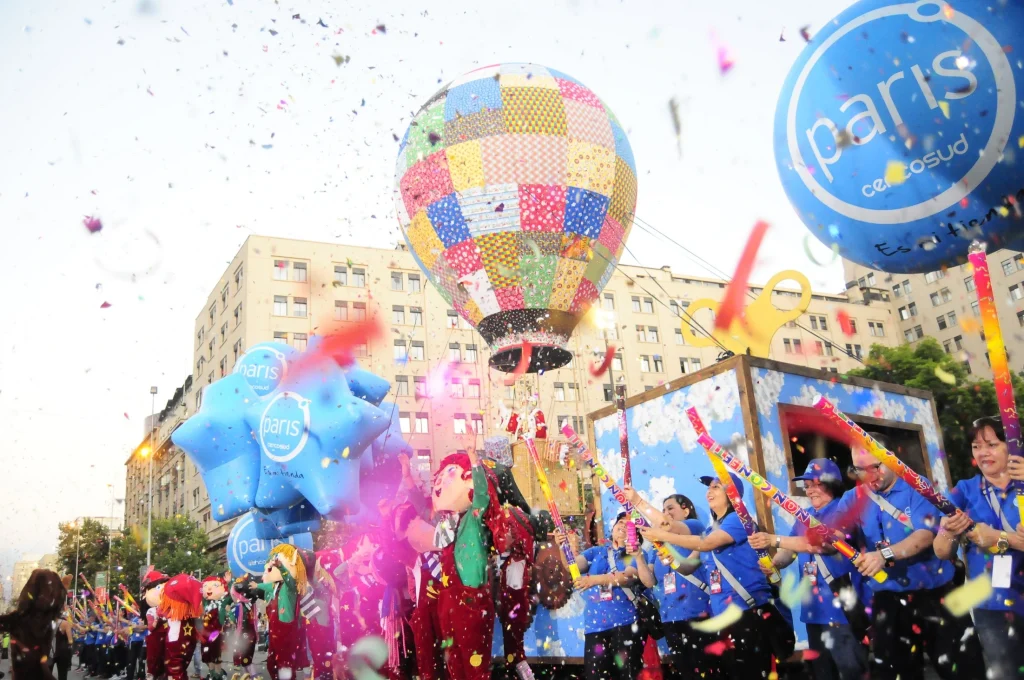


Giant balloons, floats, dance troupes, music, and dance will be part of a new edition of Paris Parade, one of Chile’s most popular family-friendly cultural events. Organized by Paris and produced by Romero & Campbell, this year’s parade will cover a three-kilometer route, starting near the Salvador Metro station in Providencia and continuing along the Providencia-Alameda corridor until it ends at a stage near the Palacio de La Moneda.
Since its first edition in December 2010, the event saw attendance grow by more than 100% over its first five years, surpassing one million attendees in 2016 and again in 2025. Its reach extends beyond the capital: at its most recent edition, 13% of the attendees came from other regions of the country, and of those, 86% traveled specifically to participate in the event.
Creative Talent and Chilean Identity
The production of Paris Parade involves more than 1,900 people for each edition. In 2025, it generated 1,951 direct jobs, 980 of which were for artists, demonstrating the national creative industries’ capacity to produce large-scale shows.
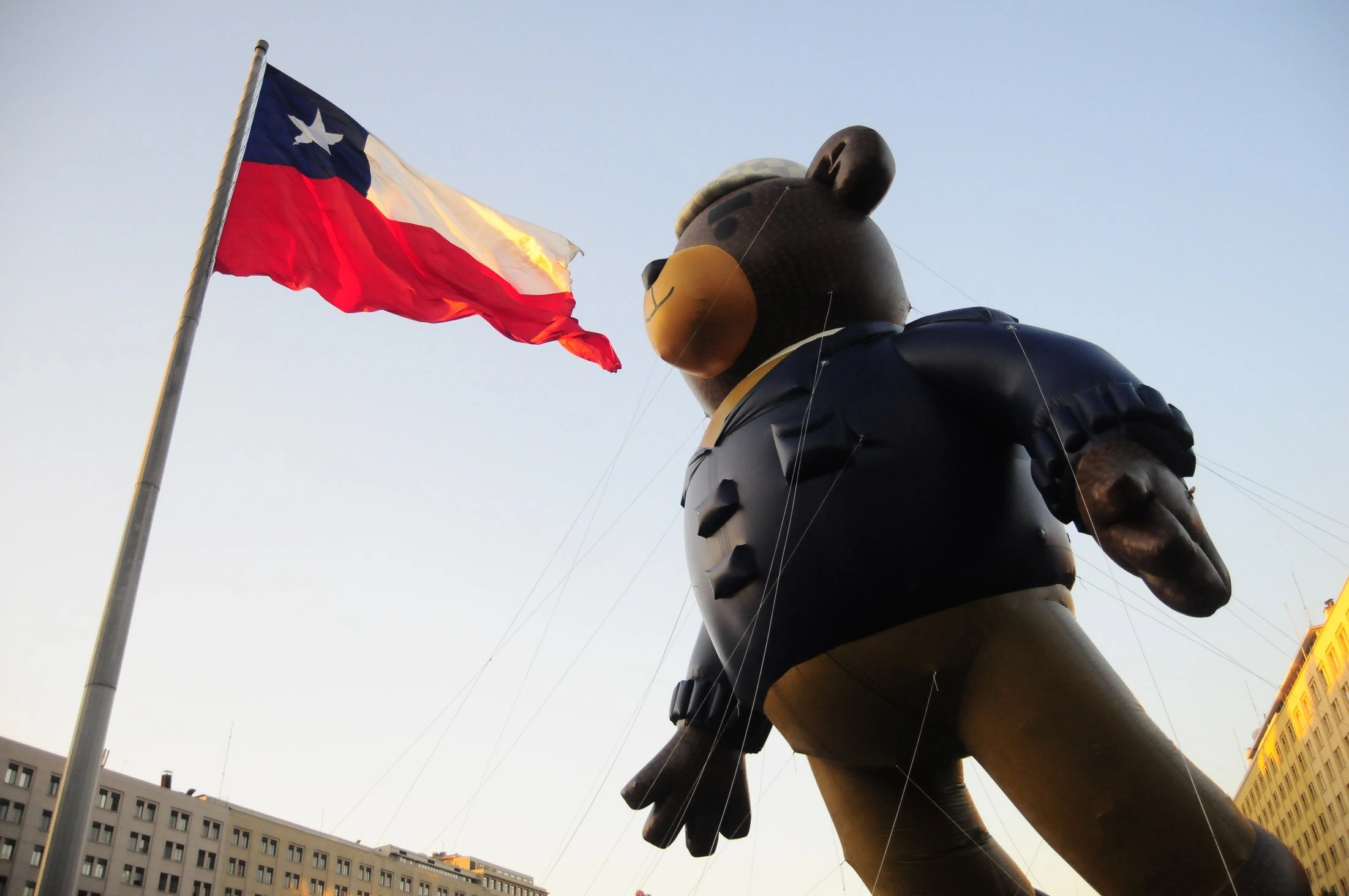
Throughout its history, giant balloons depicting characters from the Disney universe—such as Mickey Mouse—classics like Popeye and SpongeBob, Latin American icons like Mafalda and El Chavo del Ocho, and figures from Chilean culture like Condorito and Mampato have paraded through the streets of Santiago.

Another key character is the traditional Viejito Pascuero, the name typically used in Chile to refer to Santa Claus. The role will be played by Guillermo Burgos, who in 2012 became the country’s first professional Santa Claus after earning a certification in the United States.
A city that embraces a tradition as its own
Organizing the parade requires extensive public-private collaboration. In 2025, its Governance Committee brought together 14 institutions to coordinate issues related to transportation, security, environmental management, and the use of public spaces.
Sustainability is also a key part of its operations. Since 2023, the event has been measuring its carbon footprint, and according to its 2025 Results Report, it has managed to reduce its emissions by 24%. In terms of transportation, 65% of attendees arrived by public transit, and 51% used the Metro.
Now in its 15th year, the Paris Parade has become part of Santiago’s end-of-year traditions, transforming its public spaces into gathering places for people of all ages and establishing itself as the starting point for Chile’s “warm” Christmas celebrations.