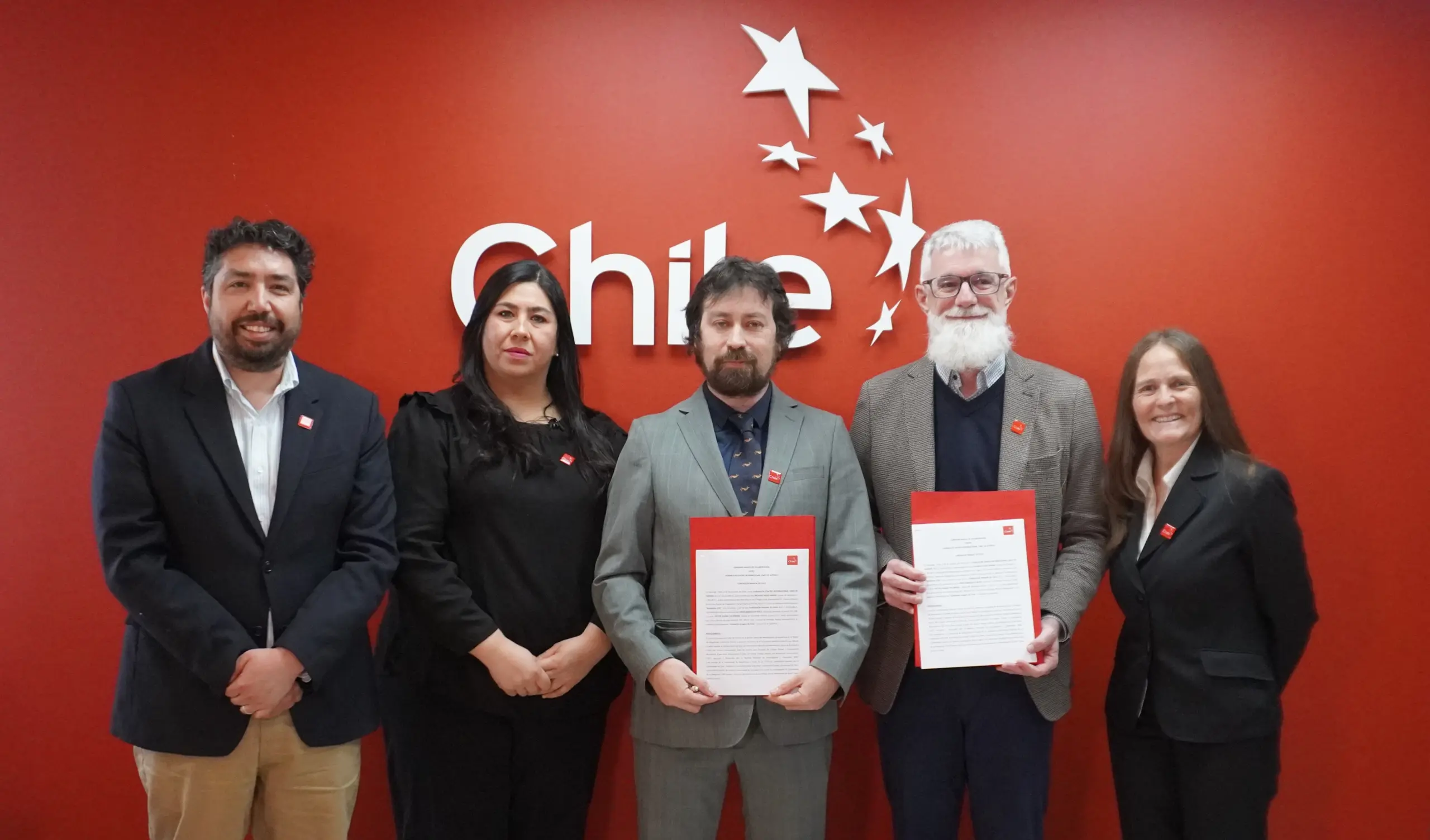


The Cabo de Hornos International Center (CHIC) and Marca Chile signed a framework agreement for collaboration, which aims to coordinate efforts to promote the country, with a focus on the Cabo de Hornos Biosphere Reserve and the center’s work in research, education, and biocultural conservation.
Located in Puerto Williams on Navarino Island, the CHIC is the first permanent center of scientific and technological excellence established in this region. There, researchers from various disciplines study sub-Antarctic ecosystems and their changes, and address global phenomena such as climate change and biodiversity loss—a mission that will be promoted through various initiatives outlined in the partnership agreement signed by both entities.
“This agreement strengthens Chile’s image as a country known for its environmental assets, diversity, and the unique characteristics of the sub-Antarctic region. It allows us to incorporate the southernmost part of the country—all the way to Cape Horn and the Drake Passage—into the national consciousness, and it strengthens the link between public policy and scientific sovereignty,” said Ricardo Rozzi, CHIC’s director of research.
The agreement is being signed at a time when environmental science is gaining prominence in Chileans’ sense of pride. According to the “Orgullo Chileno” study by the Imagen de Chile Foundation, 63% of people feel very proud of the country’s scientific and technological development. Furthermore, between 2023 and 2025, pride in initiatives such as the Climate Change Observatory rose from 55% to 73%, and pride in species and biodiversity conservation rose from 59% to 74%.
“From the southernmost tip of Chile, knowledge is generated about processes that have implications for the world. This agreement allows us to help ensure that this work—and the scientific talent that makes it possible—gains greater international visibility, demonstrating that Chile has the resources and capabilities to conduct research, generate knowledge, and contribute to addressing global challenges,” said Enzo Abbagliati, executive director(s) of Marca Chile.
One of the highlights of this collaborative effort will be the 5th International Cape Horn Conference, to be held May 10–14, 2027, in Puerto Williams. The conference will bring together researchers and experts from various countries to address the challenges of ecology, economics, and conservation on islands and in remote areas.