

La Moneda Palace: Chile's architectural icon
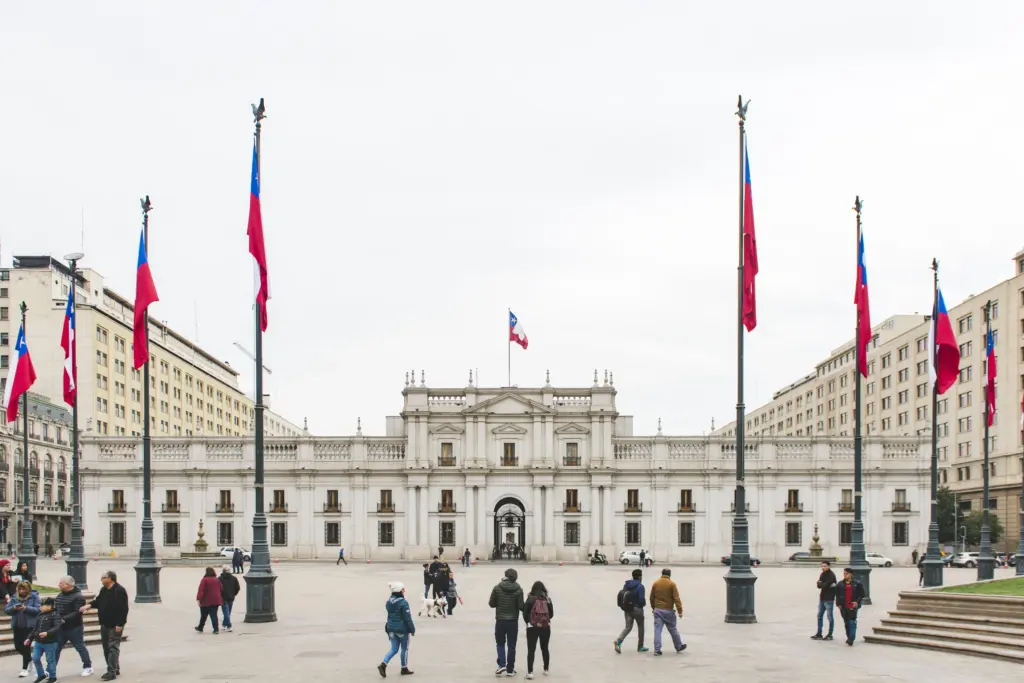
Known to Chileans simply as La Moneda, this neoclassical building located in the heart of Santiago is one of the most emblematic in the country. It was designed by Italian architect Joaquín Toesca and inaugurated in 1805 as the headquarters of the Royal Mint of Santiago.
In 1846, President Manuel Bulnes transformed the building into the seat of the Chilean government. Since then, its halls and interior courtyards have witnessed the country's political history from the 19th century to the present day.
Santiago Municipal Theater: the epicenter of art
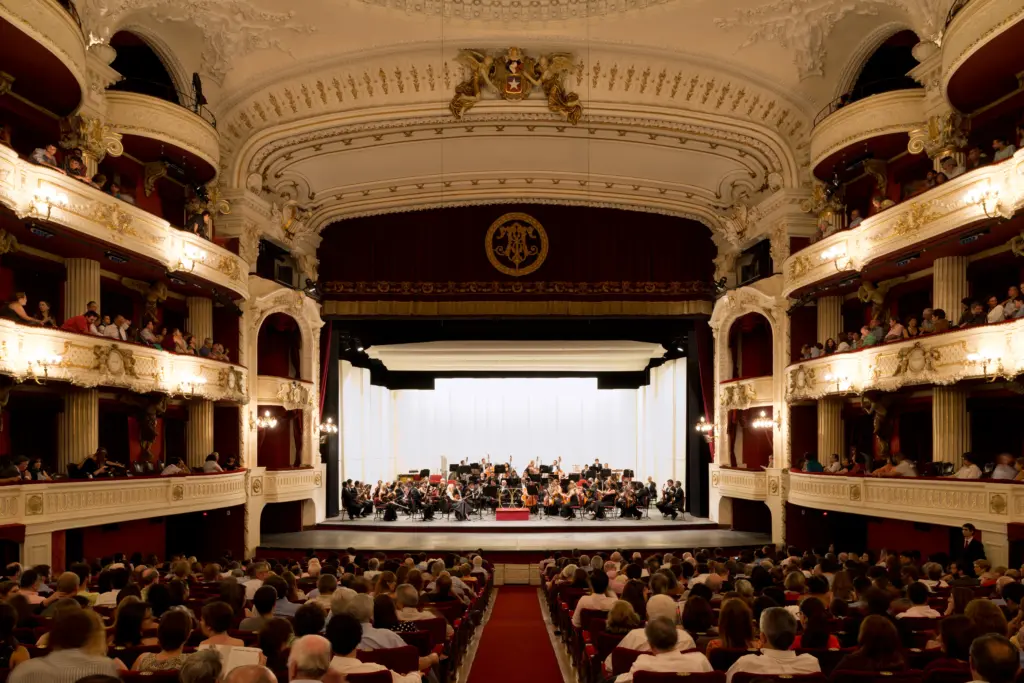
The Municipal Theater of Santiago is one of Chile's longest-standing cultural centers. Designed by architect Francisco Brunet des Baines, its architecture is inspired by the French neoclassical style.
It was inaugurated on September 17, 1857, with a performance led by soprano Sofía Amic-Gazan, who sang the national anthem accompanied by a female choir. Since then, the theater has been the venue for outstanding opera, ballet, and classical music productions, establishing itself as a benchmark for the performing arts in the country.
Estación Mapocho Cultural Center: railway history and culture
Mapocho Station was inaugurated in 1912 as one of Santiago's main railway terminals. Its construction responded to the need to modernize rail transport and strengthen connections with other cities in Chile.
After closing its operations in 1987, the building was restored as a historical landmark and transformed into the Estación Mapocho Cultural Center, a space where exhibitions, fairs, conferences, and artistic activities converge to enrich the cultural life of the capital.
Historic Valparaíso: architecture and port heritage
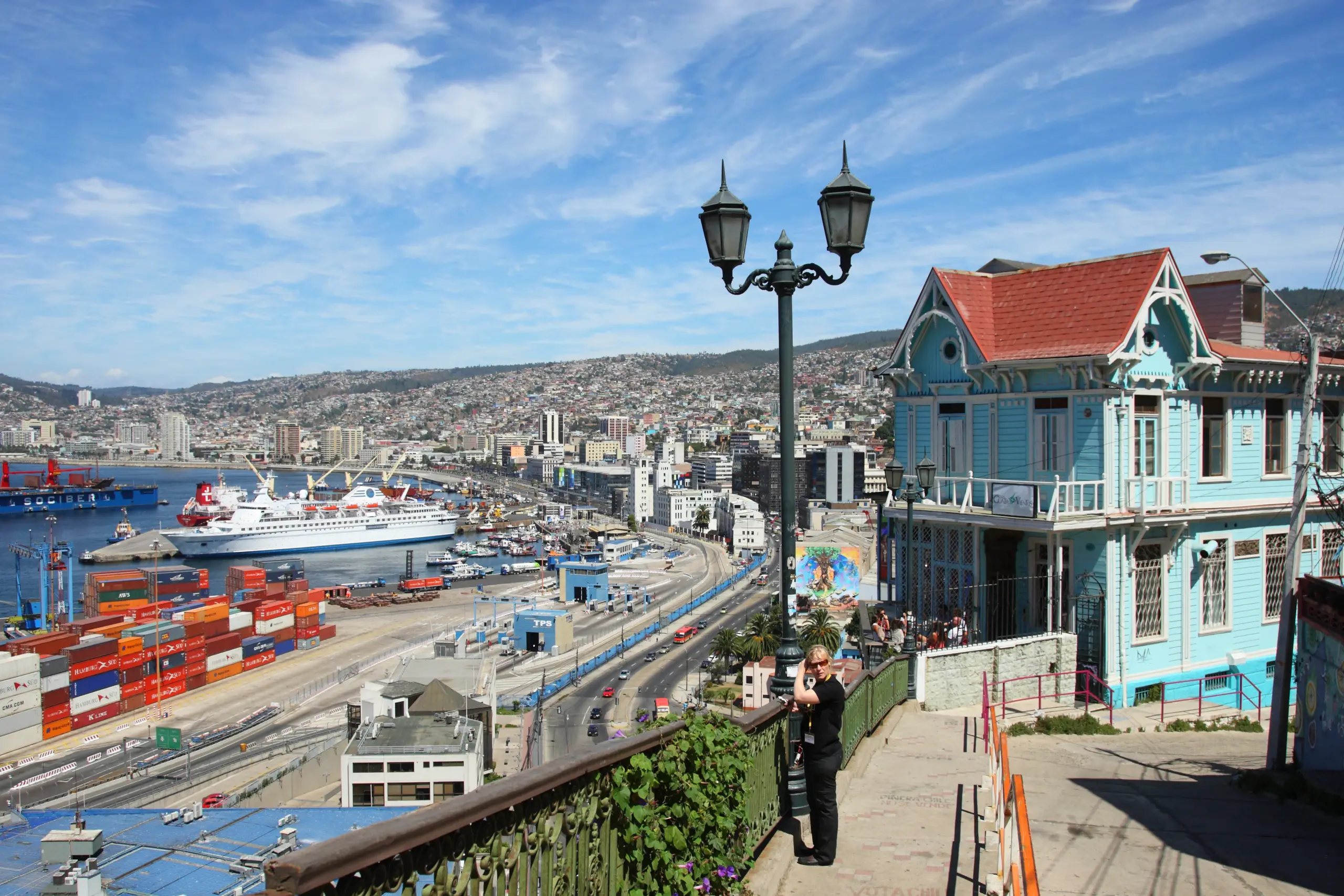
The historic center of Valparaíso, declared a World Heritage Site by UNESCO, is one of Chile's most distinctive urban landscapes. Its hills covered with colorful houses, historic elevators, and port architecture reflect the city's development as one of the Pacific's main ports.
Places such as Echaurren Square, rebuilt after the 1906 earthquake, and Sotomayor Square, surrounded by administrative and port buildings of different architectural styles, bear witness to the historical evolution of this heritage city.
Casa Colorada: a testament to the colonial era
Built between 1769 and 1779, Casa Colorada is one of the few examples of colonial architecture that remain in downtown Santiago. It was the residence of Mateo de Toro y Zambrano, president of the First National Government Junta in 1810.
Since 1970, the building has belonged to the Municipality of Santiago and, after a restoration process, it became the Museum of Santiago, a space dedicated to disseminating the history and urban development of the city.
Wulff Castle: heritage by the sea
Located opposite Caleta Abarca beach in Viña del Mar, Castillo Wulff is one of the most recognizable buildings on the coastline. It was built between 1905 and 1906 by businessman Gustavo Adolfo Wulff Mowle and stands out for its blend of European and Chilean architectural influences.
It was later remodeled by architect Alberto Cruz Montt in 1910. Today, the building serves as a cultural space, hosting exhibitions and artistic activities with a privileged view of the Pacific Ocean.
Museum of Memory and Human Rights: memory and reflection
Opened on January 11, 2010, by former President Michelle Bachelet, the Museum of Memory and Human Rights was created based on the recommendations of the National Truth and Reconciliation Commission.
The museum preserves testimonies, archives, and documents that provide insight into the human rights violations that occurred during the military dictatorship, with the aim of contributing to historical memory and promoting a culture of respect for human rights.

Chile's architectural heritage: living identity and international influence
Each of these heritage sites connects new generations with their collective memory and strengthens cultural tourism in the country. Their conservation not only safeguards the past, but also promotes sustainable development and showcases Chile's historical and cultural wealth to the world.