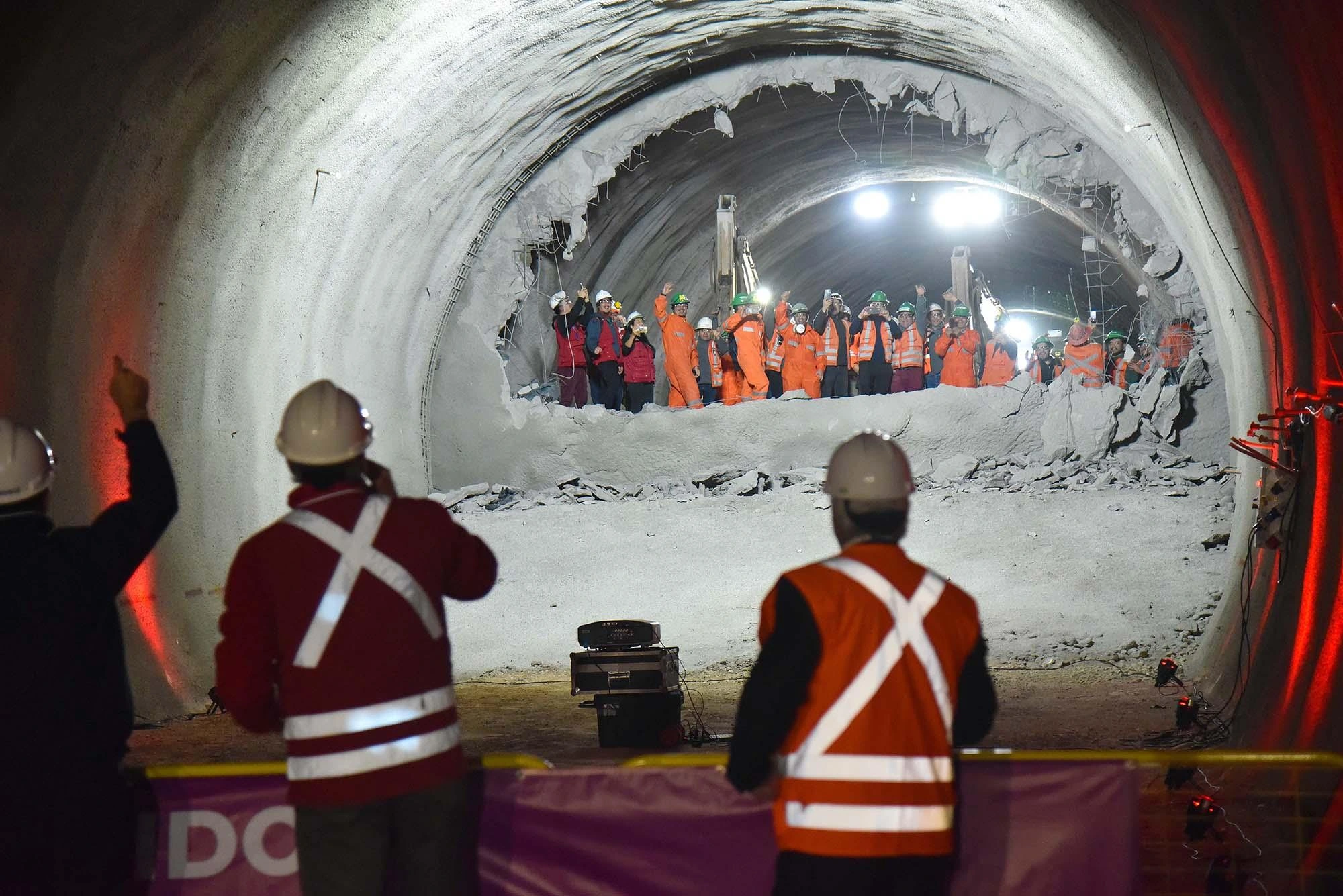


On Monday, August 31, Metro de Santiago took another step forward in its ambitious expansion plan with the tunnel breakthrough for the Line 6 extension in the Cerrillos district, a project that is part of the system’s portfolio aimed at reaching a 231-kilometer network by 2034 and becoming the longest in Latin America. The new station, located on Avenida Lo Errázuriz, will directly benefit 90,000 residents of the district and will reduce the estimated travel time to Los Leones, in the eastern part of the capital, to 27 minutes.
“Currently, the Line 6 extension is 55% complete. This project is one of two extensions we are developing for Line 6, adding to Metro’s expansion project portfolio—the most ambitious in its history,” said Felipe Bravo, general manager of Metro de Santiago.
He added: “By 2034, Metro de Santiago will have the most extensive network in Latin America, totaling 231 kilometers. A key point is that 55% of our network’s total length will consist of fully automated lines, using the world’s most advanced technology.”
The extension of Line 6 involves an investment of $244 million and is expected to begin operations in 2028. In addition to this project, the future Lines 7 and 9—currently under construction—will expand the system's coverage and are expected to serve 1.6 million and 2 million passengers, respectively.
Connections to Rural Areas
The expansion of the Metro network will not only improve travel within Santiago but also strengthen its connection to rural communities surrounding the capital. This will be made possible by the future connection between the Avenida Lo Errázuriz station and the State Railroad Company’s (EFE) Melipilla Train.
This integration will make it easier to travel between the city and rural areas, benefiting both those who live in these communities and those who visit them.
In this regard, Louis de Grange, Chile’s Deputy Minister of Public Works and of Transportation and Telecommunications, stated: “We are talking about projects that transform people’s quality of life. The westward extension of Line 6 is a national project that transcends individual administrations. We continue to move forward with a clear commitment: a more integrated and efficient public transit system that gives people more time and a better quality of life.”
With this growth plan, Metro de Santiago—which is celebrating its 51st year of operation this September—continues to work toward solidifying its position as one of the most important transit systems in Latin America.