

Located 72 kilometers from Iquique, in the Tarapacá Region, La Tirana -with a population of only 1,200 inhabitants- receives more than 250 thousand people during ten days of celebration. The Festival of La Tirana, dedicated to the Virgin of Carmen, mixes Catholic traditions with Andean cosmovisions, in a syncretism that has aroused the interest of international media and academic communities around the world.
Tradition, faith and dance: a crossroads of cultures
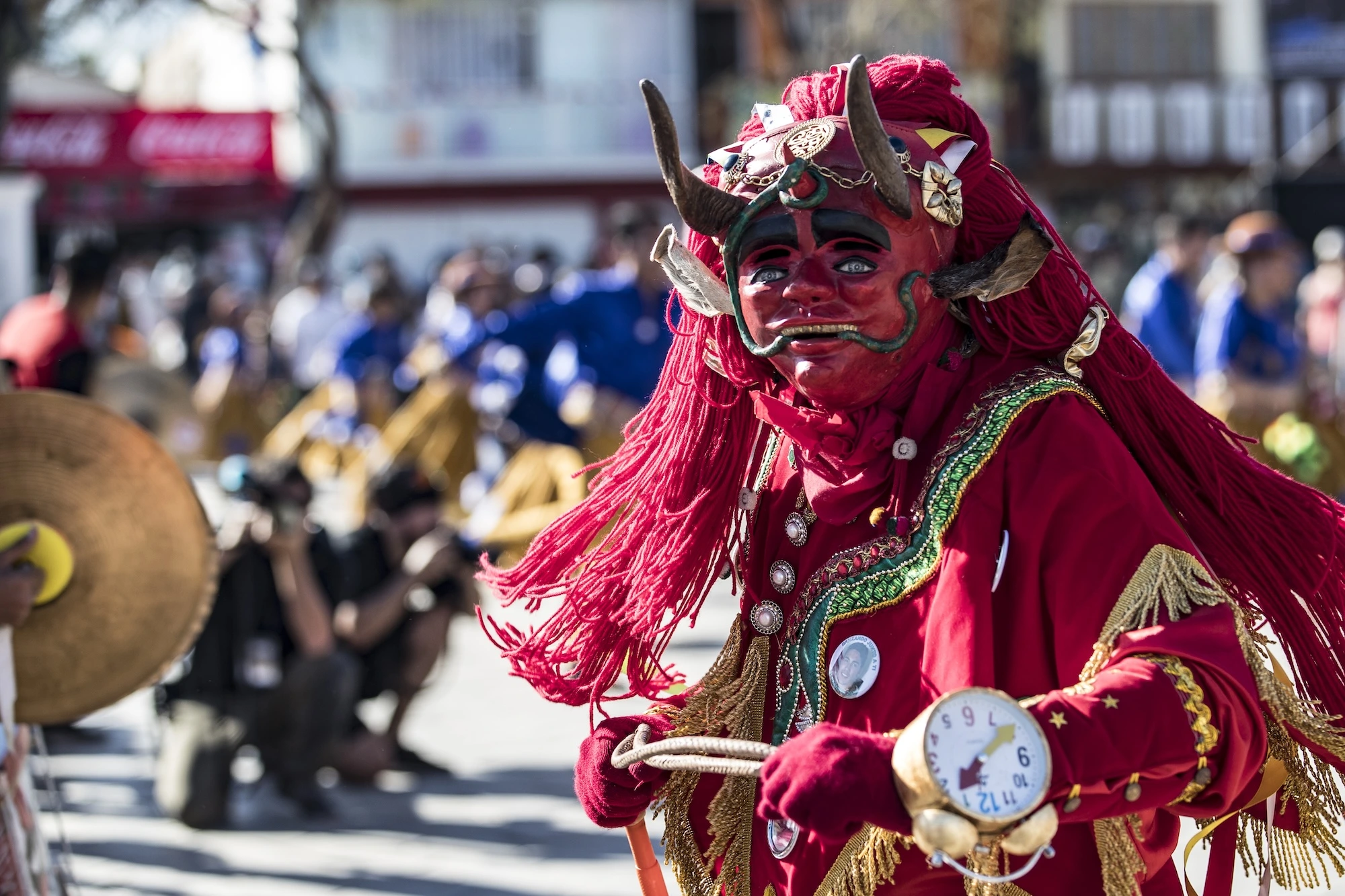
More than 200 groups of devotional dances from the north of Chile, Bolivia and Peru gather every year in this meeting that unites people, generations and religions. Diabladas, Caporales, Morenadas, Tinkus and Sambos are some of the dances that fill the streets of the town with color and energy. Each group is distinguished by its handcrafted costumes, ritual choreographies and live music, performed exclusively by brass and percussion bands.
These dancers prepare for months, many of them motivated by personal or family promises to the Virgen del Carmen. The costumes, hand-embroidered with metallic threads, the masks made with ancestral techniques -some weighing up to 5 kilos- and the steps that are repeated in each procession are part of an expression that combines popular art, identity and spirituality.
A celebration that transforms the territory
During the carnival festival, the town of La Tirana changes completely. Makeshift camps, fairs, health services and supply points emerge to welcome pilgrims, musicians and tourists. Many arrive after long walks or bicycle pilgrimages from nearby cities such as Iquique, Alto Hospicio or Calama.
The spiritual center of the festivity is the Sanctuary of La Tirana, where the image of the Virgen del Carmen is venerated. July 16, the day of its official celebration, marks the high point of the festivity, with multitudinous processions and a cultural display that thrills both the faithful and visitors.
Surprising figures and data
-More than 250 thousand people attend every year, turning the carnival of La Tirana into an annual Festival of La Tirana the most massive religious event in the country.
-More than 200 dance groups officially participate, some with more than 100 members each.
-100% live music, without the support of recordings, accompanies each dance from the beginning to the end.
- The masks of the "diablos" can weigh up to 5 kilos and are considered true works of popular art.The masks of the "devils" can weigh up to 5 kilos and are considered true works of popular art.
-The name "La Tirana" comes from a 16th century legend about an indigenous princess - Nusta Huillac - converted to Christianity by a Spanish conquistador.