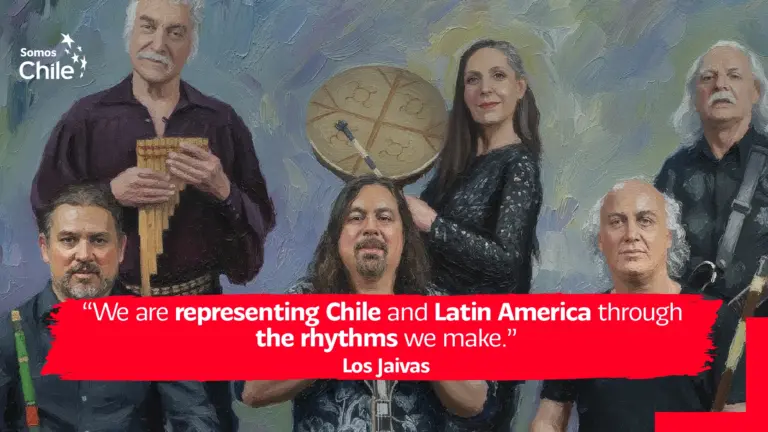
"They're going to ruin the ruins!" The warning from one of the archaeologists at Machu Picchu—the legendary Inca citadel and World Heritage Site—takes the members of Los Jaivas by surprise as they try to bring a piano through one of the stone gateways leading to the historic sanctuary.
The problem was solved in a way worthy of a legend: the instrument was loaded onto a Peruvian Air Force helicopter and transported to one of the hills overlooking the majestic landscape, among the stone structures that centuries ago were home to the elites of the Inca Empire.
That almost unthinkable gesture—bringing a piano to one of the most iconic locations in the Americas to record a musical special—gave rise to one of the most memorable images in the history of Latin American rock. A scene that encapsulates everything Los Jaivas stand for: the convergence of the avant-garde and tradition, of classical music and folk roots, and of Chile and the cultural identity of a continent.
But the story of Los Jaivas goes far beyond a single unforgettable album. From the experimental sounds of El volantín to the fusion of progressive rock, Latin American music, and folklore on El indio, they developed a unique musical language that made them the most influential band in the history of Chilean rock and the creators of some of the most popular anthems in the national songbook.