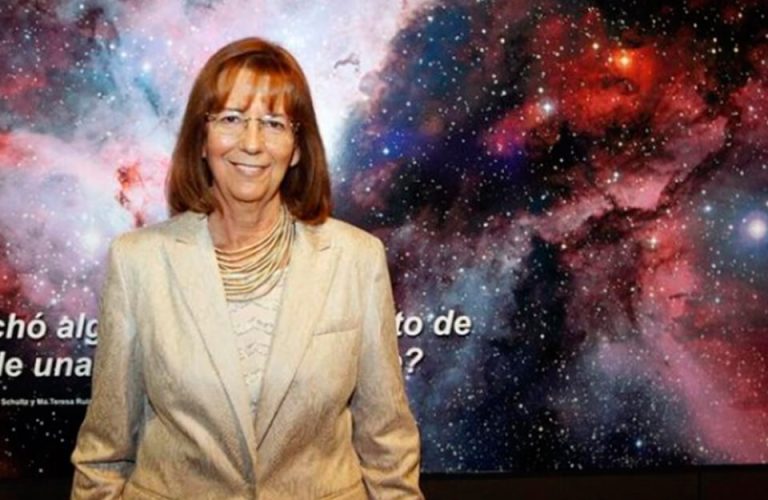
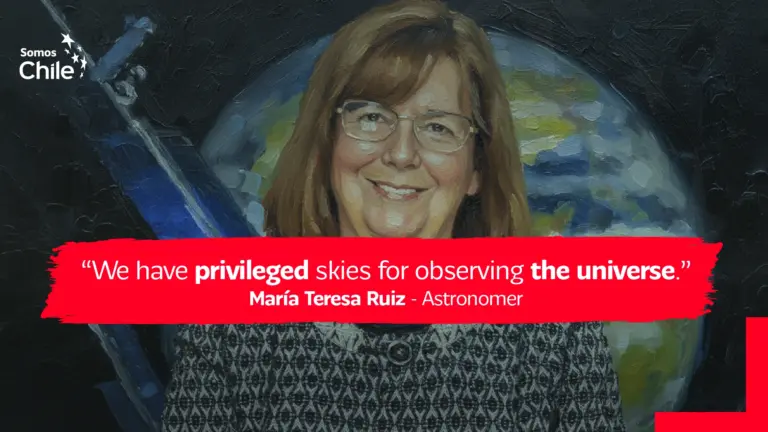
“I think we did something wrong. Let’s take another shot because something very strange came up.” María Teresa Ruiz, Chile’s first female astronomer, was studying something unusual on red plates at the La Silla Observatory.
It was the night of March 16, 1997, in the Atacama Desert, a natural laboratory unlike any other in the world, whose pristine, dark skies allow for exceptional clarity in observing the universe.
María Teresa frequently visited the observatory with a clear goal in mind: to find the coldest dead stars in order to determine their limits and estimate the age of the galaxy.
That night, she observed something different. She had to study it using red filters instead of the blue ones she usually used. She thought she’d found a white dwarf, but the data didn’t match. “Let’s take another look—something very strange came up.”
The Chilean astronomer and astrophysicist made one of the most important astronomical discoveries in Chilean science: she was the first to discover a brown dwarf.
This milestone made María Teresa the first woman to receive the National Prize in Exact Sciences and opened new windows onto the universe for national science.
Sources: University of the Americas and University of Chile.